Showing posts with label Wallonian Pale Ale. Show all posts

Wednesday, June 8, 2016

Recipe: Wallonian Pale Ale (Fifth Edition) [Batch #100]

It has unfortunately been a long, long time since my last post, but I'm hopeful that, starting with this post, I'll be back to posting frequently. I have 4-5 recipe posts (some with accompanying tasting notes) in the backlog.  I need to work through those over the next several weeks so that I can really focus on a post that will combine quite a few of these recipes -- an all-encompassing post on the work that I've started to do with barrel-aging and barrel-fermenting saisons, including plenty of blending.   Once up, I will use that post going forward to track everything that goes into and comes out of the 13.2-gallon oak barrel that I have in our basement.

For now, below is a recipe for my fifth iteration of Wallonian Pale Ale, which essentially an America IPA malt and hop base then fermented with a blend of saison yeasts, Brettanomyces, and some lactic-acid bacteria. Even though the IBUs are quite high, a bit of acidity still comes through.  The grain bill on this one was a bit of a mess as I tried to get rid of some older adjuncts that were used to lighten up the body a bit in order to let the yeast and hops shine through.  For hops, I used a nice blend of American hops and went with a 90-minute hop stand at the end of the boil, which is a technique I've used in the past with this beer to really lock in the hop character over a relatively-long (at least for hoppy-beer standards) fermentation period.

Here are the full details on this batch:

Batch Number: 100
Brew Date: August 8, 2015
Batch Size: 16 Gallon
OG: 1.049 (est.)
FG: 1.004 (est.)
IBU: 52 (modified Tinsmith)
ABV: 6.0% (est.)
SRM: 6

Mash: Single infusion for 60 minutes at 154* F
Boil: 60 minute


Fermentables


16.00 lb Dingemans Belgian Pilsner (47%)
4.19 lb Wheat Malt (12%)
3.00 lb Munich (9%)
2.00 lb Flaked Oats (6%)
1.88 lb Acid Malt (6%)
1.75 lb Flaked Rice (5%)
1.75 lb Flaked Corn (5%)
1.25 lb Rye Malt (4%)


Salts & Water


12.5 g Calcium Chloride (all in the boil kettle)
13.5 g Gypsum (all in the boil kettle)
4.5 g Sodium Chloride (all in the boil kettle)

Resulting water profile is as follows:

Mash pH (est.): 5.20
Calcium: 110
Magnesium: 12
Sodium: 27
Chloride: 115
Sulfate: 114


Hops

3.0 oz Mosaic (pellet, 11.6 AAU), at 60 minutes 
8.0 oz Mosaic (pellet, 11.6 AAU), at flameout (hopstand for 90 minutes)
4.0 oz Galaxy (pellet, 15 AAU), at flameout (hopstand for 90 minutes)
4.0 oz Belma (leaf, 11.6 AAU), at flameout (hopstand for 90 minutes)
8.0 oz Styrian Bobek (pellet, 3.9 AAU, 2.5 years old), at 60 minutes

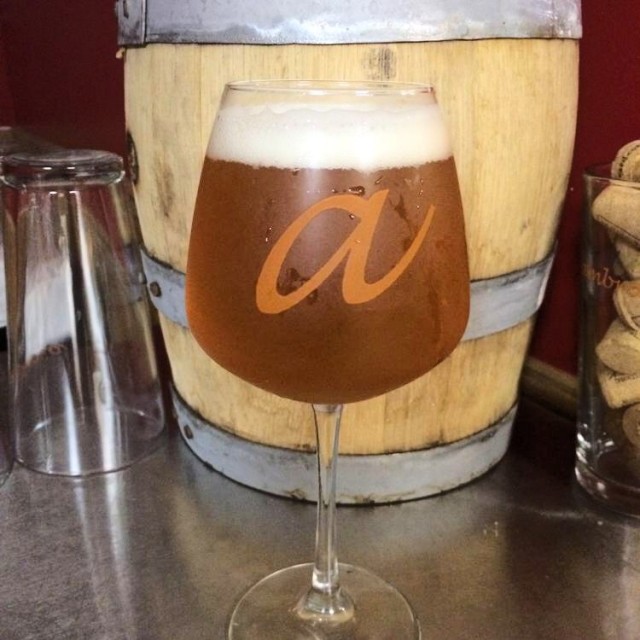
Other


4.0 tsp. Wyeast Yeast Nutrient at 10 minutes


Yeast


Ambrosia Blend 05
Yeast Bay Wallonian


Friday, November 14, 2014

Wallonian Pale Ale (Batch 04): Recipe

This is my fourth time trying out this recipe, a very hop-forward saison with moderate bitterness.  I absolutely loved my second batch of this (recipe; tasting notes).  The third batch was basically the same recipe as the second, and I didn't feel that it warranted its own post.  This was especially true as I was brewing with a friend (his half of the batch was fermented with basic Chico yeast) and I wasn't able to take many notes.  This attempt is slightly different, as I plan to change up the hop profile a bit, and will also probably dry hop each half of the batch differently.

Here are the full details on the batch:

Batch Number: 97
Brew Date: October 18, 2014
Keg Date: November 9, 2014
Batch Size: 10 Gallon
OG: 1.045 (est.)
FG: 1.003 (est.)
Fermentation Temperature: 65-70* F
IBU: 56.0 (modified Tinseth from BrewCipher)
ABV: 5.5%
SRM: 5.0

Mash: Single infusion for 60 minutes at 154* F
Boil: 60 minute

Fermentables

10lb 8oz Dingemans Belgian Pilsner
4lb 0oz Munich Malt
2lb 0oz Flaked Wheat
0lb 14oz Acid Malt
0lb 12oz Flaked Oats

Salts & Water

6.6g Calcium Chloride (all in the boil kettle)
7.1g Gypsum (all in the boil kettle)
2.5g Sodium Chloride (all in the boil kettle)

5.5mL lactic acid added to the sparge water to get that pH to approximately 5.3.  

Resulting water profile is as follows:

Mash pH (est.): 5.34
Calcium: 96
Magnesium: 12
Sodium: 25
Chloride: 100
Sulfate: 100

Hops

1.5oz Pacific Gem (pellet, 16.0 AAU) at 60 minutes 
4oz of Mosaic (pellet, 11.6 AAU), 30 minutes after flameout
2oz of Belma (leaf, 11.6 AAU), 30 minutes after flameout
2oz of Galaxy (pellet, 15.0 AAU), 30 minutes after flameout

Let the hops sit in the wort for about an hour total, as I ended up leaving them for a long time with Batch 02 of WPA and really enjoyed the character.

Dry Hops

01.02.2015: This one has been on tap for about two weeks, and I'm finally getting around to adding some dry hops in the keg.  I've been way behind, as my wife and I had twin boys in November!  I had planned on doing a blend of 3-4 hops and using some leaf, but I discovered that I'm out of large hop bags and don't have the time to reseal that many packages.  Thus, I ended up going with only two varieties of pellet hops, adding them to a hop bag (without weights, also can't find those) and dropping that into the keg attached to some unwaxed/unscented floss.

I went with 4 ounces of 2014 Mosaic and 1 ounce of 2013 Columbus.  The Columbus came from a 1-ounce package.  I usually have those around since I like to use them for bittering.  The Mosaic came out of a 1-pound bag.  I put the bag into a gallon Ziploc and put it back in the freezer.  Hopefully I'll have time to vacuum seal sooner rather than later.

Other

2.0 tsp. Wyeast Yeast Nutrient at 10 minutes

Yeast

Full batch used Ambrosia Blend 005 (now the seventh generation) from the cake of an September 27, 2014 batch of Demeter Facile.  Per yeast calculator.com, I needed 320 billion cells for the entire batch.  At 40-60% solids, this would mean 250mL for the whole batch.  I went with 500mL, as I was pulling from a wine thief and didn't have the best view, and I'd rather overpitch than underpitch, and didn't have time to let everything settle out before measuring.

Notes

11.09.2014: Kegged each half.  Will wait until closer to tapping to add the dry hops.

Tuesday, September 9, 2014

Wallonian Pale Ale (Batch 02): Tasting Notes

Here are the tasting notes for my second batch of Wallonian Pale Ale, which is aimed to be a hoppy farmhouse ale, merging the fruity, citrusy, tropical notes of American hops with tropical and earthy notes coming from our house blend of saison yeast, Brettanomyces, and other critters.  On the hop side, this batch included Amarillo, Belma, Citra, Columbus, and Mosaic.  I like trying to use a multitude of hops, and that way I can attempt to replicate an aroma/flavor profile based on what I have on hand.  The full recipe for the batch is here.


Appearance: Slightly hazy light orange color with a fluffy white head. Good retention and plenty of spotty lacing as it goes down.

Nose: Initial whiff is resinous hops. The Mosaic really comes through here. Tropical fruit, citrus pith, and pine come through underneath. Mango is prevalent alongside leafy hop goodness. As it warms, a bit more orange marmalade.

Flavor: Like the nose, hops hit hard on the front end with nice resin and pine, paired with an intense citrus character. Some light earthiness in the background. Bitterness is moderate, light considering that the flavor and aroma hops are well into the range of a Double IPA.

Mouthfeel: Light with very apparent bitterness. IBUs aren't terribly high, but the water profile and sub-1.005 terminal gravity really accentuate the bitterness. Extremely dry. Very faint tartness from the lactic acid bacteria in the blend coming through on the backend. I've heard people say that sour and butter don't go well together, but the very faint acidity works quite well alongside the dry bitterness, in my opinion. Carbonation is in between that of a standard pale ale and a saison, which seems about right here.

Overall: I'm extremely pleased with this and have been blowing through the keg. Luckily, it was a 10-gallon batch and I decided to bottle off the other half, conditioning with tropical fruit juice instead of table sugar.

I don't think there's much at all that I would change with this one. I'll mess around with the hops based on what I have on hand and what I haven't tried in a while, but this otherwise fits the bill of what I've been looking for -- a saison / IPA hybrid that fits within the farmhouse mold, but could be served to a broader set of drinkers than a wild saison. This will hopefully sit as part of the core lineup at the eventual taproom for Ambrosia Farmhouse Ales.

Tuesday, August 5, 2014

Wallonian Pale Ale (Batch 02): Recipe

This is my second time trying out this recipe, with the theory that this is a fairly hoppy pale ale with saison yeast. The first attempt didn't go over that well, as I really didn't like the French Saison yeast. This time I'm going with the third generation of Ambrosia Blend 05, which is a blend of saison yeast and various Brettanomyces strains. Based on my experience with Demeter Vert (Batch 03), this is also picking up some lactic acid bacteria from the buckets I'm fermenting in, which is a good way to transfer some bugs from batch to batch since I don't have a barrel, though I do plan to make use of oak cubes for the same purpose soon. (I don't worry about the contamination, as anything I do that's "clean," which isn't all that often, is fermented in stainless steel kegs.)

I went pretty simple on the grain bill, and then hopped fairly intensely with Belma, Citra, and Mosaic at flameout. I'll also be looking to dry hop heavily as well.

Here are the full details on the batch:

Batch Number: 91
Brew Date: July 27, 2014
Keg Date:
Batch Size: 10 Gallon
OG: 1.042 (est.); 1.044 (measured)
FG: 1.003 (est.)
Fermentation Temperature: 70-74* F
IBU: 53.0 (modified Tinseth from BrewCipher)
ABV: 5.2%
SRM: 5.0

Mash: Single infusion for 60 minutes at 154* F

Boil: 60 minute

Fermentables

10.44 lb Dingemans Belgian Pilsner
4.00 lb Munich Malt
2.00 lb Flaked Wheat
0.88 lb Acid Malt
0.69 lb Flaked Oats

Salts & Water

Calcium Chloride (2.6g in the mash and 4.0g in the boil kettle)
Gypsum (2.8g in the mash and 4.3g in the boil kettle)
Sodium Chloride (2.5g all in the boil kettle)

5.9mL lactic acid added to the sparge water to get that pH to approximately 5.3. 

This time I added the salts to the mash and the boil kettle, aiming to get the full water profile in line, except for the sparge water, which is just acidified.

Resulting water profile is as follows:

Mash pH (est.): 5.25; measured at ~5.35 (pH meter drifting between 5.3 and 5.4)

Calcium: 94
Magnesium: 12
Sodium: 24
Chloride: 95
Sulfate: 96

Hops

9mL of HopShot (~3 AAU) at 60 minutes
4oz of Mosaic (11.6 AAU), pellet, 30 minutes after flameout
2oz of Belma (11.6 AAU), whole leaf, 30 minutes after flameout
2oz of Citra (12.9 AAU), whole leaf, 30 minutes after flameout

Let the hops sit in the wort for about 1.5 hours total, as I was busy bottling a few new beers in the Science & Art series and figured some additional exposure to the wort wouldn't hurt.

Dry Hops

Per 5 gallons:

2oz of Amarillo, whole leaf, 7 days
1oz of Citra, whole leaf, 7 days
1oz of Columbus, whole leaf, 7 days

After tasting the beer at two weeks, I decided that it was quite tropical/fruity from the flameout editions, and I wanted a little bit backing earth and floral character, as well as some additional citrus. Given that, I went with the combination above, with each 5-gallon portion getting a total of 4 ounces of whole leaf hops. 

Other

2.0 tsp. Wyeast Yeast Nutrient at 10 minutes

Yeast

Full batch used Ambrosia Blend 05 (now the third generation) from the cake of Farmhouse Mild (Batch 05). Each 5-gallon portion got 100mL of dense slurry from that cake.

Notes

07.27.2014: Removed chiller at 72*F, but let hops sit in the wort for 90 minutes or so before transferring to two buckets, each of which received 30 seconds of pure oxygen to each half just before pitching. Will plan to dry hop in 1-2 weeks. The temperature controller is set at 72*F with a 2*F differential, so should sit right in that range unless the garage gets really warm.

08.04.2014: Smell and taste are really nice. Didn't take any readings, but will soon. Temperature is at 74*F after a few days that were quite warm, though the water bath still keeps the temperature from swinging too drastically (also, just as important, from swinging too quickly).

08.10.2014: At two weeks, added the dry hops per the above after transferring 5 gallons to a keg, and leaving the other half in its bucket on the yeast. I had a bit of trouble weighing the hop bag down enough in the latter (even with plenty of stainless steel bolts!), so I may need to leave those ones in for a bit longer than a week.

09.01.2014: For the second half of the batch, I decided to bottle condition with fruit juice. For volume, I guessed that there were around 3 gallons in the keg, and shooting for 3 volumes, I used 26oz of Ceres fruit medley (guava, pineapple, papaya, mango, peach, and passion fruit), aiming for around 95g of sugar. Yield was 27 500mL bottles.

09.09.2014: Tasting notes for this batch.

11.08.2014: Two months later, and the fruit conditioned portion still doesn't seem to be conditioning properly. The fruit juice also didn't add much flavor, though it did add a TON of sediment. I don't think I'll be replicating that experiment again and, if I do, will make sure to filter any juice first.

Monday, September 23, 2013

Wallonian Pale Ale: Recipe

Yesterday I brewed my first batch of what I'm calling a Wallonian Pale Ale, using a generous amount of American hops alongside a mostly pilsner malt base plus French Saison yeast.  The idea is to have a beer that's quite dry and hop forward, but with a bit of yeast complexity.  The plan is to keep the yeast at the lower ends of its range (approximately 65-68 F) to minimize its contribution, while still getting something out of it in addition to the large degree of attenuation.  With the high attenuation, I also used a decent amount of flaked wheat and kept the chloride to sulfate ratio relatively high to emphasize the malt and body a bit.

Practically speaking, this is something I also wanted to try with the idea of potentially opening a taproom or brewpub down the line.  Being able to do pale ale strength and IPA strength (in terms of alcohol and hoppiness) saison would be a great thing to be able to offer to customers without the brewery having to utilize another yeast strain, as the house saison strain would, according to plan, handle most of the load.  As a homebrewer, of course it's also easy to deal mostly with a single strain, though I normally vary it up quite a bit, though this usually takes the form of trying out different saison strains.

Preparing the mash.

The recipe for the full batch is as follows:

Batch Number: 69

Brew Date: September 22, 2013
Keg Date: October 14, 2013
Batch Size: 5 Gallon
OG: 1.055
FG:
Fermentation Temperature: 65 F
IBU: 69.6
ABV: 6.6% (est.)
SRM: 4.1

Mash: Single infusion for 60 minutes at 155 F.
Boil: 60 minute

Fermentables

7lb French Pilsner
2lb Wheat, Flaked
2lb Munich Malt

Salts & Water

4.15g Calcium Chloride (split between mash and sparge)
1.75g Gypsum (split between mash and sparge)
3mL Lactic Acid

Resulting water profile is as follows:

Mash pH (est.): 5.45
Calcium: 77
Magnesium: 12
Sodium: 7
Chloride: 70
Sulfate: 55

Chloride / Sulfate Ratio: 1.27 (very near the malty end of balanced)

Hops

1oz Columbus (19.3 AA), leaf, first wort hop
1oz Columbus (19.3 AA), leaf, at flameout
2oz Citra (12.4 AA), leaf, at flameout
2oz Citra (12.4 AA), leaf, dry hop for 7 days

Other

Whirlfloc at 15 minutes
0.5 tsp. Wyeast Yeast Nutrient at 15 minutes

Yeast

Wyeast 3711 French Saison (x2)
White Labs Brett C.

Notes

09.22.2013: After chilling, gave the wort 30 seconds of pure oxygen and then pitched both packets of 3711, which were manufactured on August 22, 2013. Took a temperature reading and realized the beer had not chilled enough, getting a reading of 87 F. Immediately put the bucket into the chest freeer at 32 F, where it slowly got back down to the appropriate temperature. I don't think this should be an issue, as not much flavor (or ethanol) is produced during the lag phase, and it was down to temperature within an hour of pitching, whereas the lag phase should last roughly from hours 3-15. See this excerpt from Brew Geeks:
The lag phase can be carried out at a higher temperature than the rest of fermentation because very little flavor compounds are produced. Ethanol production is also very limited, therefore ester formation is not a concern. Some brewers begin the lag phase for ales at 72-75F, and complete the fermentation at 68F. This can be done with success for lagers too, with starting the lag phase at 72-75F and lowering the fermentation temperature to 50-55F.
The Life Cycle of Yeast, available at http://www.brewgeeks.com/the-life-cycle-of-yeast.html.

In the end, a lot of this may have been an equipment malfunction, as I measured with a new thermometer (fresh out of the package), and got a measure of 63 F where the old one was reading 75 F, so changes are the original pitching temperature was more toward 75 and didn't need too much alteration. Serves as a reminder to ensure that I'm updating thermometers more often, as I've been using the old one for nearly three years now.

10.07.2013: Added 2oz. of Citra whole leaf hops as dry hops in a muslin bag.

10.14.2013: Transferred the beer to a CO2 purged keg an sealed the lid.  Saved the 3711 cake for a future saison.

11.05.2013: I really wasn't a huge fan of the way the 3711 completely overtook this one, even with a pretty hefty dose of late addition and dry hops, so I decided to add a vial of White Labs Brett C to the keg and let that go for a bit.  I'll taste it in two months or so, and see how I like it then.  If the 3711 is still too strong, I'll have to consider adding some additional dry hops, or maybe some fruit (pineapple?).  I loved the idea of the WPA and will try it again, but won't be using 3711.  I'm thinking that if I use one of my "wild" saison blends that are relatively clean for saison strains, I can keep the lacto in check with high IBUs and get a more complete beer.