Showing posts with label Saison. Show all posts

Thursday, July 7, 2016

Recipe: Blank Space (First Edition) [Batch #105]

Back in May, I had some friends over for a brew day, and we decided to do a saison with key lime juice and zest.  We wanted hops to complement that citrus character, and decided to use newer hops that would give additional "green fruit" character.  Namely, Hallertau Blanc, Nelson Sauvin, and Sorachi Ace.  Together, these hops should impart some gooseberry, lime, white grape, and lemon/lime character.  (I know that some people get unusual flavors like dill from Sorachi Ace, but I've always ended up with a nice citrus character, though I've never used them in a beer that didn't also feature citrus zest, so who knows what they're like all by themselves.)

Not only am I a big fan of all these flavors, but I knew that by the time this beer was done with primary fermentation, my oak barrel would be empty and I thought this would all work well with a bit of oak and its accompanying characteristics.  

I ultimately decided that I wanted to have a non-barrel-aged portion of the beer that I could also dry hop to have an ultra-refreshing (and low ABV!) beer for the summer.  Because of that, a portion of the barrel will end up with some other blonde saison as a component of the fill.  I nearly always have some sort of blonde saison around, so that shouldn't be a problem, especially since I use the same Ambrosia 005 blend as part of nearly all of my fermentations.  This is particularly true given the fact that all of my carboys and buckets are scratched and certainly house plenty of that culture, although I recently purchased a conical that I'll use for "clean" saisons going forward that I can either bottle/keg that way, or introduce specific Brett strains and/or other bugs at packaging to see how they work in secondary.

I mentioned above that a plus to this beer is its low alcohol content, but that doesn't really make this beer any sort of outlier.  As those who read this blog frequently have likely noticed, it's extremely rare for me to brew a beer that ends up over 6% ABV, as I like my saisons light, refreshing, and consumable in (relatively) large quantities.

The recipe for the full batch is as follows:

Batch Number: 105
Brew Date: May 14, 2016
Bottle/Keg Date: See notes below.
Batch Size: 20 Gallon
OG: 1.042 (est.)
FG: 1.004 (measured)
Fermentation Temperature: Room temperature, fluctuating around 65*-70*F.
IBU: 67.0 (modified Tinseth)
ABV: 5.0% (est.)
SRM: 3.0

Mash: Single infusion for 60 minutes at 154*F.
Boil: 60 minute

Fermentables

20.00 lb French Pilsner (57%)
9.00 lb Wheat, Flaked (26%)
3.25 lb Acid Malt (9%)
3.00 lb Oats, Flaked (9%)

Salts & Water

All salts added directly to the mash along with the strike water.  I'm now using a Blichmann BrewEasy system, so everything is recirculating between two pots.  All the liquid is then drained into the boil kettle at the end of the mash.

5.0g Calcium Chloride
8.0g Calcium Sulfate
12.0g Sodium Chloride

Resulting water profile is as follows:

Mash pH (est.): 5.30
Calcium: 64
Magnesium: 12
Sodium: 51
Chloride: 104
Sulfate: 69

Hops

2.0 oz Sorachi Ace (10.4 AAU), pellet, at 60 minutes
5.0 oz Nelson Sauvin (13.2 AAU), pellet, at flameout
4.0 oz Hallertau Blanc (16.8 AAU), pellet, at flameout
2.0 oz Sorachi Ace (10.4 AAU), pellet, at flameout

Dry hop forthcoming to the non-barrel-aged portion.

Other

4 tsp. Wyeast Yeast Nutrient at 10 minutes
2 Tbsp. Key lime zest (5-gallon portion only)
100 mL Key lime juice (5-gallon portion only)

Yeast

Ambrosia Blend 005

Notes

05.31.2016: Added key lime juice  (100mL) and zest (2 Tbsp.) to a 5-gallon portion of the batch being fermented in a bucket.


7.06.2016:  I rinsed the barrel with several rounds of hot water followed by a spray-out with the hose, then several rounds of cool water.  I then purged the barrel with CO2 and started adding beer:
  • 4.5 gallons of Blank Space (carboy-fermented). SG of 1.006.  Light lemon and green grape with definite backing flaked grain body and feel.
  • 5.5 gallons of Blank Space (bucket-fermented). SG of 1.004.  Flavor is similar to the carboy version but with a little bit of sulfur in the nose at first, though that quickly dissipated. 
  • 3 gallons of Wallonian-fermented wort from the 04.29.2016 WPA batch (Batch 104). SG is 1.004.
I added the rest of the Wallonian Farmhouse portion of Batch #104 to the carboy fermented with Ambrosia 005 from that batch.  That carboy is now at max capacity, and I plan to transfer that beer onto some watermelon juice soon.

12.17.2016: Emptied the barrel into kegs.

01.01.2017: One full keg of Black Space received 33g of Galaxy pellets. The other received 43g of Nelson Sauvin.  Both kegs bottled after dry hopping was complete.

01.14.17: 3 gallon keg remained (approximately). It's been carbonating in the keezer and has a bit of sulfur and is a bit too oaky. Added 1oz of Denali pellets in a muslin bag. Keezer at 45*F.

Friday, June 10, 2016

Recipe: Noble Namur [Batch #102]

This was a batch of Namur, which is my "plain" saison that's generally fermented clean.  I ended up pitching some bugs into the 3724 portion when it stalled at 1.024.  However, a separate 5-gallon portion was fermented with Omega's Saisonstein's Monster and got down quite low.  That portion I dubbed "Noble Namur" given the use of classic hops in combination with the clean saison yeast profile.

In the end, I really, really enjoyed the Saisonstein's Monster portion and will definitely be making a full batch of this again in the future, simplifying the malt bill quite a bit  (this one was more of a "get rid of some stuff" profile) so that it's essentially a pilsner fermented with a saison yeast that's more peppery and earthy rather than fruity, even though I generally prefer saisons that fit into the latter category.

Finally, the water profile on this one was a bit more sulfate-heavy than my typical saison, as I wanted the bitterness to stand out a bit more.  Although, in the end, this one ended up just a bit too bitter, so I'd probably pull back the IBUs to 25-30 the next time around.

The recipe for the full batch is as follows:

Batch Number: 102
Brew Date: October 2, 2015
Bottle/Keg Date: See notes below.
Batch Size: 20 Gallon
OG: 1.033 (est.)
FG: See below.
Fermentation Temperature: Started at 72*F and ramped up to 82*F.
IBU: 36.0 (modified Tinseth)
ABV: 4.1% (est.)
SRM: 3.0

Mash: Single infusion for 60 minutes at 154*F.
Boil: 60 minute

Fermentables

12.00 lb French Pilsner (46%)
7.00 lb Wheat, Flaked (27%)
2.00 lb Munich (8%)
1.81 lb Acid Malt (7%)
1.50 lb Oats, Flaked (6%)
1.50 lb Rye, Flaked (6%)

Salts & Water

1.1g Calcium Chloride (all added directly to the kettle)
13.1g Calcium Sulfate (all added directly to the kettle)
17.5 Sodium Chloride (all added directly to the kettle)

Resulting water profile is as follows:

Mash pH (est.): 5.24
Calcium: 68
Magnesium: 12
Sodium: 77
Chloride: 128
Sulfate: 102

Hops

9.0 oz Strisselspalt (3.5 AAU), pellet, at 60 minutes
4.0 oz Sterling (8.0 AAU), pellet, 90 minutes after flameout (30-minute hopstand)

Other

4 tsp. Wyeast Yeast Nutrient at 10 minutes

Yeast

Wyeast 3724 (Dupont)
Omega Saisonstein's Monster

Notes

10.02.2015 Mash temp 152*F.  4oz of Sterling added after 1.5 hours natural cooling. Temp was 165*F.  After removing the hops, I let the wort sit for approximately 8 hours before pitching at 68*F with temperature regulator set at 72*F and the differential set at 1*F.

30 seconds of oxygen to each 5-gallon portion.  The 3724 packs were both manufactured on 08.11.15. Omega Saisonstein was packaged on 09.01.15.  Controller probe placed in the carboy with the Omega.

10.03.2015: At 24 hours, moved to 74*.

10.04.2015: At 48 hours, loved to 76*. Moved to 78* and 80* at single-day intervals. Continued to 82* at next day. Leaving at 82*.

10.15.2015: Omega at 1.002. 3724 at 1.024.  Controller turned down to 70*F.  Planning to add bugs to the 3724 carboys.

10.16.2015: Created a blend of Saccharomyces Trois, Brett C, Brett Drei, and ECY 03-B plus dregs from Demeter Automne and Demeter Facile.  250mL and split between each 3724 carboy.  The temperature is sitting at 69*F.  Eventually got down to less than 1.002.

11.10.2015: Kegged Noble Namur. FG is 1.001 and pH is 4.51.

Recipe: Demeter Auran (Fourth Edition) [Batch #101]

Continuing with the recipes, this is a batch of Demeter Auran (the fourth time I've brewed this beer), most of which ended up going into my 13.2-gallon oak barrel.  For the portion that I kegged, I didn't end up taking formal tasting notes on any of the batch, even though I would have liked to as half was dry-hopped with Citra and half was dry-hopped with Galaxy.

The recipe for the full batch is as follows:

Batch Number: 101
Brew Date: August 15, 2015
Bottle/Keg Date: See notes below.
Batch Size: 20 Gallon
OG: 1.037 (measured)
FG: 1.004 (measured)
Fermentation Temperature: 76-78*F.
IBU: 51.0 (modified Tinseth)
ABV: 4.2%
SRM: 3.0

Mash: Single infusion for 60 minutes at 154*F.
Boil: 60 minute

Fermentables

16.00 lb French Pilsner (53%)
9.00 lb Wheat, Flaked (30%)
3.00 lb Oats, Flaked (10%)
2.00 lb Acid Malt (7%)

Salts & Water

10.0g Calcium Chloride (all added directly to the kettle)
8.0g Calcium Sulfate (all added directly to the kettle)
11.0g Sodium Chloride (all added directly to the kettle)

Resulting water profile is as follows:

Mash pH (est.): 5.35
Calcium: 82
Magnesium: 12
Sodium: 50
Chloride: 125
Sulfate: 70

Hops

2.0oz Citra (13.0 AAU), leaf, at 60 minutes
8.0oz Citra (13.0 AAU), pellet, at flameout

5 gallons of the batch was dry-hopped with 2oz of Citra leaf, and another 5 gallons was dry-hopped with 2oz of Galaxy pellets.  The remaining 10 gallons went into the barrel after fermentation and did not receive any dry hops.

Other

4 tsp. Wyeast Yeast Nutrient at 10 minutes
56g Orange Zest at flameout
20g Rose Hips at flameout

Yeast


Fresh pack of Wyeast 3726 (Blaugies), 200ml of Wyeast 3726 slurry, and 200ml of Wyeast 3724 (Dupont) slurry.

Notes

08.16.2015: Pitched at 77*F 15 hours after cooling.  I pitched late as chiller only went down to 88*F. Temperature controller off for now.

08.17.2015 (8:00 AM) Temperature has been sitting between 76* and 78*F without any assistance. Water bath container seems to have a small leak.

09.07.2015: Transferred 5gal to keg with 2oz Citra leaf.

11.02.2015: FG is 1.004 and pH is 3.50. Dry hopped with 2oz of Galaxy pellets. Transferred with CO2 using stainless setup.

Monday, October 19, 2015

Saison Faible (Batch 02): Tasting Notes

It's been a long time coming as this keg has (unfortunately) long since kicked, but below are the tasting notes for the second batch of Saison Faible (recipe here), which is designed to be a light, easy-drinking saison.  This is the portion of the batch that was fermented with Wyeast 3726 Farmhouse Ale.  The beer was carbonated in the keg to approximately 3.0 volumes of CO2.


Appearance:  Heavy, creamy head atop a hazy golden beer. Great retention and heavy lacing on the way down. One of the best-looking beers that I've brewed. As I think I have mentioned in the past, I love the rustic look of a hazy saison as opposed to one that pours crystal clear.

Nose: Strong with notes of mango, orange zest, honey, and a bit of pear. Almost a light, vanilla-like character as it warms.

Taste: Similar to the nose, but actually has a bit of tart cherry in the background. It's not a sour beer by any means, but there is a very faint tartness through the finish. Just a hint of earthy spice.

Mouthfeel: Full and creamy up front, but finishing quite dry. The oats and wheat added plenty of proteins, and it seems like this yeast produces plenty of glycerol, together leading to a lovely feel. At the same time, finishing around 1.002-1.004 doesn't leave much there, and the finish is accordingly quite dry.

Overall: Not much I would change about this one, and I'm looking forward to brewing another batch. This is something I plan to have on tap year round at the future tap room, and is making me think twice about doing all oak fermentation with Brett in everything. While there is undoubtedly a bit of Brett going to work here (given that there was a pellicle at the time of kegging), its character is relatively muted compared to the Saccharomyces and hops.

Saturday, July 18, 2015

Saison Faible (Batch 02): Recipe

This was my second time brewing Saison Faible, which is intended to be a light, fruit- and hop-forward saison without the funk and light acidity of Farmhouse Mild. For this one, I wanted to experiment with a few different yeasts, so half the batch was fermented with non-saison Belgian yeasts. It was a 20-gallon batch, so I ended up with around 5 gallons of portions fermented with each of the following: Wyeast 3724 (Dupont, Wyeast 3726 (Blaugies), White Labs 510 (Bastogne, which is Orval's primary-fermentation strain), and White Labs 550 (Achouffe, which is, or at least was, Jolly Pumpkin's primary strain).

After this, I plan to start experimenting a little bit more with European and old-school American hops, as I'd like to see how much of the fruity profile of many of my beers is a result of the yeast and bacteria strains I use, and how much is related to the generally-copious amounts of American and Southern Hemisphere hops I use at flameout.

Here are the full details on the batch:

Batch Number: 99
Brew Date: June 15, 2015
Keg/Bottle Date: See notes below
Batch Size: 20 Gallon
OG: 1.040 (est.)
FG: 1.003 and the 3724 and 3726; 1.008 for the 510 and 550 (measured, prior to Brett/dreg additions)
Fermentation Temperature: See notes below
IBU: 32.0-66.0 (wildly-different estimates from BrewCipher based on the hop stand, and I also don't know how much the aged 60-minute hops affected things)
ABV: 4.9% (est.) for the 3724 and 3726; lower for the 510 and 550 (until I decided to add dregs to each)
SRM: 3.0

Mash: Single infusion for 60 minutes at 152* F
Boil: 60 minute

Fermentables

14lb 8oz Dingemans Belgian Pilsner (46%)
9lb 8oz Flaked Wheat (30%)
2lb 0oz Munich (6%)
2lb 0oz Flaked Oats (6%)
1lb 11oz Acid Malt (5%)
1lb 0oz Flaked Rye (3%)
1lb 0oz Honey Malt (3%)

Salts & Water

1.0g Calcium Chloride (all in the boil kettle)
13.1 Gypsum (all in the boil kettle)
17.5g Sodium Chloride (all in the boil kettle)

Resulting water profile is as follows:

Mash pH (est.): 5.30
Calcium: 67
Magnesium: 12
Sodium: 75
Chloride: 123
Sulfate: 99

Hops
8.0oz Styrian Bobek (pellet, 3.9 AAU, 2.5 years old), at 60 minutes
1.0oz of Galaxy (pellet, 15.0 AAU), after flameout*
4.75oz of Mosaic (pellet, 11.6 AAU), after flameout*
4.25oz of Calypso (leaf, 12.0 AAU), after flameout*

* No hops right at flameout. Turned the burner off and let it cool to 190*F. Added the hops at that point for a 90-minute hop stand, with final temperature around 150*F.
Other

4.0 tsp. Wyeast Yeast Nutrient at 10 minutes

Yeast

  • Wyeast 3724: Pitched into a water bath at 72*F. At 12 hours, bumped to 74*F. At 72 hours, bumped to 76*F. All temperatures are setting on controller with a 1*F differential. At 5 days, bumped to 78*F. Removed temperature control at 8 days.
  • Wyeast 3726: Pitched into a water bath at 72*F. At 12 hours, bumped to 74*F. At 72 hours, bumped to 76*F. All temperatures are setting on controller with a 1*F differential. At 5 days, bumped to 78*F. Removed temperature control at 8 days.
  • White Labs 510: Fermented in the basement at room temperature, generally 67-68*F.
  • White Labs 550: Pitched into bath at 72*F. At 12 hours, bumped to 74*F. At 72 hours, bumped to 76*F. All temperatures are setting on controller with a 1*F differential. At 5 days, moved to ambient garage temperature, generally 70-75*F.

Notes

06.19.2015: Starters:


06.15.2015 - 06.23.2015: See "Yeast" section above for temperature adjustments.

06.15.2015: Bastogne finished at 1.008 after sitting for 15 days at 67-68*F ambient temperature. Pint of slurry harvested.  Very clean with little sediment.  Flavor is a bit leafy and earthy in the background with some faint phenolics.  Apricot and peach up front. 

550 finished at 1.008.  Lighter profile than the Bastogne.  A bit of pear and honey with a light touch of bread dough.  Very faint fruity notes, quite a bit less than the Bastogne in that area.  Fuller mouthfeel than the Bastogne despite finishing a bit drier.

Blaugies is extremely carbonated for coming out of primary.  Sitting at 1.004.  Dupont is also sitting around 1.004.  Both are fairly tropical and have notes of peach and apricot, but the Blaugies is more subdued.  Many of the fruity aspects are likely coming from the hops.  

07.06.2015: Transferred the Bastogne version to a keg to begin carbonation.  Not sure I like the combination of the fruity hops with the more floral, earthy, and leafy yeast.  I'll have to try this again with Noble hops, as those will complement those yeast aromas/flavors.

07.07.2015: Decent pellicle already going on the Blaugies fementor not too many days after it was removed from the hot water bath.  (Obviously, even filling these buckets with StarSan solution and letting them sit for a while doesn't get rid of all the bugs I have in the buckets and lids.)  My theory on the sudden Brett takeover is that the saison yeast really takes over at higher temperatures, but as the temperature is lowered and the gravity drops, it becomes more dormant and the Brett takes over.

07.09.2015: Added the dregs from two year-old 375mL bottles of Bam Biere to the WLP550 version, as I wasn't terribly happy with the profile, and it has been a long while since I've used Jolly Pumpkin dregs.

07.18.2015: The Bastogne version was on tap, but I'm still not happy with how the yeast character clashes with the hops, so I pulled the keg and plan to add some Orval dregs to let those go to work over time, which will also allow for the hop aromatics to fade a bit.

11.09.2015: Added Orval dregs to the Bastogne keg.

03.04.2016: Added dregs from a bottle of 03.11.2014 Jolly Pumpkin Luciernaga to the Bastogne keg.

05.31.2016: Was never happy with the 550 version, so that one ended up going down the drain, as I didn't have anything to blend it with that I thought would actually work out.  I'm likewise not particularly pleased with the Bastogne version, but I'm still holding out hope for further development with that one.

Wednesday, July 15, 2015

Farmhouse Mild (Batch 06): Recipe

This was my sixth time trying out this recipe, a petit saison with Brettanomyces and miscellaneous bacteria, plus a slew of saison strains.  This was also my first beer brewed since my wife and I had twins in November, and I was also testing out quite a bit of new equipment, including a Blichmann 30-gallon kettle and a 13.20-gallon oak barrel!  The vast majority of this beer headed to the barrel.  I can't wait to have that around on tap and in bottles for a long time to come as soon as it's ready.

Since I'm not writing this four months after the beer was brewed (not to mention that it's the sixth iteration of the recipe), I'll keep the post fairly short and straightforward.  However, now that I'm brewing regularly again, I should hopefully have a steady stream of recipe posts.

Here are the full details on the batch:

Batch Number: 98
Brew Date: March 15, 2015
Keg/Bottle Date: 
Batch Size: 20 Gallon
OG: 1.035 (est.)
FG: 1.004 (est.)
Fermentation Temperature: 65-70* F (room temperature)
IBU: 30.0 (modified Tinseth from BrewCipher)
ABV: 4.2%
SRM: 3.0

Mash: Single infusion for 60 minutes at 154* F
Boil: 60 minute

Fermentables

10lb 0oz Dingemans Belgian Pilsner
7lb 0oz Flaked Wheat
3lb 0oz Vienna 
3lb 0oz Flaked Oats
1lb 12oz Acid Malt
1lb 8oz Flaked Rye

Salts & Water

9.3g Calcium Chloride (all in the boil kettle)
7.6g Gypsum (all in the boil kettle)
11.0g Sodium Chloride (all in the boil kettle)

Resulting water profile is as follows:

Mash pH (est.): 5.24
Calcium: 82
Magnesium: 12
Sodium: 50
Chloride: 125
Sulfate: 70

Hops

2.0oz Mosaic (pellet, 12.0 AAU) at 60 minutes 
3.0oz of Galaxy (pellet, 15.0 AAU), at flameout
3.0oz of Mosaic (pellet, 11.6 AAU), at flameout
4.0oz of Belma (leaf, 11.6 AAU), at flameout

Other

4.0 tsp. Wyeast Yeast Nutrient at 10 minutes

Yeast

Portions of the batch split between Ambrosia Blend 005 (10 gallons at room temperature), along with 5 gallons fermented with Wyeast 3724 (Dupont) and 5 gallons fermented with Wyeast 3726 (Blaugies).  The latter two were ramped up from 70*F to 84*F over a period of 11 days (see below)

Rather than chill before pitching, I set the beers out in my brew pots to chill overnight:


Cage to keep out all the raccoons and other critters near our house, and the box as it was supposed to drizzle a bit that night, and I didn't have a clean tarp.


Notes

03.15.2015: Into the Coolship at 138*. Hops were sitting in beer for 2.5 hours. Used spigot to drain 10 gallons into other pot. Total of 21 gallons. Current temperature is 57* (9:45 PM)

03.16.2015: At 8:00 AM, beers around 60*. Each got 30 seconds of O2. Accidentally left Mosaic bittering bag overnight in Blichmann kettle.

Set water bath to 72*F.

650mL total of AMB005. 50mL to 750mL of wort for continuing culture. 300mL to each 5 gallon batch.

10 hours after pitching, basement bath doing well. Both have airlock activity and bath sitting at 70*F due to the 2* differential.

03.18.2015: 2 days after pitching, good activity in basement water bath. Was down to 69* and heat turned back on. Bumped setting up to 74* with 2* differential.

03.19.2015: Three days after pitching, bumped to 76*.

03.21.2015: 4.5 days after pitching, at 75*. Bumped controller to 78*.

03.23.2015: 7 days after pitching. Probe said 77* and actual temp of each was 76*. Bumped to 80*. Each at 1.010. 3726 more mild with some light fruit and hints of spice. 3724 a fruit bomb with pineapple and juicy fruit.

03.24.2015: Bumped to 82*. For wild portion, one at 1.008 with beginning of bubbles for pellicle, and other at 1.006 with bubbles covering almost the entire surface.

03.25.2015: Bumped to 84*.

03.26.2015: Bumped to 86*. Differential still at 2*, so beer currently at 84* with heater on.

04.06.2014. Water bath below the probe level, but beers still at 80*F. Removed the temperature control.

June 2015: Of the 20 gallons, some was blended into Science & Art #8 (a future post), and the rest was added to a newly-acquired 13.2-gallon Hungarian Oak barrel.

Tuesday, January 27, 2015

Demeter Facile: Tasting Notes

After nearly three months in the bottle, I'm getting around to posting tasting notes for Demeter Facile (recipe).  The idea behind this one was to go with a (relatively) simple malt bill and fairly-minimal hop additions so that I could get a beer that showed off the character of my current house blend (Ambrosia 005) of saison yeast (Saccharomyces), Brettanomyces strains, and lactic acid bacteria (LAB).  Overall, I'm quite happy with the results, and this is something that I will most definitely be brewing again in the future.  I'll also plan to do an oak-aged version soon enough.


Appearance: Quite clear.  Color is a medium yellow with a sizable initial head that fizzles down a bit quickly.  Could be better in this area, though the retention isn't horrible.  

Nose: Begins with yellow and orange SweeTarts, leading into faint tropical fruit.  A bit of apricot. Light grass and wheat.  Some honey as it starts to warm, potentially from the bit of honey malt that I used in this one.  (While I wanted to keep it simple, I love honey malt in saisons and couldn't resist).  Hints of lime zest as well, lingering after the more-upfront mango and tangerine subside.

Flavor: Similar notes as the nose, but with a light-to-moderate tartness through the finish.  Just where I like it, tart without really being sour.  Maybe a bit of pineapple that I wasn't really getting from the nose.  Mango, tangerine, and light lemon/lime seem to be the dominant characteristics.  I'm guessing this is mostly from the yeast and bacteria rather than the hops, as I didn't use much Centennial, and it's not the light orange and generic citrus that I typically associate with Centennial.

Mouthfeel: Light and airy, definite saison carbonation.  Could use a bit more body.  Might need to up the adjuncts next time.  Really easy drinking; the bottle goes down way too quickly.

Overall: I really like this beer and am pretty damn pleased with what my standard blend did with an otherwise-simple base beer.  I'd like to try bottle conditioning this with honey at some point, and also potentially with a tropical fruit juice.  As mentioned above, a bit of oak could also add a bit of complexity.  

Wednesday, January 7, 2015

Saisons & Farmhouse Ales: General Thoughts & Brewing Overview

Recently there was a thread in the homebrew forum on TalkBeer.com where a user had some questions on brewing saisons and farmhouse ales. I eventually posted plenty of my thoughts here, but the thread also gave me the idea to do an overview post on my saison brewing process and thoughts on brewing saisons in general.  I've been brewing for just over four years now, and the last 2-2.5 years have been focused almost entirely on saisons and other mixed fermentation beers.  For the most part, my saisons tend to have Brettanomyces and/or lactic acid bacteria (LAB).  I feel that this offers greater opportunity to create complex flavor profiles, and also keeps away comparisons to Saison Dupont, which is nearly impossible to rival when dealing with clean saisons (though Off Color comes damn close with their Apex Predator).  At the same time, I have found a place for light, clean saisons as a way to bring an approachable example of the style to those who are otherwise unfamiliar with beers of the farmhouse tradition.  When I eventually start up my own brewery, it'll focus exclusively on saisons and wilds, but everything won't be too crazy, as I'd love to offer a low-ABV saison with a fairly-light yeast profile to get people started down the farmhouse track.

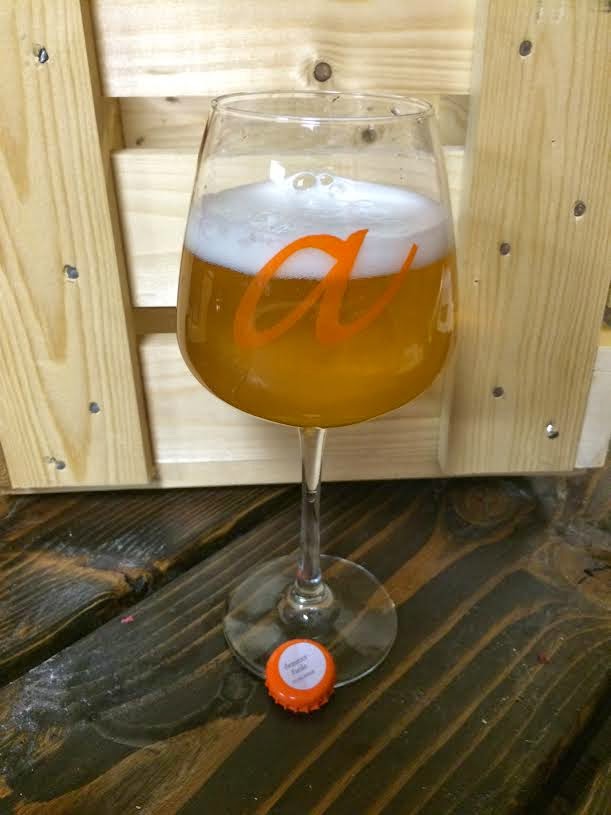
A word of caution.  Portions of like may seem like a bit of stream-of-consciousness rambling.  I think about saisons and future brewing plans constantly every day, so it's been hard to contain and edit my thoughts, though hopefully I haven't gone too overboard.  Since I feel like every good blog post should have a picture, below is one that seems appropriate.  It's a picture of one of my saisons in a glass with the future logo of Ambrosia Ales, sitting atop a table littered with coasters from many fantastic saison, lambic, and other wild beer producers.


GENERAL

Since the question always comes up, what is saison?  The following is simply my opinion; there are certainly many valid opinions, including Shaun Hill of Hill Farmstead recently indicating that the term shouldn't even be used by American brewers in this interview with Good Beer Hunting.  I take a very broad approach, using the label for any beer that is yeast-forward using a Belgian strain with or without Brettanomyces or lactic acid bacteria.  The only other requisite characteristic as far as I'm concerned is that the beer finishes quite dry.  From there, it doesn't matter to me whether the beer is light or dark; high or low ABV; or makes use of fruit, spices, or other adjuncts.  To differentiate, I will sometimes use "saison" to refer to beers that are clean and crisp, rendering them quite drinkable, whereas farmhouse is a term I use for beers that are more toward the pre-Industrial beers of Wallonia that would have been funky and/or sour.

As mentioned above, I typically gravitate toward saisons that utilize Brettanomyces, LAB, and/or other non-traditional (or traditional, depending on how far back you look) fermenters in addition to Saccharomyces.  Given that, most of this post will focus on beers along those lines, but I'll first provide some quick thoughts on "clean" saisons that are fermented solely with one ore more Saccharomyces strains.

I've long thought that if a brewery is going to offer something to introduce saison to a broader set of customers, something along the lines of a sub-5% ABV clean saison would be perfect.  When sticking with a beer fermented solely with a saison strain, the first question is whether you want to go with a beer that is phenolic and spicy, or tends toward the fruity side of things.  Comparing to other styles, I think you could go toward the spicy side to "replace" something like a pilsner.  You would want to keep the phenolics to a low level, complementing the dryness of the beer without being overpowering.  The drinker should smell and taste something beyond clean grain/malt, but without being able to specifically say what it is.  I've encountered this effect when introducing light-beer drinkers to something like Penrose Devoir or Stillwater Classique, both fantastic beers and excellent examples of what an approachable saison can be.  I would keep hops and malt relatively simple, focusing on the yeast without too many distractions.  I haven't truly brewed something like this, but plan to in the future, likely utilizing Wyeast 3726 (Farmhouse Ale), which is reportedly the Blaugies strain.  Another option would be using one of the abbey/Trappist strains, which are often used for Belgian Blondes, a style that can have considerable overlap with saisons, often times seeming to be one in the same.  For example, are the great beers from De La Senne (such as Taras Boulba) saisons, Belgian Blondes, or something else?  (Not that it truly matters what you call these beers; they're absolutely delightful no matter the terminology.)

On the fruity side, I think you can go a bit more complicated, as this would be less of your straight light-beer substitute, and be more comparable to something like an introductory American Pale Ale.  The idea here is that you'd have something with light-to-moderate bitterness (probably sub-30 IBU) and use the yeast and hops to accentuate citrus and/or tropical fruit notes.  In my experience, I've found that strains/blends like East Coast Yeast 08 Saison Brasserie can pair perfectly with flameout additions of American hops to offer an easy-drinking beer.  This is example what I did when I brewed my initial batch of Saison Faible (recipe; tasting notes), a beer I definitely intend to brew again in the future.  The aforementioned Apex Predator is a great example of a very fruit-forward clean saison.  While the comparison to an APA is further off than a lightly-phenolic strain to a light beer, it still offers consumers a starting point, drawing parallels to the fruitiness that American hops bring to pale ales, while taking things in a slightly-different direction.

INGREDIENTS

Yeast/Bacteria

First, and most importantly, the yeast and other fermenters.  Since saison is such a wide-ranging "style," a lot of your yeast decision depends on what you're looking for, as people certainly have different goals. If you're shooting for something that's more funky, spicy, and phenolic, I'd recommend just going with Saccharomyces in the primary, letting it get down quite low, and then adding dregs/Brett in secondary or at bottling. Nearly any saison strain should work for that, though as many others do, I would caution using Wyeast French Saison (3711) as it tends to get overly spicy and one dimensional.  It will get your beer dry, but doesn't offer the complexity of things like White Labs Saison II (WLP566) and Wyeast Farmhouse, which are both a bit more spicy rather than fruity.  However, many brewers do have success blending in a little bit of 3711 with a more-interesting saison strain, as it is a workhorse that will ensure the beer finishes dry no matter the recipe and fermentation temperature.

If you prefer saisons that are fruitier with some tartness, I'd go with something along the lines of The Yeast Bay Wallonian Farmhouse or ECY08 (Saison Blend). I would then also pitch this alongside a healthy dose of Brett that tends to be fruity-heavy in primary before it starts working on the Sacch.-created compounds. Here, best bets in my opinion are Brett Claussenii (WLP645) and "Brett" Trois (WLP644) (not really Brett).  I use both.  You could then also go with some fruitier American hops at flameout or for dry-hopping.  Think intense tropical- and citrus-forward hops, just only use a third or a half of what you'd use for a bigger IPA.

In terms of fermentation temperature, I've honestly had success anywhere from the low 60s to the upper 70s when going with a fruitier saison strain paired with Brett, with fermentations taking about 2 weeks at the upper end of the range, and more toward 4 weeks at the lower end. However, the flavor profiles aren't too noticeably different.  Thus, when using Brett, I think you can go with a more Laissez-faire attitude.  Results will likely differ, but that's part of the fun of brewing these beers.  Each batch is unique.  With that said, you can always achieve more-consistent results through blending.

Now, with regard to temperature, you need to be much more careful if you're going to be barrel-aging or using other methods of fermentation that may expose the fermentation to oxygen.  If this is the case, you need to ensure you keep temperatures down, as otherwise you run the risk of dealing with an acetobacter infection.  Saisons should be crisp and refreshing, and the vinegar produced by acetobacter completely destroys that possibility.  When dealing with strict Saccharomyces fermentations, also make sure to maintain temperature control and take detailed notes, as a clean saison fermented at 70*F will taste much different from one fermented at 80*F.  With clean fermentations, I also recommend starting in the upper 60s or maybe low 70s, and then let the yeast free rise or slowly push it upward into the upper 70s or 80s.  Going too quickly may result in fusel alcohols and other off flavors.

One final note on using bacteria (and this is more of a preference than a hard and fast rule), and that is to keep the bacteria in check.  Aside from avoiding vinegar, you also want lactic acid kept to a background note.  Saisons are great with a nice tartness, but should not be overly sour to the point where that is the dominant character of the beer.

Finally, as saison is a style that originated in the agricultural regions of Belgium, using locally-harvested yeast or that borrowed from nearby farms, catching your own wild yeast to use as a sole fermenter (if you're lucky) or, more likely as part of a blend offers great opportunities to add depth, nuance, and a distinct house character.  This has been done by breweries such as Jester King and Plan Bee.

Water


For the most part, when I've seen discussions surrounding water profiles for saisons, people tend to recommend high sulfate levels (often over 100 ppm) to accentuate the dryness of the beer.  I'd offer advice to the contrary.  Personally, I find that the very low finishing gravity (approaching 1.000) that can be achieved through proper fermentation procedure (especially when saison yeast is paired with Brett and/or LAB) achieves the requisite dryness.  Instead, I like to keep the sulfate at a moderate level and instead accentuate the malt flavor and give some perceived body through chloride and sodium additions.  I generally put the sodium levels right around 50 ppm, thereby accentuating the flavors of the beer without approaching any sort of actual salty flavor.  With chloride, I'll push toward 100 ppm, thereby providing some grain and malt flavor to complement what the yeast and hops are doing for the flavor profile.  This also protects against the beer seeming overly thin.


One minor caveat to my statement about sulfate additions is that I will push the levels to 100 ppm when I'm doing a very hoppy saison, e.g., my Wallonian Pale Ale.  Even here, however, I keep the sulfate at the same level as the chloride.

When dealing with mineral additions, and throughout the saison brew process, pH is also incredibly important.  First, since many saisons are using exclusively or nearly-exclusively Pilsner malt, you really need to make sure your mash pH is in order and doesn't get too high.  The ideal mash range is often given somewhere in the area of 5.2 to 5.5.  Personally, I like to keep it right at the bottom of that range for saisons, as the lower pH tends to soften the overall profile of the been, enhancing the overall perception and drinkability.  If you're adding your minerals to the mash rather than to the kettle, keep in mind what effect they'll have on pH, and then use either acid malt or lactic/phosphoric acid to adjust to the appropriate level.  Depending on your base water, malt profile, and mineral additions, the amount of acid malt that may be required could be enough to give a little bit of acidity to the finished beer.

If you're taking care to adjust the pH of your mash, make sure to pay attention to the pH of the sparge water as well.  It's important here to keep that pH low so as to not pull tannins from the mash as you sparge.  I typically just use lactic acid to adjust the sparge water to the same pH as I had the mash.

For all my pH adjustments (actually, for the entire recipe), I use the BrewCipher spreadsheet.  With regard to mineral additions, I generally add everything to the kettle so that I can use only acid to adjust mash and sparge pH.  I can then adjust mineral additions for flavor without worrying about their effect on mash pH.  Starting around a year ago, each recipe post on this blog details the mineral and acid additions, including timing and (sometimes) rationale.


Hops


Really, this is mostly going to be about personal preference.  The one "rule" I would have is that IBUs should be kept in check, as the dryness achieved by the extreme attentuation will enhance bitterness levels.  Thus, for a typical saison, I recommend sticking at 30 IBU or less, potentially then pushing things up to 50 or so IBUs if you're looking for a really hoppy saison akin to the Wallonian Pale Ale that I mentioned above.  Even then, I wouldn't go much higher as you'll be getting that dry, bitter profile and can then focus more on flavor and aroma hops so that the beer really pops.


From there, the hops you use will really depend on what your goal is.  If you're doing a clean saison that tends toward the phenolic/spicy side of the style, sticking with Noble and other European hops (and their American counterparts) is probably the best bet, keeping aroma and flavor additions to a minimal, and using minimal (if any) dry hops.  This same advice would like apply if you're using Brettanomyces to achieve a funky, earthy finishing profile.  On the other hand, if you're using a more-fruity, ester-heavy strain, then American and Southern Hemisphere hops work really well.  You can go with citrus-heavy or tropical hops, as both will play well with the fruity character created by something like The Yeast Bay Wallonian Farmhouse or East Coast Yeast Saison Brasserie.  These hops also work quite well when you add in a little bit of tartness through the addition of bacteria.


Grain


Malt might not be the least-important of the four main ingredients, but it's my least-favorite component, so it goes last.  In practice, there are so many different directions that you can go with the malt profile of a saison, so I really can't give too many broad generalizations.  I'll give a bit on my preferences and general techniques, offer a few pointers, and then discuss things to avoid because, in reality, by altering the water profile and fermentation of a given beer, you can turn almost any malt bill into a saison.  I say almost because caramel/Crystal malt has no place in a saison.  None.  (Okay, maybe a bit of CaraMunich for color, but I'd even discourage that.)  Other than that, let the experimentation begin.

Non-barley additions work fantastic in saisons, providing some additional mouthfeel and comlexity, particularly when you're dealing with a Pilsner base.  It's always nice to get at least 10-20% wheat, spelt, oats, rye, flaked corn, etc. in there for some additional mouthfeel.  One caution with rye is that it can get fairly spicy as you go above 10% of the grain bill, so be careful crossing that threshold if you're already using a yeast that's going to put out plenty of phenolics, as that may result in any overly-peppery, one-dimensional beer.

Aside form these adjuncts, using 5-20% of something like Munich or Vienna is nice as well if you want to have a bit more bready flavor than what you'd get using only Pilsner for your barley component of the mash. Higher than that and I think you get too much of a bready or doughy character that can begin to detract from the yeast.  Personally, I also like using 5-10% honey malt, as that adds a nice layer of flavor without detracting from other components of the beer.  (Of course, you can use actual honey, too.)

When dealing with a dark saison, I recommend against overly-roasty malts, as those will contrast with the flavors created by the yeast.  When going with a darker beer, I recommend using something like Carafa II or III for most of the color, and then accenting the beer with malts like Chocolate or Special B, if you're looking for chocolate or dark fruit character, respectively.  Again, I'd stay aware from any straight caramel/Crystal malts, as those add caramel-like sweetness that contrasts the dry nature of the beer, while Special B at least offers some dark fruit notes that can add a nice twist to a darker example of the style.  If you want to call me an idiot and say I'm way off base with the caramel/Crystal thoughts, just point me toward this interview with Alexandre Dumont de Chassart of Brasserie de Jandrain-Jandrenouille, one of Belgium's best saison producers, where he discusses using caramel malt in their beer V Cense.

Fruit, Spices, & Other Additions


Given that the idea behind saison really depends on dryness and being yeast-forward, there really isn't anything out of bounds here.  Cherries or other fruit?  Sure.  Citrus zest?  Most definitely.  Spicing to complement the yeast?  When used in moderation, absolutely.  Coffee in a dark saison?  Works as well.  Really, here, just let experimentation run wild.  Keep things to a minimum at the beginning, as you can always add more.


With fruit additions, I think that you want to be considerate of the underlying beer, so my rule is to cut the typical lambic level in half, starting at one pound per gallon for common fruits like cherries, raspberries, grapes, etc.  If you're going with some more exotic and pungent, e.g., passion fruit or pineapple, think about cutting that down to half a pound per gallon or less.  You want the fruit to complement the yeast profile of the beer.  If you're just going to have the fruit dominate, you might as well just brew a clean ale and add all the fruit to that beer.

Since there's such a wide range of possibilities here, instead of going through everything, I'll offer a few examples of my own recipes that use fruit and/or spices:

As you can see, I've tended to use fruit more often than spices, but there are plenty of commercial examples using nearly anything you can imagine.  Some things I'd like to work with in the future include grains of paradise, grapefruit zest, rhubarb, yuzu, sumac, wine grapes, hibiscus, lilac, tea, and plenty of oak cubes soaked in different wines/spirits.

PROCESS

Some of these things I've gone over above, but here's more of an overview of how process might differ from a typical ale.  Again, first and foremost, temperature and pH are going to be key throughout the saison brew and fermentation process.  If you want to achieve the requisite saison yeast character and mouthfeel, these are two most-focus variables.

A few other things you may want to consider:
  • If you want the resulting beer to be more ester heavy, go with a little bit less oxygen.  I use 30 seconds of pure O2 through a diffusion stone per 5 gallons, as opposed to the general recommendation of 45-60 seconds for an ale of standard strength in the range of 1.040 to 1.050.  (Remember, many saisons will ferment down to near 1.000, so the alcohol will build up fast compared to a beer that finishes at 1.010-1.015.)
  • If you're looking for more acidity and/or funk, starting out (and also to shorten the timeline), I recommend doing a cleaner saison with just Sacch. and Brett, and then always keep on hand some base blonde wild for blending (even half a gallon of that in 5 gallons of beer without lactic acid will make a noticeable difference).  For ideas and notes on blending, see my post (and accompanying links) on my Science & Art series of blended saisons and wilds.
  • I always use double the recommended rate of yeast nutrient per the recommendation in Farmhouse Ales. I don't know if it really makes a difference, but it's not hurting anything and the stuff isn't expensive.
  • If you're messing with water profiles, a lot of people recommend heavier sulfate additions in saisons. Again, I really don't like this. The finishing gravity is low enough to make it dry, and 25-30 IBUs will give it a nice bitter edge. I favor keeping chloride and sulfate roughly the same, aiming for no higher than 75-100 ppm.
  • If you're dealing with pH, keeping the mash pH down in the range of 5.2-5.4 (room temperature) really helps smooth things out.  There's a very-detailed discussion at this Braukaiser page.
  • For mash temperature, you really can't go wrong.  Different temperatures will yield different results, but if you know your fermenters, you'll be able to get the beer sufficiently dry.  For a clean saison, I like something that finishes fast and dry, and would recommend staying under 150* F.  For something with Brett or bacteria, push that number up for increased funk and acidity levels.  The higher you go, the more you'll allow the non-Saccharomyces fermenters to do the work, though saison strains can tackle plenty of complex sugars all on their own.

CONCLUSION

Saison has become such a wide-ranging idea that it's really difficult to place in a neat box.  Here, I've only scratched the surface with what you can do.  For instance, I haven't tackled thoughts on barrel-aging (yet).  If nothing else, hopefully this post has served to pique people's interest in brewing dry, refreshing beers with a Belgian influence.  There are many other great resources out there.  If you're interested in learning more about the subject, I can't recommend Phil Markowski's Farmhouse Ales enough.  In particular, the essay on saison from Yvan de Baets (of the aforementioned De La Senne) is phenomenal.  

Any thoughts, questions, or concerns?  Did I leave anything out?  I'm always up for saison discussion, so please comment away!  In the future, I hope to have a post or set of posts highlighting the different characteristics of most of the available commercial saison strains and blends, pairing plenty of them with different Brettanomyces offerings and/or lactic acid bacteria.  I also plan to do a post on what I believe the ideal saison-focused brewery would offer and how it would operate, as it's something I've put a lot of thought into and would like to attempt in the not-so-distant future.

Cheers!

Friday, November 14, 2014

Demeter Sinis (Batch 03): Recipe

This was my third time brewing Demeter Sinis, the winter seasonal in the Demeter series.  As I have been pretty happy with it since the first batch, I didn't really change anything up here.  I'm also pretty excited as it has been a long time since I've had "straight" Demeter Sinis available.  This is due to the fact that last year's Batch 02 was all fruited, with the pomegranate portion getting kegged and the cranberry portion was bottled.  Thankfully I do still have a few bottles of the latter.  

As I've cleaned up my temperature control equipment for the season making way for a steep drop-off in brewing over the next few months (twin boys coming soon to the Thorpe family!), I decided to just ferment this one at room temperature.  In my experience, I've gotten yeast-driven character that's pretty similar no matter the temperature I use with my current yeast/Brett blend, it just takes a bit longer when fermenting in the 65-70*F range as opposed to the 75-80*F range.  I really do need to do some actual split-batch experiments with temperature next year though.

The recipe for the full batch is as follows:

Batch Number: 96
Brew Date: October 4, 2014
Bottle Date: November 2, 2014
Batch Size: 10 gallons
OG: 1.045 (estimated)
FG: 1.002 (estimated)
Fermentation Temperature: 65-70* F (room temperature)
IBU: 27.0
ABV: 5.5% (est.)
SRM: 17

Mash: Single infusion for 60 minutes at 154* F.
Boil: 60 minute

Fermentables

7lb 8oz Belgian Pilsner
4lb 0oz Wheat Malt
4lb 0oz Wheat, Flaked
1lb 0oz Acid Malt
0lb 12oz Rye Malt
0lb 8oz Oats
0lb 8oz CaraMunich
0lb 8oz Carafa II
0lb 4oz Chocolate Malt

Salts & Water

5.5g Calcium Chloride (all added directly to the kettle)
4.3g Gypsum (all added directly to the kettle)
6.1g Sodium Chloride (all added directly to the kettle)

All of the salts are added directly to the kettle to achieve the ultimate water profile that I am looking for. Acid malt is being used to get the mash pH almost to where I wanted it.  I also added 4mL of lactic acid to the mash.

Resulting water profile (based on EZ Water Calculator v3) is as follows:

Mash pH (est.): 5.21
Calcium: 78
Magnesium: 12
Sodium: 50
Chloride: 127
Sulfate: 70

I also added 5.5mL of lactic acid to the sparge water to get the pH of that liquor to 5.2.

Hops

1.0oz Nugget (pellet, 13.3 AAU) at 60 minutes
1.0oz Willamette (leaf, 7.5 AAU) at flameout

Other

2.0 tsp. Wyeast Yeast Nutrient at 10 minutes
6.0g Lavender, dried, at flameout*
1.0g Black Cardamom, at flameout

Yeast

Full batch used Ambrosia Blend 005 (now the seventh generation) from the cake of an September 27, 2014 batch of Demeter Facile.  Per yeast calculator.com, I needed 160 billion cells for the entire batch.  At 40-60% solids, this would mean 250mL for the whole batch.  I went with 500mL, as I was pulling from a wine thief and didn't have the best vie, and I'd rather overpitch than underpitch, and didn't have time to let everything settle out before measuring.

Notes

11.02.2014: Bottled around 9 gallons, aiming for 3.0 volumes of CO2 based on the tastybrew.com priming calculator.

Sunday, November 9, 2014

Demeter Automne: Tasting Notes

After about two months in the bottle, it's about time to write out some tasting notes for this batch, which is my first time brewing Demeter Automne, a fall saison (recipe).  I'll say that early on, I thought the finish was too biscuit-heavy, but that character has certainly died down over the past month, and is now just about where I want it.  


Appearance: Medium to dark amber with a puffy light tan lasting head.  Fairly clear.

Nose: Toasty biscuit alongside faint pumpkin spice.  Earthy and leafy.  I think the combination of light spicing and Willamette at flameout got me what I was looking for -- something that isn't too heavy in any one direction, but is instead just reminiscent of fall.

Taste: Earth and toast with a bit of fall spice.  Nothing stands out too much.  Some pumpkin in the background as it warms.  I'm glad that I used fresh-roasted (then frozen) pumpkin in this recipe, as I think the squash flavor does actually come through.  Some light funk on the backend, alongside a faint acidity.

Mouthfeel: Dry finish, though the body itself isn't too light.  Carbonation just where I want it for a darker saison.  Easy drinking without any one element becoming too dominant.  Light tartness through the finish.

Overall: For a first attempt, I'm quite happy with this one.  I'm not sure there's anything that I would change up too much.  Next year, I think I may increase the Willamette addition at flameout just a bit, adding a bit more of the leafy/earthy character that I really like in this beer.  As mentioned above, at first I thought the biscuit malt was too much, but I think after a month of being fully-carbonated, that character is just about where I want it.  

Now that I have the base recipe down, I think I'll likely do a few batches of this next year, as I'd like to try a few "barrel-aged" variants.  I'm most interested in trying a version with wine-soaked oak cubes, and then another version with brandy-soaked oak cubes.

Thursday, October 23, 2014

Demeter Facile: Recipe

With this beer being my sixth time using Ambrosia Blend 005 to ferment, I wanted to try something very neutral in order to really pick out the yeast and bacteria profile that I have going.  This meant brewing a beer with a fairly-simple blonde malt profile, keeping the hops in check, and not using any spices or fruit.  Based on this process, I decided to go with "Facile" (French for "simple") as the name for this beer in the Demeter series.  For those who haven't been reading for too long, the Demeter series is a line of saisons using Brettanomyces and/or lactic acid bacteria, and have up until this point contained some sorts of fruit or spicing.  The name of the series comes from Greek mythology, where Demeter is the goddess of the harvest.

With the simple base beer, I'm hoping to be able to pull out fruity aspects that are coming from the yeast and bacteria blend, perhaps with a little bit of spice as well.  While I do appreciate saisons that tend toward the phenolic side, I vastly prefer to brew (and drink) saisons that focus on fruity esters.  I've generally picked out a lot of tropical fruit and citrus notes so far when using Ambrosia Blend 005 to ferment, though I've never been sure how much of that was due to hops and other aroma/flavoring agents I've added to those beers.  Here I use a bit of Centennial for some hop character, but by no means an excessive amount (1.5 ounces per 5 gallons).  For the grist, I used mostly pilsner, adding in some Munich, honey malt, spelt, and wheat to give a little extra flavor and up the mouthfeel a bit.

Here are the full details on the batch:

Batch Number: 95

Brew Date: September 27, 2014
Bottle Date: October 25, 2014
Batch Size: 10 Gallon
OG: 1.044 (est.)

FG: 1.002 (est.)
Fermentation Temperature: ~65*F.  (This is being fermented in the unfinished portion of our basement, which generally hovers in this area, staying warm throughout the winter as the boiler is located in the corner.)
IBU: 29.0 (modified Tinseth from BrewCipher)
ABV: 5.7%
SRM: 5.0

Mash: Single infusion for 60 minutes at 152* F
Boil: 60 minute

Fermentables

14.0 lb Pilsner Malt
1.50 lb Raw Spelt
1.00 lb Flaked Wheat
1.00 lb Munich Malt
1.00 lb Honey Malt

Salts & Water

All salts added to the kettle. Also added 14mL of lactic acid to the mash to get the pH to around 5.24.

5.2g Calcium Chloride
4.3g Gypsum
6.1g Sodium Chloride

Resulting water profile is as follows:

Mash pH (est.): 5.24 (BrewCipher estimate)
Calcium: 77
Magnesium: 12
Sodium: 50
Chloride: 125
Sulfate: 70

Hops

1.5 oz Centennial (8.7 AAU), pellet, at 60 minutes
3.0 oz Centennial (8.7 AAU), pellet, at flameout

Other

2.0 tsp. Wyeast Yeast Nutrient at 10 minutes

Yeast

Full batch used Ambrosia Blend 005 (now the sixth generation) from the cake of  an August 23, 2014 batch of Wallonian Pale Ale.  Each 5-gallon portion got approximately 125mL of dense slurry from that cake.  (Estimate based on 73% viability calculated at yeastcalculator.com.)  

Notes

I'm planning to take a portion of this batch and transfer on top of the spent fruit from two other batches that I currently have going.  The first is a Flanders Red that has been sitting on black raspberries that Amy and I picked in Michigan this summer, and the second is a version of Citrine that has been sitting on whole Montmorency cherries that Amy and I picked up at that same farm.  I stole this idea from Jester King, which uses this method with raspberries (La Vie en Rose) (process) and cherries (Detritivore) (process).

11.01.2014: I ended up not using a portion of this batch on the spent fruit, as the black raspberries had completely come apart, and were creating problems when I tried to bottle Amethyst.  Given that, I'll have to try the "second use" idea next year.  Instead of fruiting the second half of this batch, I blended it with some Citrine to create Science & Art #7.

For the first bucket, which stayed as straight Demeter Facile, I had around 4.5 gallons, so I used 130g of sugar, targeting 3.0 volumes of CO2.  For Science & Art #7, I combined 5 gallons of Demeter Facile and 1 gallon of Citrine, and added 175g of sugar, aiming for 3.0 volumes.

01.27.2015: Tasting notes.

Friday, September 26, 2014

Science & Art Series

This post will serve as a repository for recipes and tastings notes of the beers in my Science & Art series.  The series is a line of blended saisons, often also incorporating portions of wild ales that I have brewed.  It's amazing what just 10% blonde sour will do to a beer that was otherwise only saison yeast and Brettanomyces.  With the name, I wanted something that I could keep around for awhile, as with these blends, I thought it would be easier to go with a standard name followed by numbers or years, such as Lost Abbey Veritas, Hill Farmstead Civil Disobedience, and Cantillon Zwanze. Given that these beers will be blends of wilds and saisons, I thought "Science & Art" would be appropriate. One of the things I love about brewing, and particularly about saisons, is that there is so much room for creativity. However, at the same time, there's still the base science behind beer making and, most importantly for my purposes, fermentation.

Each beer in the Science & Art series is meant to be a concept, such that I will attempt to blend beers to achieve the same results on multiple occasions.  For example, I have already blended two separate iterations of Science & Art #1 and Science & Art #3.  

Photo of Science & Art #2

Science & Art #1
  • A blend of Farmhouse Mild and Citrine at a ratio of 85-90% to 10-15%.  The resulting blend is extremely fruity, lightly acidic, and finishes very dry and clean.  
  • Batches:
    • 01: Tasting and blending notes can be found here.  Original blend was on October 6, 2013.
    • 02: The second blend was done in mid-March 2014, with the entire batch being legged.
Science & Art #2
  • A blend of Dionysus #2, a blonde saison with white wine-soaked oak cubes, and Citrine.  Mildly fruit with some tropical and stone fruit notes, with underlying citrus and faint acidity.
  • Batches:
Science & Art #3
  • A blend of Farmhouse Mild, Citrine, Dionysus #2, and Demeter Passion.  Pungent and fruity with passion fruit along with peach, orange, light oak, and hints of white wine.  Very dry with a nice tartness through the finish.
  • Batches:
    • 01: Tasting and blending notes can be found here.  The original blend was on June 4, 2014, and the entire batch was kegged.  However, I did bottle some for the TalkBeer Saison Homebrew Competition.  The beer won the competition with an average score of 39.36. The competition judges were pretty harsh (I know I was), as second place came in at 34.54, with third averaging 33.00.
    • 02: This was blended and bottled on July 28, 2014.  This blend left out Dionysus #2, as I only had one bottle left.  Based on initial tastes, blend 01 was much better, with the oak from Dionysus #2 really upping the complexity.
Science & Art #4
  • A blend of Demeter Vert, Namur (Meyer Lemon), and Flowerfield.  The beer is delicate with a bit more body than previous blends.  The Nelson from Flowerfield comes through well underneath the citrus coming out of the Demeter Vert and Namur (Meyer Lemon).  The lemon has a stronger presence, but is nowhere near dominating like in that version of Namur.  I've had a few people taste the blend without telling them what's in it, and most have just said "citrus" without specifically identifying lemon or lime.
  • Batches:
    • 01: Blended and bottled on July 28, 2014.  Full blending and tasting notes can be found here.
Science & Art #5
  • The first dark beer in the series.  A blend of Demeter Rouge (cherries and passion fruit), Demeter Sinis (Cranberry), and two different batches of Ruby.  The beer is dark and fruity with cherry, red wine, and dark fruits.  Moderately acidic, though still not entirely "sour."
  • Batches:
    • 01: Blended and bottled on July 28, 2014.  Full blend and tasting notes can be found here.
Science & Art #6
  • An idea that came from the fact that I brewed 10 gallons of Demeter Automne for fall 2014.  Instead of bottling all of that, I decided to also go with a new addition to the Science & Art series.  For this, I took about 90% Demeter Automne and blended in 10% Citrine, and then bottle conditioned the blend with Montmorency tart cherry juice.  The resulting beer has cherry in the nose, with the flavor being more earthy and lightly spicy, with some background notes of biscuit.  A bit leafy.  Cherry comes through in the finish with a light acidity.  Very reminiscent of fall, at least in my opinion.  A great bonfire beer.
  • Batches:
    • 01: Blended and bottled on September 1, 2014.  Full blend and tasting notes can be found here.
Science & Art &7

  • This is a blend of Demeter Facile, a blonde Brett saison, and Citrine.  I had originally planned to use the second half of the 10-gallon batch of Demeter Facile to add to the "spent" fruit from batches of cherry and black-raspberry wild ales, but had some issues on bottling day, so decided to go with this blend instead.  The blend was 5 gallons of Demeter Facile and 1 gallon of Citrine.
    • 01: Blended and bottled on November 1, 2014.  Full blend and tasting notes can be found here.