Showing posts with label Science & Art. Show all posts

Monday, February 9, 2015

Science & Art #7: Blend & Tasting Notes

Where Science & Art #5 and Science & Art #6 drifted in new directions for the series by being most a blend of dark sours (#5) and bottle conditioned with fruit juice (#6), Science & Art #7 goes right back to where the series started, utilizing only two components.  Similar to what was done with Science & Art #1 and Science & Art #2, this blend takes a blonde Brett saison and marries it to Citrine, creating a fruity, tart, and slightly-funky offering.  In this case, heavy emphasis on fruity given that the blonde saison base for this iteration in the series, Demeter Facile (recipe; tasting notes), is one of the fruitiest beers I've brewed to date, even though it had no actual fruit additions.

The process to this blend wasn't terribly complicated, as I had an extra fermenting bucket full of Demeter Facile as well as several carboys of fermenting Citrine (my house blonde wild) to pick from.    In this case, I selected a batch of Citrine (dreg blend version) that was mildly funky and tart, but had a nice lemon and pineapple character, as I thought that would pair quite well with the orange, lemon, and tropical fruit character coming out of the Demeter Facile.  I was aiming for something that would be dry and lightly-acidic and would be popping with fruit character, even though it would contain almost no residual sweetness.

For this blend, the final ratio was 5 gallons of Demeter Facile and 1 gallon of Citrine.  To accomplish this, I transferred the Demeter Facile to a bottling bucket, and then used an auto-siphon to rack the 1 gallon of Citrine into the bucket, keeping the tubing inside of the Facile that was already transferred.  I flushed the bucket with CO2 prior to adding the Facile, and also added a blanket of CO2 on top of the Facile prior to adding the Citrine.  I also purged the auto-siphon with CO2.  All of this was certainly overkill, as the beer was set to condition with Brett, which would pull out any oxygen pickup quite quickly.  

I then added the priming sugar, aiming for 3 volumes, and carefully mixed that in.  This was a little bit lower than my typical blonde saisons, but given the fruity profile I was going for, I knew it wouldn't be as crisp as many blonde saisons that I've done, and I wanted the carbonation to be a little bit lighter so that it would linger on the palate a bit longer.
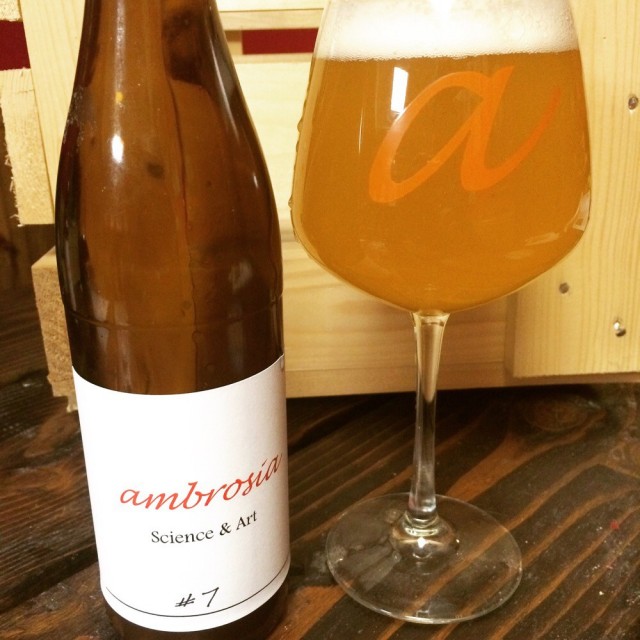


Appearance: Slightly-hazy light orange color with a big, fluffy head that lingers for quite a long time, leaving plenty of lacing on the glass on the way down.

Nose: Orange and lemon with a bit of pineapple and other tropical fruit. Light grass and a bit of wheat. Excessively fruity, just as I was hoping for. As with Demeter Facile, this beer is quite reminiscent of SweeTarts up front.

Flavor: Loads of fruit with oranges, lemon, pineapple, and guava. Moderate tartness. Just a bit of chewy wheat on the backend. Subtle funk coming from the Citrine, but the Facile really dominates here. Almost the same flavor and tartness that you'd get from a "tropical"-flavored candy or ice cream.

Mouthfeel: Light-medium body with plus carbonation and a light acidity through the finish. Super fruity and tart throughout. Great body with ample carbonation; never seems too thin. 

Overall: The Citrine didn't add too much, but I think it rounds the beer out nicely. This is just over-the-top fruity and reminds me a bit of some Fantome beers I've had (minus the peach), as well as some aged Sanctification. Not saying this is in the same league as those beers, but this definitely has similar qualities. I will definitely make this again, and as with many beers, will experiment with conditioning this with honey or fruit juice. I'd really enjoy seeing what would happen if I conditioned this with something like passion fruit, apricot, or mango juice. Maybe juice from some of the lemon guavas that I'm so fond of.

Wednesday, February 4, 2015

Science & Art #6: Blend & Tasting Notes

Science & Art #6 was a first in the series in that in addition to blending several beers, I also blended in fruit juice to add the sugar necessary to bottle condition the batch.  To start, I had plenty of Demeter Automne (recipe; tasting notes), as that was a 10-gallon batch and I didn't really need 10 gallons of funky pumpkin saison to get me through the fall season, so I knew that  wanted to do something interesting with the second half of the batch.  I considered adding red wine-soaked oak cubes or blending in some dry commercial French (or French-style) cidre such as Etienne Dupont Cidre Bouché or Virtue Percheron.  

Ultimately, when I found tart cherry juice without any preservatives at a local specialty foods shop, I decided to blend that in and use its sugars for conditioning, as that has been something I have wanted to try.  It's a nice twist on conditioning with honey, and Logsdon Farmhouse Ales has done a great job with this method, conditioning its beers (mainly saisons, including the outstanding Seizoen Bretta) with pear juice.

Once I knew what I was working with, I decided which batch of Citrine I would use to blend with the Demeter Automne.  I ultimately, selected a batch of Citrine that was fermented with East Coast Yeast 20 (Bug County), as that wasn't too acidic and added a nice, subtle fruitiness and mild funk that I thought would complement both the Demeter Automne and the cherry juice.  At the point of blending (September 2014), the Citrine was about nine months old.  The final blend ratio was 3.75 gallons of Demeter Automne, 1 gallon of Citrine, and 45 ounces of Montmorency tart cherry juice.  Based on my calculations, the sugars in the juice used should create about 3 volumes of CO2, toward the low end of where I like my saisons, but I generally go around there for darker saisons.  The total yield was 39 375mL bottles and 6 750ml bottles.

In order to determine the amount of cherry juice that I needed to use, I first used a priming calculator to figure out how much sugar I would need in grams.  Since the sugars in the cherry juice should be 100% fermentable, I could then figure out how many grams of sugar I would need from the juice.  From there, since the nutrition label would tell me how many ounces of juice I would need to use to reach the right number of grams of sugar.  Regrettably, I didn't write down the exact numbers.

However, as an example, assume that the priming calculator told me that for 4.75 gallons of beer, I would need 100 grams of sugar.  Then, I look to the nutrition label and see that one serving of cherry juice is 8 fluid ounces and each serving contains 20 grams of sugar.  That would then tell me that I would need 5 servings of juice to get to 100 grams of sugar.  Multiple 5 servings by the serving size of 8, and I'd be using 40 fluid ounces of juice in that scenario.

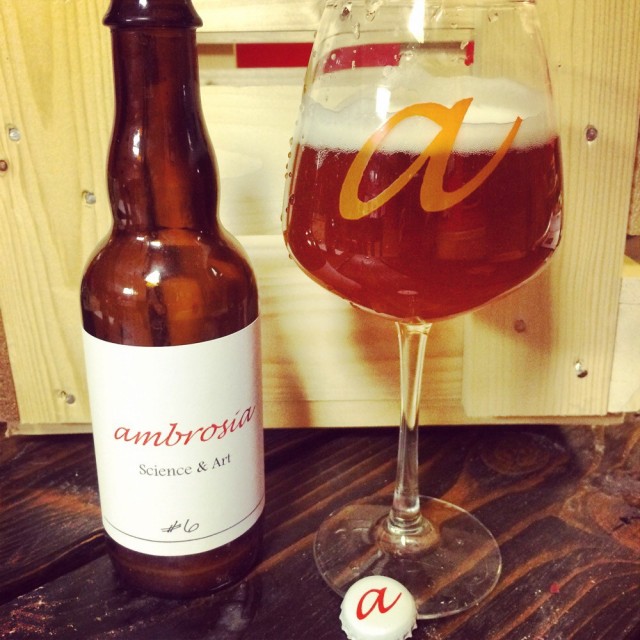
A picture and full tastings notes are below.  At this point, the beer is around 4.5 months old.


Appearance: Light mahogany color with an eggshell-white head that's fairly long-lasting. Plenty of visible active carbonation. Quite clear.

Nose: Bright, fresh tart cherry with backing earth and mild funk. Just a touch of background clove, maybe a hint of cinnamon. A bit of the biscuit character of the base beer as it warms.

Flavor: Cherry pie with a light acidity. Earthy with a bit of pie crust and biscuit. Slight spice and fall notes without being too far in any one direction.  A bit leafy through the finish.

Mouthfeel: Very dry finish, though a bit chewy initially. Acidity is above a tartness, but not at all to the level where I'd consider it too acidic or even distracting.  It very much reminds me of a tart cherry as opposed to any specific lactic or acetic character.  Moderate to high carbonation, just about where I want it.  The cherry character lingers through the finish.

Overall: I quite like this beer.  I like the base beer of Demeter Automne well enough, but this is much, much better.  It's amazing how much just enough cherry juice to bottle condition really changed this beer alongside the Citrine addition.  I would like to try again next year and also use some fresh-pressed juice from cider apples, but this one will definitely stay in the repertoire and hopefully be a future seasonal once we open Ambrosia.

Thursday, November 20, 2014

Science & Art #5: Blend & Tasting Notes


With Science & Art #4 being unique as the first in the series that didn't use Citrine, this one is unique in that it is the first dark blend. It's also the beer blend that uses something other than different saisons as a sizable portion of the blend, with a Flanders-style wild being the largest component of the blend. In the end, this one ended up being 50% Flanders-style wild and 50% dark saison. The Flanders-style component is made up of two batches of Ruby (Batch 02 (recipe lost due to a computer issue, unfortunately) and Batch 03), and the saison component is made up of Demeter Rouge and Demeter Sinis (Cranberry). The final blend was as follows:

  • 2 gallons of Ruby (Batch 03) 
  • 2 gallons of Demeter Rouge 
  • 0.5 gallons of Ruby (Batch 02) 
  • 0.5 gallons of Demeter Sinis (Cranberry) 

Overall, I think this blend really captured what I was looking for, which was to take the fruitiness of Demeter Rouge, but cut back on the acidity created by the passion fruit. Oddly enough, this was accomplished by cutting the beer with a sour Flanders-style base, albeit versions of that beer that were more funky than acidic, particularly given the age of the "young" Ruby that was used. The Demeter Sinis (Cranberry) added a nice bit of cranberry alongside some earthy, spicy notes from the black cardamom and lavender used in that beer. Finally, the Ruby additions allowed some mild funk along with notes of strawberry, raspberry, and general jam character, which is something I've had in my recent dark wild beers, particularly Biere de Nord (which I actually thought about using a bit of in this blend, but determined it wasn't necessary).

In terms of process, the Demeter Rouge, Ruby (Batch 02), and Demeter Sinis (Cranberry) were all already carbonated, so I had to be careful on that front. The Demeter Rouge was carbonated to around 2.0 volumes in a keg, and the latter two had already been bottle conditioned and were probably around 2.5 and 3.0 volumes, respectively. Given this, I opted to only aim for 2.0 volumes when using the priming calculator, assuming that this would eventually get me somewhere in the 2.5-3.0 volume range. 

In the future, once I hopefully open up a small brewery and have my own little barrel room, I'll be able to blend components without worrying about needing to pull from previously-bottled batches. One thing I'm planning on doing in the future to have more for blending is to take a half gallon or gallon of each batch and let it continue to age in a growler or gallon jug. That way, I can have uncarbonated beer for blending, and also add wine- or spirit-soaked oak cubes to portions of a batch for greater complexity. I've done smaller portions with oak cubes in the past, but never with the general intention of saving that beer for blending.

With that, the full tasting notes for this blend are below. Follow additional views on this beer, take a look at its page on Untappd.


Appearance: Deep mahogany with an even stronger reddish hue under bright light. Head fizzes up light brown, a bit darker and thicker than with cola. Could go for better retention and stability, though it's not too bad considering that a decent chunk of this beer is Flanders-style wild.

Aroma: Initial nose is quite fruity with cranberry and cherry leading the way. A hint of orange zest alongside faint coffee and chocolate notes. A touch of roasted malt and hints of cardamom. Lactic acidity in the back along with a touch of earthy funk. There's a general fruity, berry-jam character to it as well, which I attribute to the Ruby variations included in the blend. Strawberries and raspberries more and more as it warms. Just a hint of tropical fruit. The cranberry, of course is from the cranberry version of Demeter Sinis, and the cherry comes from the Demeter Rouge. The passion fruit in the Demeter Rouge is only there in faint tropical notes. 

Flavor: The tropical character comes through plenty more in the flavor, along with more noticeable acidity. Cherry, cranberry, and jam there as well. A bit of earth and funk, though that's relatively minor. Hints of red wine.

Mouthfeel: Medium-light and moderately acidic. Carbonation moderate as well, hitting about where I wanted it to be. It's elevated over typical clean ale levels, but not nearly high enough to be at saison level. The beer is a bit light, and could use some extra body. It would have been great to have been able to put this in a red wine barrel, picking up some oak character, tannin, and body.

Overall: I'm quite happy with this blend. Other than the aforementioned lack in body, there isn't too much that I would change here. I think this one definitely accomplished the foremost blending goal of creating something more interesting and enjoyable than any individual component.

Sunday, November 16, 2014

Science & Art #4: Blend & Tasting Notes

This is my fourth blend in the Science & Art Series, a group of blended saisons and wild ales. The components of this blend were Demeter Vert, Namur (Meyer Lemon), and Flowerfield. The idea behind blending is to create something that's better than the sum of its parts. Here, I had three beers that ranged from okay to quite good, with each one either having something that I didn't quite like (Namur and Flowerfield), or that were almost there, but could use an extra boost (Demeter Vert).

Demeter Vert was going to be the star of the show, as the lime saison base was something that I really enjoyed. I've been tweaking the recipe for that one across batches and think that I have most things generally dialed in, but this batch was lacking a bit of extra oomph. I think this is due to the fact that this beer was my first time using my yeast/bacteria Blend 05, and the Brett and bacteria weren't a big enough portion of the blend. Based on that, I was looking for something that could give this base a bit more flair.

For each of the previous versions of Science & Art, Citrine -- which is my house blonde wild -- had been a component of the blend, adding some acidity and fund. In this case, I was looking for something that was clean and not really funky, though I was hoping for a bit of acid to boost the overall flavor profile. My first thought was Namur (Meyer Lemon), which was just far too lemony. That beer was my first time using Meyer Lemon (or any type of lemon, for that matter) in a beer, and it was far too much. I was a bit surprised by this, as the use was generally in line with other citrus beers that I've done (Demeter Auran, the above-discussed Demeter Vert, and a few others), and those generally have hints of citrus without being too overpowering.

The lemon juice that was used alongside the zest in that batch of Namur created a good amount of acidity, and the beer itself was very clean and not at all funky, so after a few quick small-scale blends with Demeter Vert, I knew that I'd like to add that to the blend. That blend was still a bit citrus-heavy (though not obviously heavy on either lemon or lime), so I looked for something else to add in.

The perfect answer was a bit of Flowerfield, which is a collaboration that I did with Matt over at Stickman Brewing (he runs A Ph.D in Beer) over Memorial Day weekend 2014. We brewed that as a blonde Brett saison with Nelson Sauvin. To ferment that batch, I used the Yeast Bay Saison/Brettanomyces Blend and I wasn't a huge fan of the profile. There was something in the finish that was slightly acidic and just didn't quite agree with my palate, though others enjoyed it. (Matt, for one, agreed with me.) There wasn't anything wrong with the beer, so I didn't want to get rid of it, but I though blending would be a good option for some of what was remaining in the keg.

After messing around with the ratio of the three beers using a pipette and sample glasses, I settled on a blend that was four parts Demeter Vert, one part Meyer Lemon Namur, and one part Flowerfield. From there, I transferred into a bottling bucket, mixed in the priming sugar, and bottled. Since the Flowerfield portion was already kegged and carbonated and the Meyer Lemon Namur was in bottles, I needed to reduce the sugar so that I didn't get too far over my goal of 3.0 volumes of CO2. (Since the Namur was in bottles, I added that portion last, slowly pouring from chilled bottles into the bottling bucket with the neck submersed in the liquid in the bucket.) Given this, I decided to put the target at 2.2 volumes (almost purely guesswork) in the priming calculator, and then used that as my sugar level for bottling.

And now for the tasting notes, which are coming around 3.5 months after I bottled up the blend.  For tasting notes from others, you can follow the beer here on Untappd.


Appearance: Clear, bright light yellow with a fluffy white head. Good retention and plenty of lacing as it went down. Visible carbonation bubbles rising through the liquid. Has just about all it needs for a saison. I generally don't pay too much attention to whether my saisons are clear or hazy so long as they have a nice head of foam and good retention, as hazy beers seem a bit more rustic, which is something I don't mind at all when dealing with saisons with Brett and/or lactic acid bacteria (LAB).

Aroma The citrus citrus isn't too strong in the nose, and is mostly generic but tending a bit more toward the lemon. Lime there as well. I'm glad that most people haven't been able to pick out the exact citrus, as one of my goals here was to really knock down the lemon of the Namur variant, while preserving the lime from Demeter Vert. At this point, I think I was pretty successful there, likely only picking out the distinct citrus fruits as I know what went into the beer. As it warms, there is also a bit of an almost honey-like character, mixing with a bit of apricot. Maybe a bit of green grape there as well, which could be coming from the Nelson Sauvin that was used fairly heavily in Flowerfield.

Flavor: Lightly tart with just a hint of backing grain. Very clean without any funk, focusing in on the light acidity and citrus character. Maybe a bit simple, but I wasn't looking for this to be an overly-complex beer. The citrus character is just about where I want it, with some Brett-induced fruitiness in the background. The light acidity comes from the citrus, as well as from whatever lactic acid bacteria are now in this fermenting blend. (I typically use buckets that I use a carboy brush to clean, so there are plenty of scratches for LAB from dreg batches to take hold.)

Mouthfeel: Again, quite light, and also extremely crisp. The carbonation is high without gushing or being too bubbly. Clean finish, not much lingering taste. This would be a great beer for the summer, though I'm not sure I'll have much, if any, last until then. The Yeast Bay Wallonian Farmhouse is the base yeast for the fermentation blend of Demeter Vert, and I think it contributes a nice bit of body in beers that are otherwise bone dry. That's certainly apparent here. The water profiles of the base beers also likely contribute to this, as I tend to go relatively heavy on the chloride for saisons, where it seems like many other saisons are too sulfate heavy for my tastes. 

Overall: I'd describe this as simple, but elegant. Really easy drinking and is something that I'll try to re-create in the future, potentially all in the same beer by using the base for Demeter Vert and then adding in just a touch of Meyer Lemon and also maybe dry hop with some Nelson.

Friday, September 26, 2014

Science & Art Series

This post will serve as a repository for recipes and tastings notes of the beers in my Science & Art series.  The series is a line of blended saisons, often also incorporating portions of wild ales that I have brewed.  It's amazing what just 10% blonde sour will do to a beer that was otherwise only saison yeast and Brettanomyces.  With the name, I wanted something that I could keep around for awhile, as with these blends, I thought it would be easier to go with a standard name followed by numbers or years, such as Lost Abbey Veritas, Hill Farmstead Civil Disobedience, and Cantillon Zwanze. Given that these beers will be blends of wilds and saisons, I thought "Science & Art" would be appropriate. One of the things I love about brewing, and particularly about saisons, is that there is so much room for creativity. However, at the same time, there's still the base science behind beer making and, most importantly for my purposes, fermentation.

Each beer in the Science & Art series is meant to be a concept, such that I will attempt to blend beers to achieve the same results on multiple occasions.  For example, I have already blended two separate iterations of Science & Art #1 and Science & Art #3.  

Photo of Science & Art #2

Science & Art #1
  • A blend of Farmhouse Mild and Citrine at a ratio of 85-90% to 10-15%.  The resulting blend is extremely fruity, lightly acidic, and finishes very dry and clean.  
  • Batches:
    • 01: Tasting and blending notes can be found here.  Original blend was on October 6, 2013.
    • 02: The second blend was done in mid-March 2014, with the entire batch being legged.
Science & Art #2
  • A blend of Dionysus #2, a blonde saison with white wine-soaked oak cubes, and Citrine.  Mildly fruit with some tropical and stone fruit notes, with underlying citrus and faint acidity.
  • Batches:
Science & Art #3
  • A blend of Farmhouse Mild, Citrine, Dionysus #2, and Demeter Passion.  Pungent and fruity with passion fruit along with peach, orange, light oak, and hints of white wine.  Very dry with a nice tartness through the finish.
  • Batches:
    • 01: Tasting and blending notes can be found here.  The original blend was on June 4, 2014, and the entire batch was kegged.  However, I did bottle some for the TalkBeer Saison Homebrew Competition.  The beer won the competition with an average score of 39.36. The competition judges were pretty harsh (I know I was), as second place came in at 34.54, with third averaging 33.00.
    • 02: This was blended and bottled on July 28, 2014.  This blend left out Dionysus #2, as I only had one bottle left.  Based on initial tastes, blend 01 was much better, with the oak from Dionysus #2 really upping the complexity.
Science & Art #4
  • A blend of Demeter Vert, Namur (Meyer Lemon), and Flowerfield.  The beer is delicate with a bit more body than previous blends.  The Nelson from Flowerfield comes through well underneath the citrus coming out of the Demeter Vert and Namur (Meyer Lemon).  The lemon has a stronger presence, but is nowhere near dominating like in that version of Namur.  I've had a few people taste the blend without telling them what's in it, and most have just said "citrus" without specifically identifying lemon or lime.
  • Batches:
    • 01: Blended and bottled on July 28, 2014.  Full blending and tasting notes can be found here.
Science & Art #5
  • The first dark beer in the series.  A blend of Demeter Rouge (cherries and passion fruit), Demeter Sinis (Cranberry), and two different batches of Ruby.  The beer is dark and fruity with cherry, red wine, and dark fruits.  Moderately acidic, though still not entirely "sour."
  • Batches:
    • 01: Blended and bottled on July 28, 2014.  Full blend and tasting notes can be found here.
Science & Art #6
  • An idea that came from the fact that I brewed 10 gallons of Demeter Automne for fall 2014.  Instead of bottling all of that, I decided to also go with a new addition to the Science & Art series.  For this, I took about 90% Demeter Automne and blended in 10% Citrine, and then bottle conditioned the blend with Montmorency tart cherry juice.  The resulting beer has cherry in the nose, with the flavor being more earthy and lightly spicy, with some background notes of biscuit.  A bit leafy.  Cherry comes through in the finish with a light acidity.  Very reminiscent of fall, at least in my opinion.  A great bonfire beer.
  • Batches:
    • 01: Blended and bottled on September 1, 2014.  Full blend and tasting notes can be found here.
Science & Art &7

  • This is a blend of Demeter Facile, a blonde Brett saison, and Citrine.  I had originally planned to use the second half of the 10-gallon batch of Demeter Facile to add to the "spent" fruit from batches of cherry and black-raspberry wild ales, but had some issues on bottling day, so decided to go with this blend instead.  The blend was 5 gallons of Demeter Facile and 1 gallon of Citrine.
    • 01: Blended and bottled on November 1, 2014.  Full blend and tasting notes can be found here.

Monday, July 21, 2014

Science & Art #3: Tasting Notes

Now that my keg for this blend kicked yesterday, I figured it was about time to put up some tasting notes.  First, a bit of background on the beer, which is the third "Science & Art" installation, a series of blended saisons.  The first was a blend of approximately 85% Farmhouse Mild and 15% Citrine, and the second was a similar blend of Dionysus #2 and Citrine.  The series has really inspired me to make sure to keep plenty of extra beer on hand in kegs for future blending, though I may also look at putting portions of batches that are promising for future blends into 1-gallon jugs.  I've already started to ensure that I'll have plenty of Citrine on hand at all times for future blending, and -- of course -- enough for blending multiple batches of Citrine and aging some on fruit.  (Michigan tart cherry version coming soon.)

For this one, all of the components of the first two were involved in different ratios, and I also added in Demeter Passion, which is a portion of a recent Demeter Auran batch aged on passion fruit puree.  I started with a keg of Farmhouse Mild, and it made up approximately 50% of the blend.  From there, Citrine made up about 20%, with Dionysus #2 (aged version of this batch of Namur) and Demeter Passion each filling out 15% each for the remainder.  I blended this directly into the keg of Farmhouse Mild that I had around, as I was looking for something unique to submit to a TalkBeer saison homebrew competition.  The results of that should be coming in soon enough, and I'll make sure to post some outside feedback once I have that.

Unfortunately, I didn't take any photos of this one, so the best I've got is a photo from a friend's Untappd checkin:


Appearance: Mostly clear with a bit of haze.  Pale golden color with an orange tint.  High level of saison carbonation leads to great retention with plenty of lacing on the way down.  (Unfortunately the above doesn't capture the usual form with a pour out of a growler that I had filled straight from the tap.)

Nose: Passion fruit and orange zest up front with a light acidic bite.  Very mild hints of oak with a bit of grain in the background.  Brett-related notes of mango and pineapple as well.  Pretty balanced with nothing standing out too much, though it's surprising how much passion fruit came through given that (1) Demeter Passion wasn't too heavy on the passion fruit and (2) that it comprised only about 15% of the blend.

Flavor: Quite similar to the nose, with the Brett-derived tropical fruit taking a more prominent role, though passion fruit is close behind.  A bit of citrus zest along with a mild funk, which appears here quite a bit more than in the nose.  Reminiscent of some of the character I often get from Crooked Stave beers, which makes sense as those dregs were used in a few components of this blend.  Just a bit of oak in the background as well.  Very light acidity, coming through more in the finish than as a substantial flavor component (just where I like it).

Mouthfeel: Light and crisp, though a decent enough amount of body coming from all the adjuncts used in many of the underlying beers, as well as the oak component coming from Dionysus #2.  Quite easy drinking, and was perfect for the first half of summer.  Light funk and acidity made this complex enough without being overpowering.  This probably explains why I went through the keg so quickly.

Overall: I was extremely pleased with this beer, and plan to blend something similar in the future.  I'd like maybe just a touch more oak in a future blend.  My only knock on this was that as it warmed, I could get just a hint of malt oxidation, which is likely because the Demeter Passion that I used came from bottles that I very gently poured into the keg to top off the blend after flushing the headspace with CO2.  While I was careful, I'm sure there was some oxygen pickup.

As mentioned above, in the future I'm hopefully going to keep around extra portions of miscellaneous beers in kegs or carboys so that I can blend easier.  Also, next time I'll definitely have to finish blending in a bottling bucket so that I can more accurately measure components and anything from bottles can be poured with the neck fully-submersed in the liquid.  Since this one was a bit on the fly and in a bit of a rush, that didn't happen here.

Finally, Science & Art #4 should be coming up soon, using Demeter Vert as the base.

UPDATE: This beer won the above-mentioned TalkBeer Homebrew Saison Competition.  Here is a link to the scoresheets that I received.

Thursday, July 10, 2014

Science & Art #2: Tasting Notes

This is my second in the line of "Science & Art" beers, which will be an ongoing project involving blended saisons with Brett and/or wild ales.  This particular version is a blend a Dionysus #2 and Citrine.  Dionysus #2 (tasting notes to come) is a version of Namur that was originally brewed with White Labs Belgian Saison III (WLP585), and then aged on white wine-soaked oak cubes and Brettanomyces Bruxellensis Trois (WLP644) for about six months.  Citrine is my evolving blond sour ale, mostly utilizing dregs from various lambics, as well as previous batches of Citrine.

This beer is essentially the result of fermenting WLP585 too low.  I didn't have temperature control (heating) available in the basement over some of the colder months last year, and decided to use the 585 at around 68*F.  After 3 weeks of primary, the gravity wasn't terrible (1.010 or so, if I recall), but the was an overabundance of phenols compared to the fruity esters that I prefer from saison yeast.  Knowing that the Brett would be able to take some of these in a different direction, I added plenty of Brett Trois and some oak cubes and let it sit for six months.  Since I've got a bit of 585 frozen in a glycerin solution, I'll have to make sure to do this again soon, maybe doing a 5-gallon portion at a low temperature and then aged on Brett, and then starting the other portion out at 70-72*F and then letting it free rise, then kegging on its own.

The Brett portion will then be ready to blend with some Citrine, which I now plan to always keep on hand.  The young Citrine (around 6 months) is generally slightly acidic with a nice lemon kick, and is great for blending, especially since I usually only have to use 0.5-1.0 gallons of Citrine in a mix with saison.  Then, I can let the other half of the 10-gallon Citrine batch age for eventual blending gueuze-style, or incorporate in some fruit.  The last time I brewed Citrine I incorporated plenty of spontaneous fermentation, and plan to do so from here on out, weather permitting (generally would like the overnight temperatures to be 50*F or below).


Tasting Notes:

Appearance: Bright golden-orange with a nice fluffy white head.  Thick foam and nice retention.  Fairly clear, but still a bit of haze.

Nose: Starts off with a light lemon acidity underneath a bit of melon, mostly honeydew.  Notes of oak, especially as it warms.  Not much in the way of white wine, even though the cubes had been sitting in the wine for nearly a year.  Very faint peppery spice.

Flavor: Oak, melon, citrus, and a bit of Brett funk start things out.  A nice body that carries the flavors through, even though this blend finished out damn near 1.000.  Perhaps residual glycerol production from the saison yeast (I'm not sure where 585 ranks on this skill), but more likely from the oak, as there's also a faint hint of vanilla and tannin.  The oak is just about where I want it to be, rounding out Dionysus #2, which is too oak-forward in my opinion, and I'm planning to use mostly for blending.

Mouthfeel: Very dry and crisp with a light acidity, despite the perceived body through the initial taste.  Quite refreshing, though with enough oak such that it's not entirely quaffable.  After the oak and honeydew, there's a bit of lingering earthiness.

Overall: I'm quite happy with where this beer turned out, and definitely plan to try it again.  As much as I've enjoyed brewing with the dregs of Crooked Stave, Jolly Pumpkin, Tired Hands, Fantôme, and others with my wild saisons, it's satisfying knowing that I can absolutely source the strains that I used again and replicate these.  Of course, there's something magical about using all sorts of dregs and only vaguely knowing what's fermenting a given beer, so I'll never be able to give that up either.

Tuesday, December 10, 2013

Science & Art #1: Tasting Notes

Below are the tasting notes for Science & Art #1, a blend that I created by using approximately 85% Farmhouse Mild and 15% Citrine (Batch 4).  I've wanted to start blending my saisons and wilds, and this seemed like a good place to start.  I had both beers on hand and ready to go, so I decided to mix at various ratios to get to an easy-drinking blend.  I wanted the fruit and wheat notes from Farmhouse Mild to dominate, following up with just a bit more acidity and minor funk from the Citrine.

At that point, all I needed to do was come up with a name.  I wanted something that I could keep around for awhile, as with these blends, I thought it would be easier to go with a standard name followed by numbers or years, such as Lost Abbey Veritas, Hill Farmstead Civil Disobedience, and Cantillon Zwanze.  Given that these beers will be blends of wilds and saisons, I thought "Science & Art" would be appropriate.  One of the things I love about brewing, and particularly about saisons, is that there is so much room for creativity.  However, at the same time, there's still the base science behind beer making and, most importantly for my purposes, fermentation.  


Appearance: A bright, faint yellow color with a large, fluffy white head. Great retention, with the head eventually falling down to a thin cap. Plenty of lacing on the glass. Pretty clear with visible carbonation.

Aroma: The initial nose has a touch of sulfur. Enough to be noticeable, but not distracting. This is something I actually like to have a bit of in my wild beers, similar to what I've found in Sahalie from Ale Apothecary. With that said, I know that this is often heavily present in my Berliner Weisse beers and then dissipates, so I'll have to find out the cause and whether that will be true here. Maybe it's something caused by the bottle conditioning process, as neither of the beers used in blending this beer had any sulfur.

Aside from that, there's a light bit of lemony citrus and some faint barnyard funk.

Flavor: The flavor continues from the nose, with a nice zesty acidity carrying through the finish. Some lactic, but more of a citric acid feel. A bit of wheat there, as well as a very mild tropical fruit note. While Farmhouse Mild was quite tropical and Sweet Tart-like, this takes on more of the citric feel of Citrine, even with Citrine only being 10-15% of the blend.

Mouthfeel: Lingering dryness after a light body and spritzy carbonation. Similar to Farmhouse Mild, this is very easy drinking. The acidity keeps the quaffability a little bit in check, though the lighter body makes this more drinkable than the slightly-fuller body of Farmhouse Mild.

Overall: I'm pretty pleased with the blend, and am curious to see where it goes over time.  Right now it's fairly bright, fruity, and lactic.  I'm curious if it'll become a bit more rustic and funky over time.