Showing posts with label Demeter. Show all posts

Friday, June 10, 2016

Recipe: Demeter Auran (Fourth Edition) [Batch #101]

Continuing with the recipes, this is a batch of Demeter Auran (the fourth time I've brewed this beer), most of which ended up going into my 13.2-gallon oak barrel.  For the portion that I kegged, I didn't end up taking formal tasting notes on any of the batch, even though I would have liked to as half was dry-hopped with Citra and half was dry-hopped with Galaxy.

The recipe for the full batch is as follows:

Batch Number: 101
Brew Date: August 15, 2015
Bottle/Keg Date: See notes below.
Batch Size: 20 Gallon
OG: 1.037 (measured)
FG: 1.004 (measured)
Fermentation Temperature: 76-78*F.
IBU: 51.0 (modified Tinseth)
ABV: 4.2%
SRM: 3.0

Mash: Single infusion for 60 minutes at 154*F.
Boil: 60 minute

Fermentables

16.00 lb French Pilsner (53%)
9.00 lb Wheat, Flaked (30%)
3.00 lb Oats, Flaked (10%)
2.00 lb Acid Malt (7%)

Salts & Water

10.0g Calcium Chloride (all added directly to the kettle)
8.0g Calcium Sulfate (all added directly to the kettle)
11.0g Sodium Chloride (all added directly to the kettle)

Resulting water profile is as follows:

Mash pH (est.): 5.35
Calcium: 82
Magnesium: 12
Sodium: 50
Chloride: 125
Sulfate: 70

Hops

2.0oz Citra (13.0 AAU), leaf, at 60 minutes
8.0oz Citra (13.0 AAU), pellet, at flameout

5 gallons of the batch was dry-hopped with 2oz of Citra leaf, and another 5 gallons was dry-hopped with 2oz of Galaxy pellets.  The remaining 10 gallons went into the barrel after fermentation and did not receive any dry hops.

Other

4 tsp. Wyeast Yeast Nutrient at 10 minutes
56g Orange Zest at flameout
20g Rose Hips at flameout

Yeast


Fresh pack of Wyeast 3726 (Blaugies), 200ml of Wyeast 3726 slurry, and 200ml of Wyeast 3724 (Dupont) slurry.

Notes

08.16.2015: Pitched at 77*F 15 hours after cooling.  I pitched late as chiller only went down to 88*F. Temperature controller off for now.

08.17.2015 (8:00 AM) Temperature has been sitting between 76* and 78*F without any assistance. Water bath container seems to have a small leak.

09.07.2015: Transferred 5gal to keg with 2oz Citra leaf.

11.02.2015: FG is 1.004 and pH is 3.50. Dry hopped with 2oz of Galaxy pellets. Transferred with CO2 using stainless setup.

Tuesday, January 27, 2015

Demeter Facile: Tasting Notes

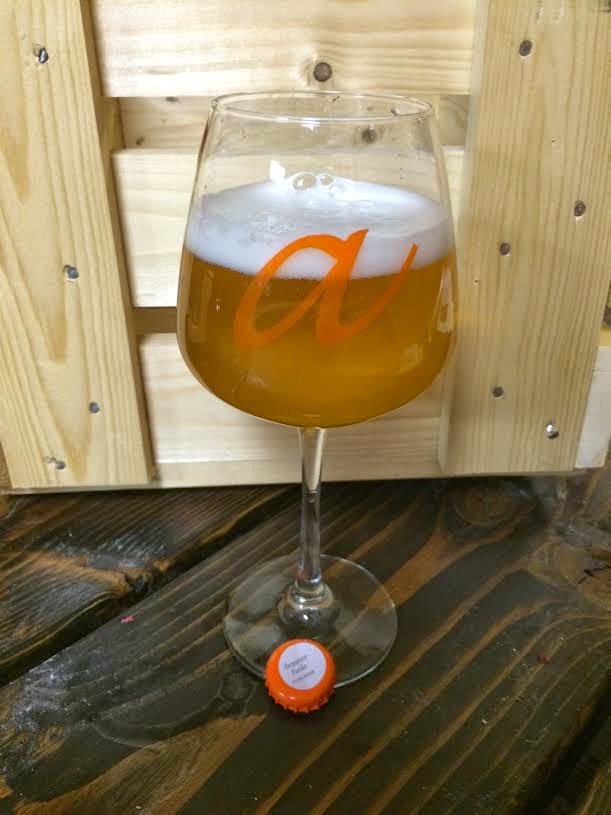
After nearly three months in the bottle, I'm getting around to posting tasting notes for Demeter Facile (recipe).  The idea behind this one was to go with a (relatively) simple malt bill and fairly-minimal hop additions so that I could get a beer that showed off the character of my current house blend (Ambrosia 005) of saison yeast (Saccharomyces), Brettanomyces strains, and lactic acid bacteria (LAB).  Overall, I'm quite happy with the results, and this is something that I will most definitely be brewing again in the future.  I'll also plan to do an oak-aged version soon enough.


Appearance: Quite clear.  Color is a medium yellow with a sizable initial head that fizzles down a bit quickly.  Could be better in this area, though the retention isn't horrible.  

Nose: Begins with yellow and orange SweeTarts, leading into faint tropical fruit.  A bit of apricot. Light grass and wheat.  Some honey as it starts to warm, potentially from the bit of honey malt that I used in this one.  (While I wanted to keep it simple, I love honey malt in saisons and couldn't resist).  Hints of lime zest as well, lingering after the more-upfront mango and tangerine subside.

Flavor: Similar notes as the nose, but with a light-to-moderate tartness through the finish.  Just where I like it, tart without really being sour.  Maybe a bit of pineapple that I wasn't really getting from the nose.  Mango, tangerine, and light lemon/lime seem to be the dominant characteristics.  I'm guessing this is mostly from the yeast and bacteria rather than the hops, as I didn't use much Centennial, and it's not the light orange and generic citrus that I typically associate with Centennial.

Mouthfeel: Light and airy, definite saison carbonation.  Could use a bit more body.  Might need to up the adjuncts next time.  Really easy drinking; the bottle goes down way too quickly.

Overall: I really like this beer and am pretty damn pleased with what my standard blend did with an otherwise-simple base beer.  I'd like to try bottle conditioning this with honey at some point, and also potentially with a tropical fruit juice.  As mentioned above, a bit of oak could also add a bit of complexity.  

Friday, November 14, 2014

Demeter Sinis (Batch 03): Recipe

This was my third time brewing Demeter Sinis, the winter seasonal in the Demeter series.  As I have been pretty happy with it since the first batch, I didn't really change anything up here.  I'm also pretty excited as it has been a long time since I've had "straight" Demeter Sinis available.  This is due to the fact that last year's Batch 02 was all fruited, with the pomegranate portion getting kegged and the cranberry portion was bottled.  Thankfully I do still have a few bottles of the latter.  

As I've cleaned up my temperature control equipment for the season making way for a steep drop-off in brewing over the next few months (twin boys coming soon to the Thorpe family!), I decided to just ferment this one at room temperature.  In my experience, I've gotten yeast-driven character that's pretty similar no matter the temperature I use with my current yeast/Brett blend, it just takes a bit longer when fermenting in the 65-70*F range as opposed to the 75-80*F range.  I really do need to do some actual split-batch experiments with temperature next year though.

The recipe for the full batch is as follows:

Batch Number: 96
Brew Date: October 4, 2014
Bottle Date: November 2, 2014
Batch Size: 10 gallons
OG: 1.045 (estimated)
FG: 1.002 (estimated)
Fermentation Temperature: 65-70* F (room temperature)
IBU: 27.0
ABV: 5.5% (est.)
SRM: 17

Mash: Single infusion for 60 minutes at 154* F.
Boil: 60 minute

Fermentables

7lb 8oz Belgian Pilsner
4lb 0oz Wheat Malt
4lb 0oz Wheat, Flaked
1lb 0oz Acid Malt
0lb 12oz Rye Malt
0lb 8oz Oats
0lb 8oz CaraMunich
0lb 8oz Carafa II
0lb 4oz Chocolate Malt

Salts & Water

5.5g Calcium Chloride (all added directly to the kettle)
4.3g Gypsum (all added directly to the kettle)
6.1g Sodium Chloride (all added directly to the kettle)

All of the salts are added directly to the kettle to achieve the ultimate water profile that I am looking for. Acid malt is being used to get the mash pH almost to where I wanted it.  I also added 4mL of lactic acid to the mash.

Resulting water profile (based on EZ Water Calculator v3) is as follows:

Mash pH (est.): 5.21
Calcium: 78
Magnesium: 12
Sodium: 50
Chloride: 127
Sulfate: 70

I also added 5.5mL of lactic acid to the sparge water to get the pH of that liquor to 5.2.

Hops

1.0oz Nugget (pellet, 13.3 AAU) at 60 minutes
1.0oz Willamette (leaf, 7.5 AAU) at flameout

Other

2.0 tsp. Wyeast Yeast Nutrient at 10 minutes
6.0g Lavender, dried, at flameout*
1.0g Black Cardamom, at flameout

Yeast

Full batch used Ambrosia Blend 005 (now the seventh generation) from the cake of an September 27, 2014 batch of Demeter Facile.  Per yeast calculator.com, I needed 160 billion cells for the entire batch.  At 40-60% solids, this would mean 250mL for the whole batch.  I went with 500mL, as I was pulling from a wine thief and didn't have the best vie, and I'd rather overpitch than underpitch, and didn't have time to let everything settle out before measuring.

Notes

11.02.2014: Bottled around 9 gallons, aiming for 3.0 volumes of CO2 based on the tastybrew.com priming calculator.

Sunday, November 9, 2014

Demeter Automne: Tasting Notes

After about two months in the bottle, it's about time to write out some tasting notes for this batch, which is my first time brewing Demeter Automne, a fall saison (recipe).  I'll say that early on, I thought the finish was too biscuit-heavy, but that character has certainly died down over the past month, and is now just about where I want it.  


Appearance: Medium to dark amber with a puffy light tan lasting head.  Fairly clear.

Nose: Toasty biscuit alongside faint pumpkin spice.  Earthy and leafy.  I think the combination of light spicing and Willamette at flameout got me what I was looking for -- something that isn't too heavy in any one direction, but is instead just reminiscent of fall.

Taste: Earth and toast with a bit of fall spice.  Nothing stands out too much.  Some pumpkin in the background as it warms.  I'm glad that I used fresh-roasted (then frozen) pumpkin in this recipe, as I think the squash flavor does actually come through.  Some light funk on the backend, alongside a faint acidity.

Mouthfeel: Dry finish, though the body itself isn't too light.  Carbonation just where I want it for a darker saison.  Easy drinking without any one element becoming too dominant.  Light tartness through the finish.

Overall: For a first attempt, I'm quite happy with this one.  I'm not sure there's anything that I would change up too much.  Next year, I think I may increase the Willamette addition at flameout just a bit, adding a bit more of the leafy/earthy character that I really like in this beer.  As mentioned above, at first I thought the biscuit malt was too much, but I think after a month of being fully-carbonated, that character is just about where I want it.  

Now that I have the base recipe down, I think I'll likely do a few batches of this next year, as I'd like to try a few "barrel-aged" variants.  I'm most interested in trying a version with wine-soaked oak cubes, and then another version with brandy-soaked oak cubes.

Thursday, October 23, 2014

Demeter Facile: Recipe

With this beer being my sixth time using Ambrosia Blend 005 to ferment, I wanted to try something very neutral in order to really pick out the yeast and bacteria profile that I have going.  This meant brewing a beer with a fairly-simple blonde malt profile, keeping the hops in check, and not using any spices or fruit.  Based on this process, I decided to go with "Facile" (French for "simple") as the name for this beer in the Demeter series.  For those who haven't been reading for too long, the Demeter series is a line of saisons using Brettanomyces and/or lactic acid bacteria, and have up until this point contained some sorts of fruit or spicing.  The name of the series comes from Greek mythology, where Demeter is the goddess of the harvest.

With the simple base beer, I'm hoping to be able to pull out fruity aspects that are coming from the yeast and bacteria blend, perhaps with a little bit of spice as well.  While I do appreciate saisons that tend toward the phenolic side, I vastly prefer to brew (and drink) saisons that focus on fruity esters.  I've generally picked out a lot of tropical fruit and citrus notes so far when using Ambrosia Blend 005 to ferment, though I've never been sure how much of that was due to hops and other aroma/flavoring agents I've added to those beers.  Here I use a bit of Centennial for some hop character, but by no means an excessive amount (1.5 ounces per 5 gallons).  For the grist, I used mostly pilsner, adding in some Munich, honey malt, spelt, and wheat to give a little extra flavor and up the mouthfeel a bit.

Here are the full details on the batch:

Batch Number: 95

Brew Date: September 27, 2014
Bottle Date: October 25, 2014
Batch Size: 10 Gallon
OG: 1.044 (est.)

FG: 1.002 (est.)
Fermentation Temperature: ~65*F.  (This is being fermented in the unfinished portion of our basement, which generally hovers in this area, staying warm throughout the winter as the boiler is located in the corner.)
IBU: 29.0 (modified Tinseth from BrewCipher)
ABV: 5.7%
SRM: 5.0

Mash: Single infusion for 60 minutes at 152* F
Boil: 60 minute

Fermentables

14.0 lb Pilsner Malt
1.50 lb Raw Spelt
1.00 lb Flaked Wheat
1.00 lb Munich Malt
1.00 lb Honey Malt

Salts & Water

All salts added to the kettle. Also added 14mL of lactic acid to the mash to get the pH to around 5.24.

5.2g Calcium Chloride
4.3g Gypsum
6.1g Sodium Chloride

Resulting water profile is as follows:

Mash pH (est.): 5.24 (BrewCipher estimate)
Calcium: 77
Magnesium: 12
Sodium: 50
Chloride: 125
Sulfate: 70

Hops

1.5 oz Centennial (8.7 AAU), pellet, at 60 minutes
3.0 oz Centennial (8.7 AAU), pellet, at flameout

Other

2.0 tsp. Wyeast Yeast Nutrient at 10 minutes

Yeast

Full batch used Ambrosia Blend 005 (now the sixth generation) from the cake of  an August 23, 2014 batch of Wallonian Pale Ale.  Each 5-gallon portion got approximately 125mL of dense slurry from that cake.  (Estimate based on 73% viability calculated at yeastcalculator.com.)  

Notes

I'm planning to take a portion of this batch and transfer on top of the spent fruit from two other batches that I currently have going.  The first is a Flanders Red that has been sitting on black raspberries that Amy and I picked in Michigan this summer, and the second is a version of Citrine that has been sitting on whole Montmorency cherries that Amy and I picked up at that same farm.  I stole this idea from Jester King, which uses this method with raspberries (La Vie en Rose) (process) and cherries (Detritivore) (process).

11.01.2014: I ended up not using a portion of this batch on the spent fruit, as the black raspberries had completely come apart, and were creating problems when I tried to bottle Amethyst.  Given that, I'll have to try the "second use" idea next year.  Instead of fruiting the second half of this batch, I blended it with some Citrine to create Science & Art #7.

For the first bucket, which stayed as straight Demeter Facile, I had around 4.5 gallons, so I used 130g of sugar, targeting 3.0 volumes of CO2.  For Science & Art #7, I combined 5 gallons of Demeter Facile and 1 gallon of Citrine, and added 175g of sugar, aiming for 3.0 volumes.

01.27.2015: Tasting notes.

Tuesday, August 26, 2014

Demeter Automne: Recipe

Now that August has rolled around, it's time to start thinking about brewing -- not releasing -- fall beers.  I've only done one pumpkin beer in the past and that was a pumpkin stout for my wife, Amy, and not something that I particularly enjoyed.  This time I decided to do a pumpkin saison, keeping the spices quite light so that they'd give more of a "fall feel" rather than being all that noticeable by themselves, and not to the level that it'd be possible to really pick out much of the individual spices.

I brewed a 10-gallon batch, and plan to do something fun with the second 5-gallon portion as part of my Science & Art series.  Right now, I'm thinking that I'll age that half with red wine-soaked oak cubes, and then eventually blend a bit with some funky cider to be ready in time for next fall.  I picked up some store-bought apple cider to try out with some Brett and other dregs, but also hope that I'll be able to pick up, juice, and blend some real cider apples this fall.

Thankfully I had planned to do a pumpkin beer for Amy last year and never got around to it, so I had 5 pounds of frozen pumpkin that she had chopped up and roasted last fall.  I used this along with a mix-and-match set of base malt for the grain bill, using up all the remaining Maris Otter and Two Row that I had, then also using some Vienna, Munich, and Biscuit for some background bread and toast.  The brown malt should add a bit of nuttiness, with slight spice coming from the rye.  I also added the honey malt and Caramel 60 for some backing sweetness and additional character.  As a side note, honey malt itself is incredibly delicious.

Pumpkin and rice hulls at the top of the mash.

Here are the full details on the batch:

Batch Number: 92

Brew Date: August 10, 2014
Keg Date:
Batch Size: 10 Gallon
OG: 1.052 (est.)

FG: 1.005 (est.); 1.006 (measured)
Fermentation Temperature: ~70-75*F (fermented at "room" temperature in the garage, which doesn't have temperature control)
IBU: 24.0 (modified Tinseth from BrewCipher)
ABV: 6.2%
SRM: 13.0

Mash: Single infusion for 60 minutes at 154* F
Boil: 60 minute

Fermentables

7.00 lb Maris Otter
5.00 lb Two Row
2.50 lb Vienna Malt
1.00 lb Munich Malt
1.00 lb Caramel 60
1.00 lb Brown Malt
1.00 lb Biscuit Malt
1.00 lb Honey Malt
1.00 lb Rye Malt

I then also added 5 pounds of pumpkin puree and half a pound of rice hulls to the mash.

Salts & Water

All salts added to the kettle.  Also added 5mL of lactic acid to the mash to get the pH to around 5.4.

5.4g Calcium Chloride
4.5g Gypsum
6.4g Sodium Chloride

Resulting water profile is as follows:

Mash pH (est.): 5.4
Calcium: 78
Magnesium: 12
Sodium: 50
Chloride: 125
Sulfate: 70

Hops

0.75oz Columbus (17.7 AAU), whole leaf, at 60 minutes
3.00oz Willamette (5.1 AAU), whole leaf, at flameout

Other

2.0 tsp. Wyeast Yeast Nutrient at 10 minutes
0.84g (.50 tsp.) nutmeg at flameout
0.66g (.50 tsp.) black cardamom at flameout
0.47g (.25 tsp.) dried ginger at flameout
0.39g (.25 tsp.) cinnamon at flameout
0.31g (.25 tsp.) allspice at flameout
0.16g (.125 tsp.) clove at flameout

Yeast


Full batch used Ambrosia Blend 005 (now the fourth generation) from the cake of Wallonian Pale Ale. Each 5-gallon portion got 100mL of dense slurry from that cake.

Notes


09.01.2014: I thought about bottle conditioning this one with apple cider, but thought that the sugar that would be required would end up being a bit too much of the overall character.  Instead, I decided to take a portion of this batch, blend it with Citrine blonde wild, and then bottle condition with Montmorency tart cherry juice.  That blend turned into Science & Art #6.


For bottling Automne, I used 152g of table sugar, aiming for 3.0 volumes with about 4.75 gallons of beer.  The yield was 25 750mL bottles.

Sunday, August 10, 2014

Demeter Vert (Batch 03): Tasting Notes

I've had this one (recipe) on tap for a month or so now, and I'm finally getting around to reviewing it.  While it is really nice having this on tap, I do really prefer to have my saisons bottle conditioner, for several reasons.  First off, based on experience with kegging partial batches and conditioning the rest in the bottle, I believe that the bottle conditioned beers have a better mouthfeel.  There's something about the conditioning process that really makes the bottles jump, both figuratively and literally.  For the latter, there's nothing like popping a 750 of a farmhouse beer and see
ing that slow gush.


Aside from the conditioning effect itself, which is a fairly minor thing for me, what I really like is being able to sit on the bottles and see how they develop, particularly since everything that I'm doing nowadays has Brettanomyces and lactic acid bacteria (and likely other critters as well).  The Brett helps scavenge any additional oxygen, and also does a great job cleaning up the diacetyl that is created by Pediococcus.  This is particularly important for a lot of the beers that I've done lately, as I've added plenty of Crooked Stave dregs, and it seems as though they've got a strain of Pedio that really, really likes to kick up a lot of diacetyl.


With this diacetyl creation, there are issues with kegging and then trying to bottle for friends, particularly if that means that the bottles are going to become warm for some time and allow the Pedio to get started again.  Without Brett to clean up, I may end up sending out buttery saisons, which is something I certainly don't want.  With Pedio in the bottles, there's likely Brett as well, although the latter may not be all that viable, as Chad Yakobson at Crooked Stave has mentioned (video link) that he's seen issues with Brett effectively dying off after being refrigerated for too long.

With those thoughts aside, here are the tasting notes for the beer:

Appearance: Slightly cloudy light peach color with a nice initial head, though the retention could certainly be a lot better.  Another unfortunate side effect of draft beer, in my experience.  Even when pouring with a thick, rocky head using flow control faucets, the head ends up not lasting for more than a few minutes, and not much lacing is produced.

Aroma: Just a touch of sulfur in the background behind notes of lime and soft malt.  A bit of wheat and earth.  Very faint background rye spice.

Flavor: Much more complex than the nose, with the rye coming through a bit more alongside lime peel and a bit of light tartness, likely coming from both the lime juice as well as the lactic acid bacteria used in fermenting the beer.

Mouthfeel: Very light and fairly effervescent while still being a bit chewy, likely as a result of the significant adjuncts.  The main saison strain used in producing this beer is the Yeast Bay's Wallonian Farmhouse, and it's possible that this yeast produces a good amount of body-enhancing glycerol, much as Wyeast French Saison (WY3711) does.  The glycerol produced by that French Saison strain is also mentioned in his talk discussed above.  Even with the chewy mouthfeel, the beer finishes quite dry, as well as faintly tart.

Overall: I'm quite happy with this beer, and it's been a great summer drink, especially filling pint mason jars of it as "growlers" to drink on the Metra train on the way home from work.  (Yes, one of the perks of my commute is that Chicago's Metra commuter trains allow alcohol.)  In terms of improvements, I definitely think this would be better with increased carbonation and a more-lasting head.  The carbonation is just right early on, but seems to fade after the glass is initially poured.  I'd prefer to have a bottle conditioned version that hits above 3 volumes of CO2.

Aside from the carbonation issues, I'd also plan to use just a bit more lime zest next time, as that should help the aroma pop a bit more.  I think that the lime juice that was used appears in the flavor, but doesn't come through too much in the aroma.  The bitterness and mouthfeel (aside from carbonation) are where I want them, so I probably wouldn't change much there.  I would also maybe dry hop with around 2 ounces per 10 gallons of Sorachi Ace to give a bit more additional aroma (maybe the additional lime zest could also be added here?).

Wednesday, May 28, 2014

Demeter Rouge: Recipe

For awhile now, I've wanted to brew a beer inspired by Jolly Pumpkin's Sobrehumano Palena'ole, a dark saison with cherries and passion fruit. I finally got around to it a few weeks ago, brewing a reddish saison and then adding cherries and passion fruit puree to the secondary for half the batch, and of course also adding the dregs of my last bottle of the Sobrehumano Palena'ole.  For the other portion, after primary I transferred to a keg with a blend of oak cubes soaked in Pinot Noir and bourbon.

Here are the full details on the new batch:

Batch Number: 84

Brew Date: April 12, 2014.
Bottle Date:
Batch Size: 10 Gallon
OG: 1.049
FG: 1.002 (est.)
Fermentation Temperature: 70* F
IBU: 30.6
ABV: 6.2%
SRM: 15.8 (prior to fruit additions)

Mash: Single infusion for 60 minutes at 150* F
Boil: 60 minute

Fermentables

12.0 lb 2-Row Pale Ale Malt
4.0 lb Munich Malt
1.0 lb Aromatic Malt
12.0 oz CaraMunich Malt (56L)
8.0 oz Carafa II

Salts & Water

5.0g Sodium Chloride (all into the kettle)
3.0g Calcium Chloride (all into the kettle)
1.0g Gypsum (all into the kettle)

Resulting water profile is as follows:

Mash pH (est.): 5.41
Calcium: 54
Magnesium: 12
Sodium: 44
Chloride: 99
Sulfate: 38

5mL lactic acid added to the sparge water to get it to a pH around 5.5.

Hops

5mL HopShot at 60 minutes
2.0 oz. Columbus (17.5 AAU) at flameout

Other

2.0 tsp. Wyeast Yeast Nutrient at 10 minutes

Yeast

White Labs 670 American Farmhouse Blend
Jolly Pumpkin Sobrehumano Palena'ole Dregs

Notes

04.12.2014: Brewday went off without a hitch.  Fermentation split between a carboy and a bucket, each with about 5 gallons.  Each got 30 seconds of aeration and I pitched a few hours after chilling at room temperature.

Original WLP670 vial had an expiration of 01.09.2014.  On 02.18.14, I gave it 750mL of 1.020 wort.  From there, stepped up on 02.23.2014 with 2L of 1.040 wort.  Finally, on 04.11.2014 (about 24 hours before pitching), decanted and then pitched cake with another 2L of 1.040 wort and put on a stir plate for 24 hours to get the approximate count require per yeastcalculator.com.

04.13.2014: No activity after about 12 hours, but removed Batch 083 from the heated water bath and put these both in at 70*F.

04.25.2014: Added 28oz. of passion fruit puree and 36oz. of frozen cherries plus the dregs of a bottle of Jolly Pumpkin Sobrehumano Palena'ole to the bucket, and sealed the lid.  A pellicle had formed in the bucket, but not in the carboy.  The lid had previously not been sealed.

04.30.2014: The carboy portion was transferred to a keg with 21g of oak cubes that had been soaking in Pinot Noir since 03.03.2013 plus 8g of oak cubes that had been soaking in Knob Creek bourbon since 02.16.2013.  Yield is about 4.5 gallons.

Wednesday, February 19, 2014

Demeter Auran (Batch 03): Recipe

This is now the third batch of Demeter Auran, and the first I've done fermenting with something other than my initial mixed-ferment saison dreg blend.  For this 10-gallon batch, half is being fermented with the second generation of grown up dregs from a few commercial saisons.  The other half is being fermented with a blend of East Coast Yeast 08 (Saison Brasserie Blend) and Brettanomyces Claussenii and Brettanomyces Bruxellensis Trois.

The recipe for the full batch is as follows:

Batch Number: 80
Brew Date: February 17, 2014
Bottle/Keg Date:
Batch Size: 10 Gallon
OG: 1.050 (estimate)
FG:
Fermentation Temperature: 79 F.
IBU: 29.2
ABV: 6.3% (est.)
SRM: 4.3

Mash: Single infusion for 60 minutes at 148 F.
Boil: 60 minute

Fermentables

9lb 8oz French Pilsner
8lb Wheat, Flaked
2lb Munich Malt

Salts & Water

7.0g Calcium Chloride (all added directly to the kettle)

Resulting water profile (based on EZ Water Calculator) is as follows:

Mash pH (est.): 5.49
Calcium: 67
Magnesium: 12
Sodium: 7
Chloride: 73
Sulfate: 27

Hops

5mL HopShot at 60 minutes
3.0oz Citra (12.9 AAU), leaf, at flameout

Other

2 tsp. Wyeast Yeast Nutrient at 10 minutes
28g Blood Orange Zest at flameout
10g Rose Hips at flameout

Yeast

Saison dregs / Ambrosia Blend 003 (5 gallons)
East Coast Yeast Saison Brasserie (ECY08) plus Brett C & Brett Trois  / Ambrosia Blend 002 (5 gallons)

Notes

02.18.2014: At 12 hours, the temperature was only 62 F in the basement, so I set up a water fermentation "chamber" in a large plastic tub.  I have an aquarium heater attached to a temperature controller.  I set the controller to 70 F with a differential of 2 degrees.  At 24 hours, the temperature was up to 68 F.  I upped the controller set temperature to 71 F.  The ECY & Brett portion is bubbling away, but nothing on the saison dreg portion yet.

02.19.2014: At 36 hours, controller says the temperature is 70 (temperature of the fermenting beer itself is the same).  Both are bubbling quite a bit.

03.01.2014: The version with Anna dregs has a sulfur taste just like the Saison Faible portion with this blend did.  I don't want to take any chances on 5 gallons, so I decided to make it a bit funky and added a wine thief full of fermenting Citrine (blend with lambic dregs previous Citrine dregs) to the bucket.

03.03.2014: Decided to create something I've wanted to try for a long time now, which is a passion fruit saison.  Since passion fruit is such a strong flavor, I wanted to keep it relatively subdued.  Thus, I added 28oz. of passion fruit puree to the Ambrosia Blend 002 portion of the batch, first saving a "clean" portion of the cake by filling a mason jar with a few wine thief pulls full of as much of the cake as I could get.  The puree was still a bit of a slush, so I added it through a funnel with the bottom of the funnel inside the liquid, attempting to limit any oxygen exposure.

03.16.2014: 23 bottles.  Aiming for 2.5 volumes.  122 grams of table sugar in 5 gallons of beer.

07.20.2014: Finally ready to do something with the portion that had grown up Anna dregs.  After adding the Citrine dregs, it has calmed down a bit, losing sulfur and is overall less funky.  To add another dimension other than the yeast, I added 84oz. of pink guava puree along with a thief full of the currently fermenting batch of Farmhouse Mild (Batch 05).  Hopefully this kick starts things.  I'm a bit worried about the temperature, as one of the 14oz bags of puree busted while thawing, so I ended up adding all of the guava as slush.

Monday, December 16, 2013

Demeter Sinis (Batch 02): Recipe

This was my second time brewing Demeter Sinis.  The first time I brewed this beer was nearly a year ago.  Overall, I was quite pleased with that batch, and still have a few bottles left.  My one complaint is that while I like what the blend of mixed-ferment saison dregs has done to the beer over time, the body has gotten a bit too thin.  To counteract that, this time I'm adding some additional chloride and sodium to the beer to emphasize the malt a bit more, and have also upped the mash temperature a bit to see if I can retain a bit more body.

Finally, last time I aimed for 3 volumes of CO2, and that made the mouthfeel a bit crisper than I would like.  While I think I'll be kegging most of this batch, I'll likely go down to 2.5 volumes, a target I'll probably stick to in the future when conditioning dark saisons, and keeping the 3.0+ volumes solely for blonde saisons, and particularly ones with Brett.

I also have a few more ideas for this beer, including a version aged on red wine-soaked oak cubes.  Since my mash tun can only handle about 20 pounds of grain, my limit for this run is about 7.5 gallons.  I decided to do 5 gallons with pomegranate, and then do 2.5 gallons on the side with cranberries.  Soon enough, I'll do a thicker mash to see if I can get to 10 gallons and do half straight and half with red wine oak cubes.

Winter brew day.  Photo courtesy of Thorpette.

The recipe for the full batch is as follows:

Batch Number: 74
Brew Date: December 14, 2013
Bottle/Keg Date:
Batch Size: 7.5 gallons
OG: 1.065 (estimated)
FG:  1.004 (estimated)
Fermentation Temperature: 65* F
IBU: 31.7
ABV: 7.8% (est.)
SRM: 24.5

Mash: Single infusion for 60 minutes at 153* F.
Boil: 60 minute

Fermentables

7.5 lb Briess 2-Row
4.5 lb White Wheat Malt
3.0 lb Wheat, Flaked
1.0 lb Acidulated Malt
12oz Rye, Flaked
12oz Wheat, Torrified
8oz Oats, Flaked
8oz CaraMunich
9oz Carafa II
4oz Chocolate Malt

Salts & Water

8.0g Calcium Chloride (all added directly to the kettle)
7.0g Baking Soda (all added directly to the kettle)
2.0g Gypsum (all added directly to the kettle)

All of the salts are added directly to the kettle to achieve the ultimate water profile that I am looking for.  Acid malt is being used to get the mash pH where I want it.

Resulting water profile (based on EZ Water Calculator v3) is as follows:

Mash pH (est.): 5.35
Calcium: 89
Magnesium: 12
Sodium: 47
Chloride: 95
Sulfate: 51

Hops

2.0oz Willamette (7.5 AAU), leaf, at 60 minutes
1.0oz Willamette (7.5 AAU), leaf, at flameout

Other

Whirlfloc (2) at 10 minutes
1.5 tsp. Wyeast Yeast Nutrient at 10 minutes
6g Lavender, dried, at flameout*
2.5 pounds of pomegranate juice and seeds,
along with a glass of Demeter Sinis (Batch 01)
1.0g Black Cardamom, at flameout

Pomegranate for 5 gallons of the batch.  For this, I took the seeds and juice from 10 pomegranates, which came to about 2.5 pounds of fruit/juice.

Cranberries for 2-2.5 gallons of the batch.  I juiced the cranberries, which yielded approximately 300mL of juice.

Both types of fruit were added to primary, with the pomegranate going into the bucket with 5 gallons, and the cranberries going into the 3-gallon Better Bottle.

* I wanted 20g of Lavender, but ran out.  I ordered more for the straight batch that I'll do in a few weeks.  I'm not as worried about this batch, since the fruit will provide plenty of background.

Yeast

Blend of Wyeast 3725, Crooked Stave, and miscellaneous mixed-fermentation saison dregs using the cake from Demeter Spectre.

I also added the dregs from a bottle of the first batch of Demeter Sinis.

Notes

12.14.2013: Gave the smaller portion 30 seconds of pure O2, and the larger portion got 60 seconds.  The gravity was lower than expected, coming in at 1.055.  I'm guessing this goes back to the sparge, where I was in a bit of a hurry due to the chilly weather and snow, which created additional obligations.  For yeast calculations, I kept the gravity at 1.065, as I'm not sure how high the fruit took each batch.

Based on Mr. Malty's calculator, I used 110mL of the Farmhouse Mild cake for the 5 gallon portion, and 45mL of the Farmhouse Mild cake for the 2 gallon portion.

12.15.2013: Strong fermentation for both portions of the batch.  Each one sitting at about 65* F.  As you can see in the picture below, the critters have already sucked the pomegranate seeds dry and they've been taken up into the krausen:


01.25.2014: Bottling day for the cranberry portion.  The pomegranate portion previously went on draft.  I haven't done a separate write up for it as of yet, as I feel like the pomegranate just added a bit of tartness, and the blend I'm using already adds some tartness, so it's difficult to tell it's there.  One thing is that as the beer warms, there is a slight hint of the pomegranate membrane, some of which inevitably got into this.  If I was doing this again, I would definitely use either pomegranate juice (store bought or self-juiced), as that would be quite a bit easier, even though it was cool watching the yeast strip away all the flesh from the pomegranate seeds.

Cranberry portion bottling: Two and a half gallons. FG of 1.006. Final pH of 3.5. Aiming for 2.75 volumes of CO2. Added sugar directly to bottles, uses 5.5g for each 750mL bottle and 2.75g for each 375mL bottle. Ended up with ten 750mL bottles and three 375mL bottles.

One thing to add is that this was also my first chance to use my custom "ambrosia" caps, which Amy got me for Christmas:

Difficult to see, but ambrosia "a" logo caps on the left.

Monday, December 9, 2013

Demeter Spectre: Tasting Notes

At this point, the bottles of Demeter Spectre are carbonated well enough and I had a chance to snap a picture and record some thoughts. Overall, I like the beer and will definitely do it again with a few alterations.


Appearance: Slightly-hazy light copper with an orange hue. Big, fluffy white head with good retention and lacing. It's a bit darker, which I was hoping for, as that somehow seems to be a bit more rustic. I think a lot of this color is attributable to the fruit juice addition, as the grain bill was pretty light. The fruit accomplished what I wanted in that regard, especially as there isn't anything that would indicate that there is juice from peaches, raspberries, and strawberries in this.

Aroma: Faintly peachy with a bit of underlying fruit and lemon. There is a bit of generic spice there as well. It's not quite phenolic, more of a very light citrus perfume, perhaps the grains of paradise. Either way, nothing specific is identifiable, which was the goal with the spice and fruit additions.

Flavor: Mildly lactic with a generic fruitiness underneath peach. Some peach pit in the finish. Would reduce peach amount by half and instead substitute apricots. Raspberry and strawberry are not specifically identifiable. Generally faint spice and fairly light on the tongue.

Mouthfeel: Body is light to medium with good carbonation. Could use a touch more wheat and grain emphasis, perhaps upping the chloride and sodium a bit. Bitterness is not particularly noticeable; probably right where I want it. Finish is lingering fruitiness with a touch of citric and lactic acid.

Overall: I think I would mess around with the water chemistry just a bit and swap the peach for apricot, but otherwise I think this is a good start and could be a pretty good beer. I think I may also add a bit more lemon zest, and a just a bit (maybe 25mL) of juice as well.

Tuesday, October 15, 2013

Demeter Spectre: Recipe

For a while now I have wanted to do a version of the "Demeter" series playing off of the lactic acidity and fruity character of Fantôme Saison.   I've been intrigued by how Dany at Fantôme gets that "Fantôme-y" character in his beers.  Even though he claims not to use fruit, plenty of people believe he does.  As for the lactic character of the beer, that fits within the traditional farmhouse roots of the style, and is not at all surprising given Dany's generally whimsical character, aside from the fact that the brewhouse itself doesn't appear to be the most sanitary.  It is, however, a gorgeous place:

Brasserie Fanôme.  Picture from our trip to Belgium in September 2011.

With all that in mind, I went with a pretty basic recipe (full below) and added hints of various spices, and then went with my standard for doing quick citrus-laden, somewhat-lactic saisons, which is a blend of dregs from various Hill Farmstead bottles.  What I had on hand here was also actually mixed with Wyeast 3725, which is reportedly the Fantôme yeast.  I decided to use some fruit, but in a way that wouldn't be as noticeable, either via the color or ultimate flavor, as detailed below.

For the water, I went with distilled plus additions of calcium chloride, gypsum, and baking soda to get the ions where I wanted them, with baking soda only in the mash, and the other two used both in the mash and sparge water.  Baking soda was only used in the mash to get the final sodium content I wanted for the full volume of the wort, as using it in the sparge water would increase the alkalinity and pH, potentially pulling tannins from the grains during the sparge process.  Finally, I also used acid malt to get the mash pH where I wanted it.

In naming this installment of the Demeter series, I wanted to play off of Fantôme Saison being the inspiration for this beer, and since Fantôme is ghost in French, I went with spectre, which is another word for ghost or phantom.

While the wort was chilling, I went inside and sliced up the peaches and prepared the strawberries and raspberries.  I juiced all of them together.  I know that Dany at Fantôme claims that he doesn't use fruit in his Saison, but many have speculated otherwise  Here, in addition to the spices, I decided to go with fruit, but opted to use freshly-juiced fruit in the primary. 

The reasons for this are twofold.  First, even though I haven't used that much fruit, I'd like the fruit to involved throughout fermentation, losing flavor and aroma during the process, producing a lower overall character.  The second reason for using juice is that I recall an episode of Basic Brewing Radio where an experiment showed that fruit juice had less flavor and particularly, color, impact compared with whole fruit.  Based on these two factors, I expect the fruit to lend flavor and aroma properties that could be expected to come from yeast and/or hops, to the point where there would be plausible deniability that fruit was used at all.

I also used double Wyeast's recommended yeast nutrient amount based on comments in Farmhouse Ales that increased FAN from extra yeast nutrient may help saison yeast perform.  Markowski was talking about the Dupont strains, but I don't think it's going to hurt anything with the 3725 / Hill Farmstead dreg blend I'm using here, so I thought I'd give it a shot.

After the beer had chilled to 70 F, I added 30 seconds of pure oxygen.  I then pitched the blend of Wyeast 3725 and Hill Farmstead dregs that was used to ferment my latest batch of Farmhouse Mild.  I had collected a pint of that slurry in a mason jar, and used the whole thing.  The yeast pitching calculator at mrmalty.com recommended 125mL of yeast slurry, though with the amount of liquid I had in the jar, the leftover cake was pretty thin.  I then wrapped a FermWrap around the bucket and set it at 65 F, with the probe wrapped inside bubble wrap on top of the bucket. 

Given that the temperatures in the low 40s at night in October in Chicago and the fact that our garage isn't (yet) insulated, I want to make sure it's basically just fermenting at room temperature.  I've had great experience using this blend in this manner, getting nice notes of apricot and lemon with mild lactic acidity.  The phenols have been quite low at this temperature, which is something I'm shooting for here, as I would prefer the fruitiness, mild spices, and acidity to shine through.

Beer while brewing: Ambrosia Farmhouse Mild (Batch 068) and Logsdon Oak Aged Bretta.  I also snagged a sample of Ambrosia Wallonian Pale Ale (Batch 069), which has been dry hopping for 5 days and will get kegged in two more.

Batch Number:70

Brew Date: October 12, 2013
Keg Date:
Batch Size: 5 Gallon
OG: 1.061
FG: 1.004 (est.)
Fermentation Temperature: 65 F
IBU: 28.3
ABV: 7.5% (est.)
SRM: 6.2 (BeerSmith estimate; not including any coloration from the fruit juice)

Mash: Single infusion for 60 minutes at 154 F.
Boil: 60 minute

Fermentables

6lb 8oz French Pilsner
3lb 0oz Munich Malt
3lb 0oz Wheat, Flaked
0lb 8oz Acidulated Malt

Salts & Water

7.4g Calcium Chloride (split between mash and sparge)
3.4g Gypsum (split between mash and sparge)
6.0g Baking Soda (mash only)

Resulting water profile is as follows:

Mash pH (est.): 5.52
Calcium: 77
Magnesium: 0 (though plenty comes from the malt itself)
Sodium: 46
Chloride:99
Sulfate: 52

Chloride / Sulfate Ratio: 1.89 (malty)

Hops

3oz HopShot at 60 min.

Other

1.0 tsp. Wyeast Yeast Nutrient at 15 minutes

Yeast

Cake from Batch 068 Farmhouse Mild (Hill Farmstead dreg blend and Wyeast 3725)

Notes

10.14.2013 - Temperature reading of the probe, which is sitting wrapped in bubble wrap on top of the fermenting bucket, is sitting at 65 F and there's a healthy krausen going.

10.27.2013: Bottled, aiming for 2.7 volumes of CO2.  Final gravity is 1.006.

12.09.2013: Tasting notes.

Friday, March 15, 2013

Demeter Auran: Recipe (Round Two)

This past Sunday I decided to go with another round of Demeter Auran.  This time I went with blood orange zest instead of clementine zest, and Mosaic instead of Citra.  I also upped the rose hips just a bit.  Aside from that, I split the 7.5 gallon batch with 5 gallons getting the mixed-ferment saison dreg blend, which was the cake from the original Demeter Auran.  The remaining 2.5 gallons got some white wine-soaked oak cubes and the cake from the portion of the Namur saison experiment that was done with grown up dregs from Tired Hands HandFarm.

I also increased the amount of blood orange zest, as I'm planning on sending the main 5-gallon portion to a keg to age with a good amount of white wine-soaked oak cubes.  I'll probably bottle one gallon of the base just to get a good comparison.


The recipe for the full batch is as follows:

Batch Number: 62
Brew Date: March 10, 2013
Bottle Date:
Batch Size: 7.5 Gallon
OG: 1.050 (est.)
FG: 1.002 (est.)

Fermentation Temperature: Ambient (~65 F)
IBU: 29.2
ABV: 5.8% (est.)
SRM: 3.6

Mash: Single infusion for 60 minutes at 148 F.
Boil: 60 minute

Fermentables

8lb 10oz French Pilsner
3lb 0oz White Wheat Malt
3lb 0oz Flaked Wheat

Hops

1.5 oz Mosaic (12.5 AAU) at 20 minutes
1.5 oz Mosaic (12.5 AAU) at flameout

Other

1 Tbsp 5.2 buffer in mash
21 grams of blood orange zest at flameout
6 grams of rose hips at flameout
White-wine soaked medium toast Hungarian oak cubes (amounts below)

Yeast

Saison Blend (5 gallons; oak cubes contained in the cake of the Demeter Auran batch)
Tired Hands Blend (2.5 gallons; half an ounce of white wine-soaked oak cubes)

Notes

03.10.2013: Brewday.  Everything went off without a hitch.  Each portion of the batch got 30 seconds of straight oxygen, with the saison dreg portion getting fermented in a 5-gallon bucket, and the Tired Hands dreg portion going into a 3-gallon Better Bottle.

03.11.2013: Fairly good initial fermentation from the Tired Hands portion after about 24 hours.

03.14.2013: It took the saison dreg portion quite awhile, and I was getting worried, but it's finally going really strong after 3.5 days.  If it wasn't going this morning, I was planning to take a good portion of the krausen of the Tired Hands dreg portion and also a thief or two from Citrine, and just see what happened.

06.02.2013: The saison portion, which was transferred to a keg after primary fermentation before our move, was hit with 1.0oz of boiled oak cubes that had been soaked in Nisia Old Vines Verdejo since 03.30.2013.

10.08.2013: The batch has been with the wine-soaked oak cubes for just over four months.  There was no blow-off assembly in place, so the beer continued to condition in the keg at room temperature, creating plenty of carbonation.  Placed into the kegerator and set at 20 PSI.

Monday, February 11, 2013

Ambrosia Demeter Sinis: Recipe


Base Recipe

Batch Number: 57
Brew Date: January 21, 2013
Bottle Date: February 10, 2013

Batch Size: 5 gallons

OG: 1.061 (est.)
FG: 1.006 (est.)
IBU: 0
ABV: 5.2% (est.)
SRM: 23.2
Mash: Single infusion for 60 minutes at 151 F.
Boil: 60 minutes

Fermentables

5lb 0oz French Pilsner
3lb 0oz White Wheat Malt
2lb 0oz Wheat, Flaked
0lb 8oz Red Wheat, Torrified
0lb 8oz Rye, Flaked
0lb 4oz Carafa II
0lb 4oz Roasted Barley
0lb 4oz Special B Malt
0lb 2oz English Chocolate Malt

Hops

1.5oz East Kent Goldings (5.8 AAU) at 60 minutes
0.5oz East Kent Goldings (4.5 AAU) at 5 minutes
0.5oz East Kent Goldings (4.5 AAU) at Flameout

Other

14g Lavender at 2 minutes
0.75g Black Cardamom at 2 minutes
1.5oz Red Wine-Soaked Medium Toast Hungarian Oak Cubes during primary

Yeast

Hill Farmstead Blend (Dregs from Hill Farmstead Arthur, Clara, and Vera Mae).  This is the third generation for this blend, after previously having been used in Repeating Numbers and then Demeter Auran.

Notes

01.22.2013 - Fermentation is active after approximately 12 hours.  At 24 hours, the airlock is bubbling away.  Used approximately 4 large spoonfuls of the cake from Demeter Auran, which was still showing a bit of activity after 9 days.  Fermentation is at approximately 65 F ambient.

02.10.2013 - Bottled approximately 5 gallons with 150 grams of table sugar, aiming for 3.0 volumes of CO2.  Tastes great out of the fermenter.  The cardamom was a bit strong a week ago, but has faded, and should be at about the right level by the time carbonation is complete.

Saturday, January 12, 2013

Demeter Auran: Recipe

"Demeter Auran" will be my second use of a mixture of saison yeast and bugs. It was originally my intention to name my saisons as part of the Demeter line, after the Greek goddess of the harvest, so I'm getting back to that. Auran is the beginning of the Latin word for orange. I know I'm crossing over a bit there, but I liked the sound of it, and -- at least according to Google Translate -- there is no Latin word for clementine.

The first time I used this blend was a "clone" of the Stone 02.02.02 Vertical Epic that I switched up to saison yeast because I didn't want 5 gallons of an imperial witbier.  Based on how the aforementioned "clone" -- aptly named Ambrosia Repeating Numbers -- is doing, this blend creates a nice, expressive saison profile along with mild funk, citrus, and tartness. 

Aside from the yeast, this beer is spiced with rose hips and clementine zest, and contains a not inconsequential amount of Citra at 20 minutes and flameout. I'm hoping the citrus, tropical, and floral notes will combine well with the yeast. I'm also going to ferment the batch on medium toast Hungarian oak cubes that were pre-boiled and have been soaking in white wine since Thanksgiving. The amount of zest should lead to roughly 500 International Citrus Units ("ICUs") based on 
Embrace the Funk's interview with Shaun Hill of Hill Farmstead. 

The remainder of the batch will be split into separate one gallon portions. The first gallon will get some reused Wyeast 3725, and the second gallon will get a "funky blend" of dregs I've saved from Russian River Sanctification, Russian River Temptation, Fantome Saison, Jolly Pumpkin Oro de Calabaza, and Jolly Pumpkin Bam Biere.


The recipe for the full batch is as follows:

Batch Number: 53
Brew Date: January 12, 2013
Bottle Date: February 2, 2013
Batch Size: 7.5 Gallon
OG: 1.050 (est.)
FG: 1.005 (est.)
IBU: 28.9
ABV: 5.4% (est.)
SRM: 3.6

Mash: Single infusion for 60 minutes at 148 F.
Boil: 60 minute

Fermentables

8lb 10oz French Pilsner
3lb 0oz White Wheat Malt
3lb 0oz Flaked Wheat

Hops

1.5 oz Citra (12.4 AAU) at 20 minutes
1.5 oz Citra (12.4 AAU) at flameout

Other

1 Tbsp 5.2 buffer in mash
14.2 grams of clementine zest at flameout
5.25 grams of rose hips at flameout
White-wine soaked medium toast Hungarian oak cubes (amounts below)

Yeast

Saison Blend (5 gallons; 1 ounce of oak cubes)
Wyeast 3725 (1 gallon; 3 oak cubes)
Random Funky Blend (1 gallon; 3 oak cubes)

Notes

The main 5 gallons were transferred into a bucket for fermentation. The other two portions each went into a one gallon jug. The main portion of the batch got 30 seconds of oxygen, and the smaller portions each got ~8 seconds. They were left to ferment at ambient, which was around 65 F.

UPDATES

01.15.2013: Each of the batches has been very slow to start fermenting. After about 36 hours, I placed the 3 vessels into the chest freezer with fermwrap set at 72 F.

02.02.2013: Bottling day. Estimated that there are 4.25 gallons of beer in the fermentation bucket accounting for what will be lost to the trub and cake. Aiming for 2.5 volumes of CO2, I'm adding 105g of table sugar. Beer racked into flushed keg on top of sugar. Headspace flushed with CO2 and then gently shaken to mix in sugar. Filled with Beer Gun. Ended up with 22 750mL bottles.

I also bottled the 3725 and "Funk Blend" portions. Each of these was estimated at 3/4 of a gallon. Aiming for 2.5 volumes of CO2, each one got 17 grams of table sugar. Ended up with 8 375mL bottles of each.

Saturday, June 23, 2012

Demeter Vert (Batch 02): Recipe


RETRO: Post written on November 13, 2014, but set to publish on the date of the original brew session to maintain order within the blog.

This was my second batch of what was then known as Sorachi Lime Saison.

The recipe for the full batch is as follows:

Batch Number: 43
Brew Date: June 23, 2012
Bottle Date: Not recorded
Batch Size: 5 Gallon
OG: 1.061 (estimate)
FG: 1.002 (estimate)
Fermentation Temperature: 65-70*F (room temperature throughout)
IBU: 31.8
ABV: 7.6%
SRM: 4.2

Mash: Single infusion at 149*F for 60 minutes

Boil: 90 minute

Fermentables

8lb 0oz Pilsner Malt
2lb 12oz Wheat Malt
1lb 0oz Rye, Flaked

Salts & Water

At this point I wasn't doing anything besides filtering the water and adding 5.2 buffer, so that's probably it.

Hops

1.0oz Sorachi Ace (pellet, 10.7 AAU) at 20 minutes
1.0oz Sorachi Ace (pellet, 10.7 AAU) at 5 minutes
1.0oz Sorachi Ace (pellet, 10.7 AAU) at flameout

Other
Whirlfloc
Yeast Nutrient

2 Tbsp Lime Zest at 5 minutes

Yeast

Wyeast French Saison (WY3711) (1 package)
Wyeast Belgian Saison (WY3724) (1 package)
White Labs Brettanomyces Claussenii (WLP645)

Notes

06.23.2012 - Brewday. Efficiency still seems low based on the OG. Not sure what the issue is. For yeast, used 2-month-old packs of 3711 and 3724 plus a good bit of Brett C slurry from the continuous jug. Hoping to create a house culture to use with different saisons. Can eventually blend in other yeast cultures if necessary, using dregs from favorite bottles.

07.28.2012 - Added the dregs from a bottle of Batch 6 Russian River Sanctification.

Friday, March 16, 2012

Demeter Vert (f/k/a Sorachi Lime Saison) (Batch 01): Recipe & Tasting Notes

Batch Number: 31
Brew Date: February 1, 2012
Keg Date: February 26, 2012
Batch Size: 5 Gallon
OG: 1.060
FG: 1.008
IBU: 32
ABV: 6.8%
SRM: 4.2

Mash: Single infusion for 60 minutes at 148 F.
Boil: 60 minute

Fermentables

8.00 lb Continental Pilsner
2.75 lb White Wheat Malt
1.00 lb Flaked Rye

Hops

1.0 oz Sorachi Ace (10.7 AAU) at 20 minutes
1.0 oz Sorachi Ace (10.7 AAU) at 5 minutes
1.0 oz Sorachi Ace (10.7 AAU) at flameout

Other

2.0 Tbsp Lime Zest at 5 minutes

Yeast

Belgian Style Saison Ale Yeast Blend (WLP 568)
Brettanomyces Claussenii (WLP 645)
Russian River Sanctification Dregs

Notes

At the end of the brewday, I had a Russian River Batch 5 Sanctification, and added the dregs from that to the carboy.

Fementation: Ambient temperature in a 6-gallon Better Bottle. Liquid temperature was approximately 72-73 F.


Tasting Notes

Appearance: Pours a moderately-hazy light apricot color with a nice, fluffy white head. Nice retention with some spotty lacing on the way down and a thin collar throughout. 2.5/3.

Nose: The first whiff brings in a bit of lime and citrus plus some backing yeastiness. The Brett may not have been entirely finished out when I decided to keg this one, and it shows in the nose. I was anxious to get this kegged for our moving date, probably at the expense of having a better final product. When I brew this again, I'll be sure to give it some more time. 10.5/12.

Flavor: The taste doesn't have nearly as much residual yeastiness as the nose does. Instead, there's a mild acidity to go along with some zesty citrus character. I think it actually comes through more as lemon, likely because of the Sorachi, though lime is present as well. There's also a slight touch of pineapple character in the background. Fairly complex and enjoyable. 16.5/20.

Feel: The flavor suffers because of the feel. The body is nice; it's quite light and crisp with minimal malt presence in the background. There's a light zest and faint acidity throughout. However, there's not enough carbonation. I let this one sit at 12 PSI for awhile, but that didn't quite give me what I was looking for. I'm coming to the conclusion that I probably need to start bottle conditioning saisons rather than just kegging them. One of these batches I'll need to split the batch by carbonation method and see the differences. With all that said, I really love the faint acidity and citrus character to the background, so probably no change in the recipe, just carbonation. 3.5/5.

Overall: I think this could be a much better beer if I were to give the Brett enough time to really work, and also boosted the carbonation up quite a bit, hitting somewhere around 3 or 3.2 volumes. I'd also boost the lime presence just a bit, probably to around 3 tablespoons. The hops are good where they're at. I think this could end up as a very nice beer with some minor improvements and/or changes in technique. 7.5/10.

Score: 40.5/50

Sunday, January 23, 2011

Demeter Noir: Recipe

RETRO: Post written July 24, 2014.  Set as being posted at time of brew session.

This was the first batch of saison that I brewed way back in early 2011 (I brewed my first beer on January 1, 2011).  The initial plan was a clean base and then to split off a portion to age with wine-soaked oak cubes and dregs, but I ended up using dregs on the entire batch as the initial flavor of the clean beer was too banana heavy for me.


The recipe for the full batch is as follows:

Batch Number: 05
Brew Date: January 23, 2011
Bottle/Keg Date: [Not Recorded]
Batch Size: 5 Gallon
OG: 1.071 (estimate)
FG: 1.002 (estimate)
Fermentation Temperature: 65-70*F
IBU: 22.0
ABV: 8.1% (est.)
SRM: 5.5

Mash (from original notes): "Use a step infusion mash, which will emphasize the maximum production of fermentable sugars.  Start with a ferulic rest at 113 F for 30 minutes.  Follow this with a protein rest at 131 F for 15 minutes.  This is then raised to 144 F for a 30 minute saccharification rest.  Finally, perform a 15 minute dextrine rest at 154 F before mashing out at 165 F.  The total mash is thus 90 minutes."

Boil: 60 minute

Fermentables

10lb 8oz Pilsner Malt
12oz Munich Malt
12oz White Wheat Malt
2oz CaraMunich Malt

In the boil: 1lb Table Sugar

Salts & Water

At this point I wasn't doing anything besides filtering the water and adding 5.2 buffer, though per the notes below, apparently forgot 5.2 buffer for this one.

Hops

1.5oz Hallertauer (3.8 AAU) at 60 minutes
.75oz Hallertauer (3.8 AAU) at flameout

Other

2 tsp. Yeast Nutrient
1oz Red Wine-Soaked Medium Toast Hungarian Oak Cubes

Yeast

Wyeast French Saison (WY3711)
Wyeast Brettanomyces Bruxellensis (WY5112)
Russian River Temptation Dregs

Notes

01.23.2011 - BREWDAY

Mash:  For the ferulic acid rest, hit the grain with 9.7 quarts of 125.3 F water.  The temperature was a bit high, so I added .5 quarts of 50 F water to bring the temperature to 113 F.  Rested here for 30 minutes.  Added 2.7 quarts of 212 F water to bring the mash up to the next step.  Overshot warm and then overshot back too cold.  Too many adjustments led to a temperature of 127 F after quite a few minutes.  Added a total of 2.5 extra quarts so that the total infusion was 5.2 quarts.  Hit with 5.5 quarts of 212 F water.  The temperature only reached 140-41 F.  Let it be and rested for 35 minutes instead of the 30 that was called for to make up the diference.  Added 4.5 quarts of 212 F water.  This only brought the temperature up to 149 F.  Let this rest for 20 minutes.  After this, mashed out with 170 F water.   Used 12 quarts for this, adding half, stirring, and then draining.  Added the second half without stirring, then drained.

* Realized during drain-off that I did not add buffer.  Tested pH of mash and first runnings is approximately 5.5 to 5.6.  According to the Homebrew Wiki, the preferred mash pH range is 5.2 to 5.5, so this should be okay. 

01.24.2011 - About 14 hours after pitching the yeast, there is a healthy kraeusen on top of the beer--about 1.5 inches.  Good bubbling in the blowoff bucket.  Yeast was pitched at room temperature, 67-70 F.

*** Make sure to aerate aggressively for this style

*** Use double the normal amount of yeast nutrient

01.24.2011 - After a little over 24 hours in the fermenter, temperature is a bit over 70 F.  Room temperature is between 67 and 68 F.  Carboy is resting in a tub with a grey t-shirt covering it.  Fermentation was pretty strong this morning with a health krausen.

* After primary fermentation, the plan for the batch was to split into two 3-gallon carboys, one of which would receive Brettanomyces Bruxellensis and red-wine-soaked Hungarian Oak chips (medium toast).

Make sure to "warm age" at fermentation temperatures or higher for 3-8 weeks.  See Phil Markowski, Farmhouse Ales 175 (2004)

01.30.2011 - Took a sample.  Gravity is currently 1.008.  Taste is a bit plain without too much yeast presence.  There are some banana notes.  Perhaps fermentation never really got warm enough.  Will be interesting to see how this develops.  If the yeast doesn't build more character, the entire batch will likely get the oak, wine, and Brett treatment.  The oak and wine started today.  Soaking 0.5 ounce of Hungarian Oak in Klee Pinot Noir ($19.99 at Rick's).  Put in a bowl and filled with enough wine to cover.  The plan is to use this for 2.5 gallons of the saison.

01.31.2011 - Doubled up on the Hungarian cubes and now plan to use the soaked cubes for the entire batch.  The sample taken just didn't have enough yeast character.  There was a bit of banana and some mild spice, but nothing that would make for a particularly-good saison

02.01.2011 - Added a package of Wyeast Brett B.  This was partially frozen during transit from Northern Brewer, so we'll see how things turn out.

02.14.2011 – No apparent activity from the Brett, though I will check again soon.  Added the wine-soaked oak cubes in a hop bag after transferring to a keg.

02.28.2011 – Added dregs from a 375 mL bottle (Batch 005xF) of Russian River Temptation.  Gravity check reveals that the beer is at 1.003.  Still no real oak presence.