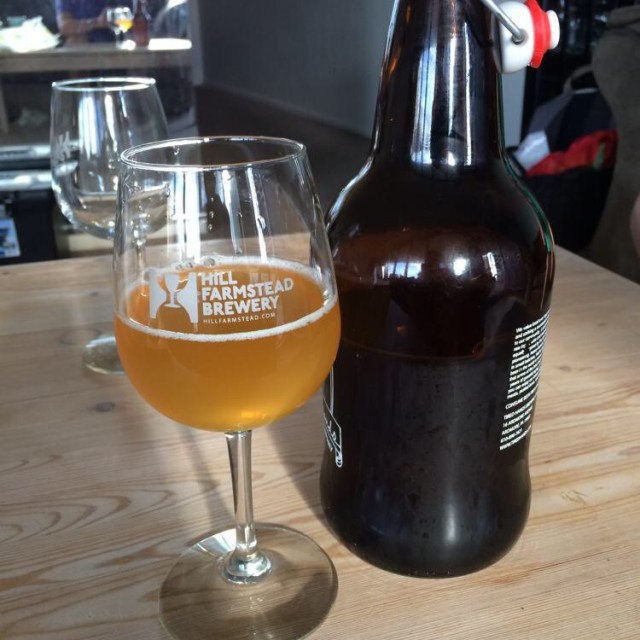
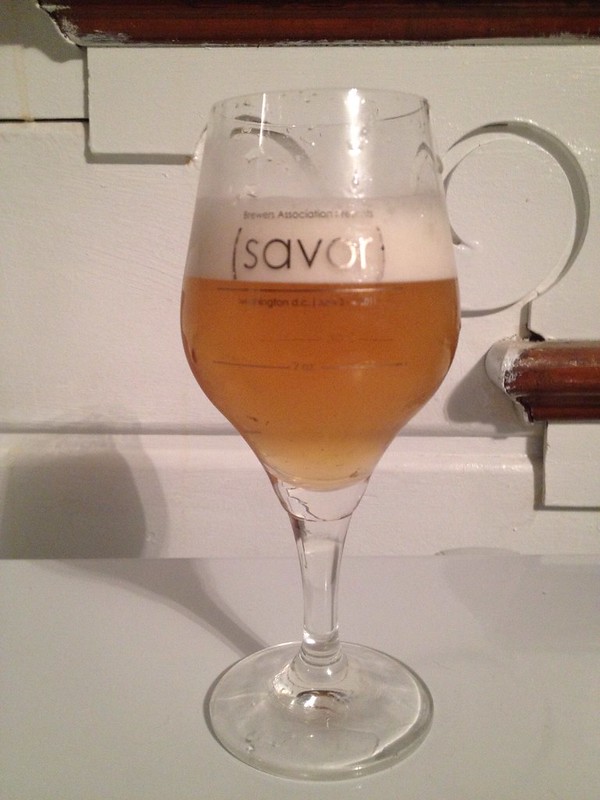
Showing posts with label Farmhouse Mild. Show all posts

Wednesday, July 15, 2015

Farmhouse Mild (Batch 06): Recipe

This was my sixth time trying out this recipe, a petit saison with Brettanomyces and miscellaneous bacteria, plus a slew of saison strains.  This was also my first beer brewed since my wife and I had twins in November, and I was also testing out quite a bit of new equipment, including a Blichmann 30-gallon kettle and a 13.20-gallon oak barrel!  The vast majority of this beer headed to the barrel.  I can't wait to have that around on tap and in bottles for a long time to come as soon as it's ready.

Since I'm not writing this four months after the beer was brewed (not to mention that it's the sixth iteration of the recipe), I'll keep the post fairly short and straightforward.  However, now that I'm brewing regularly again, I should hopefully have a steady stream of recipe posts.

Here are the full details on the batch:

Batch Number: 98
Brew Date: March 15, 2015
Keg/Bottle Date: 
Batch Size: 20 Gallon
OG: 1.035 (est.)
FG: 1.004 (est.)
Fermentation Temperature: 65-70* F (room temperature)
IBU: 30.0 (modified Tinseth from BrewCipher)
ABV: 4.2%
SRM: 3.0

Mash: Single infusion for 60 minutes at 154* F
Boil: 60 minute

Fermentables

10lb 0oz Dingemans Belgian Pilsner
7lb 0oz Flaked Wheat
3lb 0oz Vienna 
3lb 0oz Flaked Oats
1lb 12oz Acid Malt
1lb 8oz Flaked Rye

Salts & Water

9.3g Calcium Chloride (all in the boil kettle)
7.6g Gypsum (all in the boil kettle)
11.0g Sodium Chloride (all in the boil kettle)

Resulting water profile is as follows:

Mash pH (est.): 5.24
Calcium: 82
Magnesium: 12
Sodium: 50
Chloride: 125
Sulfate: 70

Hops

2.0oz Mosaic (pellet, 12.0 AAU) at 60 minutes 
3.0oz of Galaxy (pellet, 15.0 AAU), at flameout
3.0oz of Mosaic (pellet, 11.6 AAU), at flameout
4.0oz of Belma (leaf, 11.6 AAU), at flameout

Other

4.0 tsp. Wyeast Yeast Nutrient at 10 minutes

Yeast

Portions of the batch split between Ambrosia Blend 005 (10 gallons at room temperature), along with 5 gallons fermented with Wyeast 3724 (Dupont) and 5 gallons fermented with Wyeast 3726 (Blaugies).  The latter two were ramped up from 70*F to 84*F over a period of 11 days (see below)

Rather than chill before pitching, I set the beers out in my brew pots to chill overnight:


Cage to keep out all the raccoons and other critters near our house, and the box as it was supposed to drizzle a bit that night, and I didn't have a clean tarp.


Notes

03.15.2015: Into the Coolship at 138*. Hops were sitting in beer for 2.5 hours. Used spigot to drain 10 gallons into other pot. Total of 21 gallons. Current temperature is 57* (9:45 PM)

03.16.2015: At 8:00 AM, beers around 60*. Each got 30 seconds of O2. Accidentally left Mosaic bittering bag overnight in Blichmann kettle.

Set water bath to 72*F.

650mL total of AMB005. 50mL to 750mL of wort for continuing culture. 300mL to each 5 gallon batch.

10 hours after pitching, basement bath doing well. Both have airlock activity and bath sitting at 70*F due to the 2* differential.

03.18.2015: 2 days after pitching, good activity in basement water bath. Was down to 69* and heat turned back on. Bumped setting up to 74* with 2* differential.

03.19.2015: Three days after pitching, bumped to 76*.

03.21.2015: 4.5 days after pitching, at 75*. Bumped controller to 78*.

03.23.2015: 7 days after pitching. Probe said 77* and actual temp of each was 76*. Bumped to 80*. Each at 1.010. 3726 more mild with some light fruit and hints of spice. 3724 a fruit bomb with pineapple and juicy fruit.

03.24.2015: Bumped to 82*. For wild portion, one at 1.008 with beginning of bubbles for pellicle, and other at 1.006 with bubbles covering almost the entire surface.

03.25.2015: Bumped to 84*.

03.26.2015: Bumped to 86*. Differential still at 2*, so beer currently at 84* with heater on.

04.06.2014. Water bath below the probe level, but beers still at 80*F. Removed the temperature control.

June 2015: Of the 20 gallons, some was blended into Science & Art #8 (a future post), and the rest was added to a newly-acquired 13.2-gallon Hungarian Oak barrel.

Sunday, November 16, 2014

Farmhouse Mild (Watermelon): Tasting Notes

This was a batch of Farmhouse Mild that had the Pedio in the fermentation blend kick up some diacetyl after I had kegged the beer and before I tapped it.  In order to clean this up, I added some extra Brettanomyces, and since I had been wanting to try a beer with watermelon juice, I decided to add that here to provide some extra sugars to jump-start the Brett.  I ended up adding the juice from 8 pounds of watermelon into roughly 5 gallons of Farmhouse Mild, and then let it ferment for about a month.  The resulting beer had a nice watermelon character, with a nice taffy-like character.


Appearance: Pours a hazy light peach color with just a touch of pink in the light.  Big, fluffy white head with good retention, and plenty of sticky lacing on the way down.

Aroma: Nose starts out with a nice watermelon-taffy aroma, and then fades into some slight lactic acidity as well as a bit of plant-like watermelon rind.  The latter isn't off-putting at this level, and reminds me of the "green"-type flavor you get from something like watermelon gum.  Speaking of, I was pretty shocked how well watermelon taffy/gum apparently captures the flavor of watermelon juice.  (Well, at least how watermelon juice tastes after it's been fermented and mixed with saison.)

Flavor: Similar to the nose.  Quite juicy and refreshing.  It's too bad I'm only a few months late on this one, as it snowed half an inch in the Chicago area last night.  (In fairness, I've had this on tap since mid-October, though it's not like it was super warm then either.)  Watermelon really leads the way, dominating over any other character, though the watermelon itself is not overpowering.  I like the level here, even though the base beer doesn't shine through too much.  There's a touch of grain/grass in the background.  Though the hops from the base beer have mostly faded, there is still a generic "fruitiness" that I wouldn't attribute to the watermelon, and I'm guessing is lingering from the initial American hops.

Mouthfeel: Light and extremely refreshing.  This is something I could drink a gallon of after doing yard work in the summer.  Even as I sit here cold and watching football, it's hard to put down.  Super crisp with heavy carbonation, it's light and airy, yet the flavor still lingers quite well.

Overall: I'm quite pleased with how this one turned out, especially given that it was an experiment with a beer that had developed some issues.  I will absolutely return to this one next year, and this pretty much firms up my thoughts lately that there's no reason for me to brew fruited Berliners when I can instead just go with a session saison and add fruit (particularly when adding fruit juice, which creates a swift secondary fermentation).

Monday, July 21, 2014

Science & Art #3: Tasting Notes

Now that my keg for this blend kicked yesterday, I figured it was about time to put up some tasting notes.  First, a bit of background on the beer, which is the third "Science & Art" installation, a series of blended saisons.  The first was a blend of approximately 85% Farmhouse Mild and 15% Citrine, and the second was a similar blend of Dionysus #2 and Citrine.  The series has really inspired me to make sure to keep plenty of extra beer on hand in kegs for future blending, though I may also look at putting portions of batches that are promising for future blends into 1-gallon jugs.  I've already started to ensure that I'll have plenty of Citrine on hand at all times for future blending, and -- of course -- enough for blending multiple batches of Citrine and aging some on fruit.  (Michigan tart cherry version coming soon.)

For this one, all of the components of the first two were involved in different ratios, and I also added in Demeter Passion, which is a portion of a recent Demeter Auran batch aged on passion fruit puree.  I started with a keg of Farmhouse Mild, and it made up approximately 50% of the blend.  From there, Citrine made up about 20%, with Dionysus #2 (aged version of this batch of Namur) and Demeter Passion each filling out 15% each for the remainder.  I blended this directly into the keg of Farmhouse Mild that I had around, as I was looking for something unique to submit to a TalkBeer saison homebrew competition.  The results of that should be coming in soon enough, and I'll make sure to post some outside feedback once I have that.

Unfortunately, I didn't take any photos of this one, so the best I've got is a photo from a friend's Untappd checkin:


Appearance: Mostly clear with a bit of haze.  Pale golden color with an orange tint.  High level of saison carbonation leads to great retention with plenty of lacing on the way down.  (Unfortunately the above doesn't capture the usual form with a pour out of a growler that I had filled straight from the tap.)

Nose: Passion fruit and orange zest up front with a light acidic bite.  Very mild hints of oak with a bit of grain in the background.  Brett-related notes of mango and pineapple as well.  Pretty balanced with nothing standing out too much, though it's surprising how much passion fruit came through given that (1) Demeter Passion wasn't too heavy on the passion fruit and (2) that it comprised only about 15% of the blend.

Flavor: Quite similar to the nose, with the Brett-derived tropical fruit taking a more prominent role, though passion fruit is close behind.  A bit of citrus zest along with a mild funk, which appears here quite a bit more than in the nose.  Reminiscent of some of the character I often get from Crooked Stave beers, which makes sense as those dregs were used in a few components of this blend.  Just a bit of oak in the background as well.  Very light acidity, coming through more in the finish than as a substantial flavor component (just where I like it).

Mouthfeel: Light and crisp, though a decent enough amount of body coming from all the adjuncts used in many of the underlying beers, as well as the oak component coming from Dionysus #2.  Quite easy drinking, and was perfect for the first half of summer.  Light funk and acidity made this complex enough without being overpowering.  This probably explains why I went through the keg so quickly.

Overall: I was extremely pleased with this beer, and plan to blend something similar in the future.  I'd like maybe just a touch more oak in a future blend.  My only knock on this was that as it warmed, I could get just a hint of malt oxidation, which is likely because the Demeter Passion that I used came from bottles that I very gently poured into the keg to top off the blend after flushing the headspace with CO2.  While I was careful, I'm sure there was some oxygen pickup.

As mentioned above, in the future I'm hopefully going to keep around extra portions of miscellaneous beers in kegs or carboys so that I can blend easier.  Also, next time I'll definitely have to finish blending in a bottling bucket so that I can more accurately measure components and anything from bottles can be poured with the neck fully-submersed in the liquid.  Since this one was a bit on the fly and in a bit of a rush, that didn't happen here.

Finally, Science & Art #4 should be coming up soon, using Demeter Vert as the base.

UPDATE: This beer won the above-mentioned TalkBeer Homebrew Saison Competition.  Here is a link to the scoresheets that I received.

Wednesday, July 16, 2014

Farmhouse Mild (Batch 05): Recipe

This is the fifth iteration of Farmhouse Mild, and presented a good opportunity to try out a new yeast blend, which I always love.  In this case, it was GigaYeast Farmhouse Sour (GB121), which is new enough that it's not even on GigaYeast's website.  Instead, I had to take the description from Farmhouse Brewing Supply's website, which says that this is "a blend of Belgian ale yeast, Brett and lactic acid bacteria-- sweet, sour and a little funky."  This is my first product from them, and it sounds quite promising.  Hopefully the IBU in this one don't interfere too much with the lacto performance.

The other half of this batch is with an evolving blend that I've been using, Ambrosia Blend 05, which is a mixture of Yeast Bay Wallonian Farmhouse, East Coast Yeast Farmhouse Brett (Pure Strain) (ECY03-B), and Ambrosia Blend 002 (East Coast Yeast Saison Blend (ECY08), Brett C., and Brett Trois).

For the grist, I went with my typical mixture of a few different grains, including several adjuncts.  I started fairly late in the day, so ended up using some wheat and rye, foregoing the oats and raw spelt that I've used in the past.  (I want to try a cereal mash the next time I use raw spelt, and I was nearly out of oats.)  For hops, standard 60-minute addition for a bit of bitterness and for flameout, as always, I went with a decent amount of fragrant American hops.  In this case, Simcoe.

The recipe for the full batch is as follows:

Batch Number: 90
Brew Date: July 6, 2014
Bottle/Keg Date:
Batch Size: 10 Gallon
OG: 1.042 (estimated); 1.040 (measured)
FG: 1.003 (estimate); 1.005 (GigaYeast);
Fermentation Temperature: 72*F
IBU: 24
ABV: 5.2% (est.)
SRM: 4.0

Mash: Single infusion for 60 minutes at 152 F.
Boil: 60 minute

Fermentables

10lb 6oz French Pilsner
2lb Wheat, Flaked
1lb Vienna Malt
1lb Rye Malt
1lb White Wheat Malt
12oz Acidulated Malt

Salts & Water

8.0g Calcium Chloride (all added directly to the kettle)
4.0g Gypsum (all added directly to the kettle)

Resulting water profile (based on BrewCipher) is as follows:

Mash pH (est.): 5.42  (measurement swung from 5.4 to 5.5)
Calcium: 94
Magnesium: 12
Sodium: 7
Chloride: 88
Sulfate: 70

I used lactic acid to adjust the pH of the sparge water, adding 5mL to the 8.75 gallons of water used for the sparge.

Hops

1oz Nugget (13.3 AAU), pellet, at 60 minutes
4oz Simcoe (13.0 AAU), pellet, at flameout

Other

2 tsp. Wyeast Yeast Nutrient at 10 minutes

Yeast

5 Gallons: GigaYeast Farmhouse Sour (GB121) (Generation 1)

5 Gallons: Ambrosia Blend 05 (Generation 2)

For the GigaYeast portion, I simply pitched the pack, which was quite fresh (June 25, 2014).

For the Ambrosia Blend 05 portion, I calculated that I needed 85mL of slurry from the Demeter Vert cake.  Roughly 1.8 billion cells/mL based on the calculating from my previous slurry post.  Viability should be near 96% harvesting today according to yeastcalculator.com, so take starting volume of 154 billion cells to get to 148 viable cells.  154/1.8 = 85.

Notes

07.06.2014: Chilled to 70*F and pitched into a water bath that should sit at 70-72*F based on the setting (72*F) and differential (2*F).  Each bucket received 30 seconds of pure oxygen through a stone.

07.07.2014: At 24 hours, water bath is at 74*F, likely because it was over 90*F outside. Temperature should come back down a bit over night back toward 72*F.

07.09.2014: At 2.5 days, beer sitting at 70*F. Controller still set at 72*F with a 2*F differential.

07.27.2014: GigaYeast Farmhouse Sour portion measures 1.005 as final gravity, using the BrewCipher refractometer conversion.  10 Plato originally, and now measuring 3.75 Plato, converting to 1.0047 FG.

Same gravity readings for the Ambrosia Blend 05 portion.

The GigaYeast portion was blended into a new batch of Science & Art #3, with this one consisting of 4.5 gallons of Farmhouse Mild, one gallon of Citrine (dreg portion of Blend 05), and one gallon of Demeter Passion (from 5 bottles)

The Ambrosia Blend 05 portion was put into a keg.  Oddly, tasted normal at the beginning of the day, but after transferring to the keg and sitting for a few hours, I noticed some diacetyl.  That's happened with this one before, and ended up being why I added the lemon guavas to Farmhouse Mild (Lemon Guava), as those gave some additional sugars to get the Brett going again, which allowed it to clean up diacetyl presumably created by pedio that's infected plenty in the brewery (originally introduced through Crooked Stave dregs, which seem to have a pedio strain that really kicks up diacetyl).

If this one ends up showing signs of diacetyl after two weeks on its own in the keg (I intentionally transferred a decent amount of the cake to have Brett in suspension), then I'll consider adding in some fruit, or maybe even bottling and priming with some fruit juice.  It may take a bit of time, but the Brett should be able to clean up pedio's mess.

08.24.2014: For the portion that had some issues with diacetyl, I transferred it back to a carboy on top of the juice from 8 pounds of watermelon.  I also added some fresh yeast from Demeter Automne, hoping to capture enough Brett to clean things up.


11.16.2014: Tasting notes for the watermelon portion can be found here.

Wednesday, May 21, 2014

Farmhouse Mild (Lemon Guava): Tasting Notes


This beer started as a portion of the third batch of Farmhouse Mild that I brewed back in December.  The beer had a bit of a pedio issue, kicking up a lot of diacetyl.  Since it was going to take the Brett a bit to take care of that, I figured I might as well experiment with some fruit that I'd been wanting to try.


Over the summer, I had frozen 5 pounds of chopped lemon guavas, which I find to be highly enjoyable.  They're about the size of a lime, and are a pale yellow, with a "burst" at one end:


The flavor is fantastic.  A combination of lemon and guava, with a bit of pineapple thrown in.  Very tropical, and lightly tart.  The inside has small and hard (yet edible) white seeds.

I let transferred the Farmhouse Mild over to a keg on top of the 5 pounds of chopped, previously frozen fruit, filled the headspace with CO2, and let them sit for about two months.  I got the beer on tap in early March, but am just now finally getting around to posting tasting notes.


Appearance: Hazy bright yellow. Shiny with a fluffy white head. Short retention time with little lacing.

Aroma: Nose is bright guava with hints of pineapple and nice backing lemon. Fruit skin hits there as well. Bit of backing wheat, though the overall grain presence is fairly minuscule.

Flavor: Lemon, guava, light acidity, and a bit of fruit skin. Very faint tannin. Lemon guava in liquid form with a bit of extra pineapple and extra acidity. Mild Brett C induced funk in the background. Can just barely taste the wheat.

Mouthfeel: Very light and crisp. Strong carbonation. Extremely easy drinking. Tartness is more than noticeable, but not quite sour. Berliner level in that regard. Low alcohol making it excessively quaffable.

Overall: One of the best beers that I've done to date. At this point, really can't think of how I would change this up too much. Would perhaps up the sodium and chloride levels up just a touch in the water profile, and maybe use a little more wheat, or change up some of the existing flaked wheat unmalted wheat. Maybe 5% or so of oats, enough to give just a bit more body without taking away from the drinkability.

Saturday, February 22, 2014

Ambrosia Farmhouse Mild (Batch 04): Recipe

This is now my fourth time overall brewing Farmhouse Mild.  Most of the recipe is the same, but this time I also added a bit of raw spelt to give the recipe a little more of a rustic flare.  The spelt was not cereal mashed.  I had also run out of Munich, so this time I used a little Aromatic and Vienna instead.  Finally, for a bit more color, I added a bit of CaraMunich.

For the hops, this was my first time using Belma, which should give a nice fruitiness to the beer, as the HopsDirect website describes the hop as follows: "very orange, slight grapefruit, tropical pineapple, strawberry, and melon aroma."
The recipe for the full batch is as follows:

Batch Number: 78
Brew Date: February 2, 2014
Bottle/Keg Date:
Batch Size: 10 Gallon
OG: 1.044 (estimated)
FG:
Fermentation Temperature: 65 F
IBU: 25.2
ABV: 5.6% (est.)
SRM: 5.9

Mash: Single infusion for 60 minutes at 154 F.
Boil: 60 minute

Fermentables

6lb 8oz French Pilsner
4lb White Wheat Malt
2lb Wheat, Flaked
1lb Spelt, Raw
1lb Vienna Malt
14oz Acidulated Malt
8oz Aromatic Malt
8oz CaraMunich Malt
8oz Oats, Flaked
8oz Rye, Flaked

Salts & Water

5.5g Calcium Chloride (all added directly to the kettle)
2.8g Gypsum (all added directly to the kettle)

Resulting water profile (based on EZ Water Calculator v3) is as follows:

Mash pH (est.): 5.40
Calcium: 70
Magnesium: 12
Sodium: 7
Chloride: 59
Sulfate: 53

I used lactic acid to adjust the pH of the sparge water, adding 5mL to the 9 gallons of water used for the sparge.

Hops

5mL HopShot at 60 minutes (25.2 IBUs)
2oz Belma (11.6 AAU), at flameout
1oz Simcoe (13.0 AAU), at flameout
1oz Amarillo (8.5 AAU), at flameout

Other

2 tsp. Wyeast Yeast Nutrient at 10 minutes

Yeast


Notes

02.02.2014: Added 5mL of 88% lactic acid to the 9 gallons of sparge water to achieve a sparge water pH of 5.6, using the sparge water acidification measurements provided in the spreadsheet available from Homebrewing Physics: http://homebrewingphysics.blogspot.com/2014/01/mph-water-calculator-v12.html.

Measured mash pH of 5.5 at roughly room temperature.

Used cake from 01.05.2014 batch (unrecorded; lost notes).  133mL to each bucket after 30 seconds of oxygen.  Loose lids.  Chilled to upper 60s.  OG is 1.047.

02.04.2014: Very strange fermentation here.  Looks very slightly ropy on the top after 48 hours.  At 36 hours, there were visible CO2 bubbles rising to the top and the gravity was down to 1.044.  At 48 hours, there still is no krausen, but there are visible bubbles and it's down to 1.039.

02.05.2014: Ended up adding a wine thief or two full of the batch with HF Anna dregs to each bucket, and 12 hours later a krausen had started to form.  24 hours later, at full krausen underneath the Brett pellicle.  Very interesting look.

Wednesday, December 4, 2013

Farmhouse Mild: Recipe (Version 3)

This is now my third time overall brewing Farmhouse Mild, and the second time in the past few months. The first keg on the last batch kicked way too quickly, and the other half was blended with my blonde sour (Citrine) and bottled. For this round, I kept almost everything the same, changing up the hops a little bit and also added a bit more acidulated malt.

The recipe for the full batch is as follows:

Batch Number: 73
Brew Date: December 1, 2013
Bottle/Keg Date:
Batch Size: 10 Gallon
OG: 1.043 (measured)
FG:
Fermentation Temperature: 67 F
IBU: 44.5
ABV: 4.1% (est.)
SRM: 4.1

Mash: Single infusion for 60 minutes at 154 F.
Boil: 60 minute

Fermentables

8lb French Pilsner
4lb White Wheat Malt
2lb Wheat, Flaked
1lb 8oz Munich Malt
12oz Acidulated Malt
8oz Oats, Flaked
8oz Rye, Flaked

Salts & Water

5.5g Calcium Chloride (all added directly to the kettle)
2.8g Gypsum (all added directly to the kettle)

As referenced above, this time I upped the acid malt to get to the proper mash pH, and then added these flavor adjustments directly to the boil kettle.  Given the batch size, I did a double batch sparge, with the second sparge using only distilled water to make sure I wasn't pulling the pH up too high.  I wanted to add a bit of lactic acid, but wasn't able to quickly find a good calculator to use online.

Resulting water profile (based on EZ Water Calculator v3) is as follows:

Mash pH (est.): 5.40
Calcium: 70
Magnesium: 12
Sodium: 7
Chloride: 59
Sulfate: 53

Chloride / Sulfate Ratio: 1.11 (Balanced)

Hops

2.0oz Citra (12.9 AAU), leaf, at 45 minutes
2.0oz Amarillo (6.9 AAU), leaf, at flameout
1.0oz Citra (12.9 AAU), leaf, at flameout
1.0oz Simcoe (12.4 AAU), leaf, at flameout

Other

Whirlfloc (2) at 10 minutes
2 tsp. Wyeast Yeast Nutrient at 10 minutes

Yeast

Wyeast 3725 Biere de Garde (x2)
Miscellaneous saison dreg blend
Crooked Stave dreg blend

I built up a starter from the Demeter Spectre cake starting two days before the brew.  It was a 1.5 L starter, and prior to pitching, I also added dregs from Crooked Stave Saison Vieille and Surette Provision Saison.  I did not decant the starter.  While I normally do, here I didn't have too much time, and given the volume of the cake that was being reused, the starter was quite thick even after going for a few hours without being shaken.

Notes

12.01.2013: After the boil, I chilled to 68* F and added 30 seconds of pure oxygen to two separate buckets, which will each serve to ferment half the batch.  I placed the buckets in the basement with the lids on loosely.

12.02.2013: Both buckets showing strong fermentations, with the internal temperature of each sitting right around 67* F.

12.08.2013: Most of the activity appears to have stopped and the beer is around 1.010.  After taking the sample, a fastened the seals on the lids of the buckets.

01.05.2014: Kegged into multiple batches.

After going on tap, one has a bit of diacetyl after being on for about a week; I think there's likely pedio in this blend, so maybe it kicked back up?  Taking it off tap and going to add lemon guavas and some additional Brett to see if it will take care of the diacetyl.

The other half was later also blended with some Citrine to create a second blend of Science & Art #1 to go on tap.

05.21.2014: Tasting notes for the 5-gallon portion that sat on 5 pounds of lemon guavas for two months.

Wednesday, November 20, 2013

Farmhouse Mild: Tasting Notes

I had really been delaying writing down some tasting notes for Farmhouse Mild, as while I really enjoyed the beer, I was having quite a bit of difficulty figuring out exactly how to describe it.  When I finally got around to taking some notes last Sunday during the Bears-Ravens weather delay, it proved to be fortunate timing, as the keg kicked that evening.


Appearance: Pale yellow-golden color with an initial fluffy white head.  Slightly hazy body with visible carbonation bubbles.  Fairly decent head retention with a bit of lacing.

Aroma: The nose has an initial whiff a faint lemon alongside what I can best describe as a Sweet Tart candy-type flavor.  It's unquestionably fruity, though it's difficult to describe what's there aside from the lemon.  I guess it's faintly tropical, perhaps including guava and a bit of tart apricot.

Flavor: Lightly tart with a hint of background wheat.  The main flavor is a generic fruitiness similar to Sweet Tarts when considering the combination of fruit and mild acidity.  Again, guava and apricot are probably the best I can do, though neither would be particularly prominent.

Mouthfeel: The body is light and airy with some background wheat to help prevent it from being too boring.  It's dry with just a touch of residual sweetness.  Moderate carbonation and overall very drinkable with a lingering acidity.

Overall: One of my favorite beers that I've brewed to date.  It's very light and easy drinking, but has enough complexity to keep it captivating.  The acidity is faint and adds an interesting twist, without being to the level where it detracts at all from drinkability.

In the end, 5 gallons wasn't nearly enough of this.  I made 10 gallons of the base beer, though half of that was blended with some Citrine in what became Science & Art #1.  I will have a post up on that as soon as I have time to open a bottle and take some notes.

Friday, September 20, 2013

Farmhouse Mild (Batch 02): Recipe


This is my second time doing a Farmhouse Mild, and my second batch (first was Bitter Beer Face Pale Ale) since moving back to Illinois. The first batch of this beer was split and mostly treated with separate strains of Brettanomyces, so I'm looking forward to having a full 10 gallons. The plan is to keg 5 gallons straight, and then blend the other 5 gallons with a portion of my blonde sour (Citrine) and then bottle.

The recipe for the full batch is as follows:

Batch Number: 68
Brew Date: September 15, 2013
Bottle/Keg Date: October 4, 2013
Batch Size: 10 Gallon
OG: 1.043
FG:
Fermentation Temperature: 70 F
IBU: 46.1
ABV: 4.1% (est.)
SRM: 4.1

Mash: Single infusion for 60 minutes at 154 F.
Boil: 60 minute

Fermentables

8lb French Pilsner
4lb White Wheat Malt
3lb Wheat, Flaked
1lb 8oz Munich Malt
9oz Acidulated Malt
8oz Oats, Flaked
8oz Rye, Flaked

Salts & Water

5.5g Calcium Chloride (split between mash and sparge)
2.8g Gypsum (split between mash and sparge)

Resulting water profile is as follows:

Mash pH (est.): 5.50
Calcium: 70
Magnesium: 12
Sodium: 7
Chloride: 59
Sulfate: 53

Chloride / Sulfate Ratio: 1.11 (Balanced)

Hops

8mL HopShot (~40 IBU) at 60 minutes
4.5oz Amarillo (6.9 AAU) at flameout*
4.5oz Citra (12.4 AAU) at flameout*

* These hops were refrigerated rather than frozen during the period from May to August while we were in temporary housing, so I added quite a bit more than I otherwise would have based on their aroma, which was not cheesy or oxidized, but was weaker than normal.

Other

Whirlfloc (2) at 15 minutes
1 tsp. Wyeast Yeast Nutrient at 15 minutes

Yeast

Wyeast 3725 Biere de Garde (x2)
Crooked Stave dreg blend
Miscellaneous saison dregs

Notes

09.15.2013: Smackpacks of 3725 are dated June 30, 2013. Also adding 500mL worth of saison dreg blend slurry from the Demeter Auran cake from March 30, 2013. Also added a mixed thin slurry of dregs from Crooked Stave Hop Savant, Crooked Stave St. Bretta (Spring), and Crooked Stave St. Bretta (Summer). The total of this thin slurry was approximately 250mL. Initial pitching temperature was 72 F. Provided 25 seconds of pure oxygen to each 6-gallon bucket. I placed the lids loosely on the buckets instead of sealing tightly.

The hops are a bit dated and don't smell as pungent after being in the chest freezer at 35-40 F from May through August at my parents' house in Clarendon Hills, Illinois. Thus, used double what I normally would.

09.16.2013: Both buckets have a healthy krausen and are fermenting at 67-68 F at 7:30 PM. Current outdoor temperature is 57 F.

09.20.2013: This morning the krausen was down to a very thin layer of film, so I sealed the lids on the tops of the buckets.

10.04.2013: Kegged half the batch. The other half was blended at a 4:1 ratio with Batch 04 of Citrine and bottled, aiming for 2.7 volumes of carbonation.

11.20.2013: Tasting notes posted.

Monday, May 14, 2012

Farmhouse Mild: Tasting

 
I'm finally getting around to doing some tasting notes for Farmhouse Mild, which I brewed back at the end of March.  I only kegged up two gallons of this batch, so I have been saving it until I had some time to review it and use my Beer Gun to get a few bottles filled.  The other three gallons were split between three one-gallon jugs, with each one getting a dose of a different Brettanomyces strain.  I used White Labs Bruxellensis, Clausseni, and Lambicus.  I plan to bottle each of those after letting them sit with the Brett for a bit.

Appearance: Pours a very pale golden-straw color.  Very clear with a nice, fluffy white head.  Good retention and some spotty lacing as it falls down.  A thin cap remains throughout.  3/3.

Aroma:  The nose brings faint earth and herbal character along with a touch of white pepper.  There isn't much fruitiness, despite the American hops that I used.  I can't say that I miss it, although I expected a bit more given the level I put in there and the otherwise-basic recipe.  Behind that is a bit of light pilsner malt and a touch of straw.  As it warms, there's just a bit of Amarillo in the background.  9/12.

Flavor: It starts out with some crisp pilsner malt with some wheat and straw in the background.  Behind that is a nice yeast presence; most prevalent are notes of faint pepper and just a touch of fruit, which was otherwise missing from the nose.  Behind it all is a nice, smooth bitterness leading to a very crisp finish.  I think the yeast presence is nicely subdued, and I'm not sure I'd want too much more from a beer that is intentionally light and refreshing.  Perhaps a bit more hop flavor would put it over the top.  Perhaps another half ounce or so at 5-10 minutes.  16/20.

Feel: Body is very light and refreshing.  Quite crisp with moderately-high carbonation.  I think that this is something that can comfortably sit around 2.5 volumes.  Bitterness is just right.  There isn't much I'd change about the feel of this one.  It's crisp and dry, and leaves behind just a bit of flavor through the finish.  4/5.

Overall: This is the second iteration of a small saison that I've done.  The first was Petit Saison, and this is the Farmhouse Mild.  There wasn't much variation between the two, and I really like how both turned out.  Perhaps some minor tweaking over time, but not much.  8/10.

Score: 40/50

This is something I could really see ending up as the flagship of a brewpub.  In the past I had thought something like a Kolsch, but this offers a bit more complexity, and also wouldn't require the addition of a separate yeast.  I would really like to follow the model of a place like Tired Hands, basically only using American Ale and Saison yeast, then letting various other critters go to work in a separate barrel-aging area.

Saturday, March 24, 2012

Farmhouse Mild: Recipe

Last fall, I made a Petit Saison with White Labs' Saison I strain. It was a 4% ABV beer with about 25 IBUs and an ounce of Sorachi Ace at flameout. That beer quickly took the place of my Kolsch as my favorite low-alcohol beer, not including, of course, my series of "American Bitters." For round two, I wanted to test out the Wyeast Farmhouse Ale strain. To match the peppery and earthy characteristics, I wanted a bit of fruit, so I went with small hop additions of Citra and Amarillo. My thought on this was that I might be able to capture something akin to very fresh Fantôme Saison, which has beautiful notes of peach and tropical fruits.

Batch Number: 33
Brew Date: March 24, 2012
Keg Date: TBD
Batch Size: 5 Gallon
OG: 1.037
FG: TBD
IBU: 25
ABV: TBD
SRM: 3.0

Mash: Single infusion for 90 minutes at 149 F.
Boil: 90 minute

Fermentables

7.0 lb French Pilsner
0.50 lb Flaked Rye

Hops

0.5 oz Citra (12.4 AAU) at 20 minutes
0.5 oz Amarillo (6.9 AAU) at 20 minutes
0.5 oz Citra (12.4 AAU) at flameout
0.5 oz Amarillo (6.9 AAU) at flameout

Other

1/4 tsp Yeast Nutrient at 10 minutes
Whirlfloc tablet at 10 minutes

Yeast

Farmhouse Ale (Wyeast 3726)

Notes

03.20.2012 Made a starter with Wyeast 3726 Farmhouse Ale. I forgot to write down the date, but I think the package was 8-10 weeks old. I wasn't terribly concerned with the age, as I'm using this to make the second beer in my line of petit saisons. The volume is approximately 1.6 liters.

03.24.2012 Brewday. This is the first brew at our new house. The starter has fully fermented and the yeast is dropped. Very clear beer remains.

I mashed at 149 F for 90 minutes, infusing with 12 quarts of 163 F water. Initial mash temperature was 149 F after adding a pint or two of filtered water. The final temperature in the mash tun was 147 F. After draining, I batch sparged with 6.5 gallons of 180 F water. The final yield was 8 gallons of 1.029 runnings.

After chilling to 70 F, I transferred the wort to a 6-gallon Better Bottle with a funnel, sending over the trub and all. It got some aeration during this time, and also as I sloshed it carrying the carboy down the basement stairs. Give this, and the fact that the OG only came in at 1.037, I didn't feel the need to blast with pure oxygen.

While I normally decant the starter wort, this time I did not, as I hadn't really introduced much oxygen over its course, and also because there was still some yeast left on top, so I thought I'd give it ago. After all, it probably won't affect the flavor much (if at all) and it means an extra 1.5 liters of beer for me.