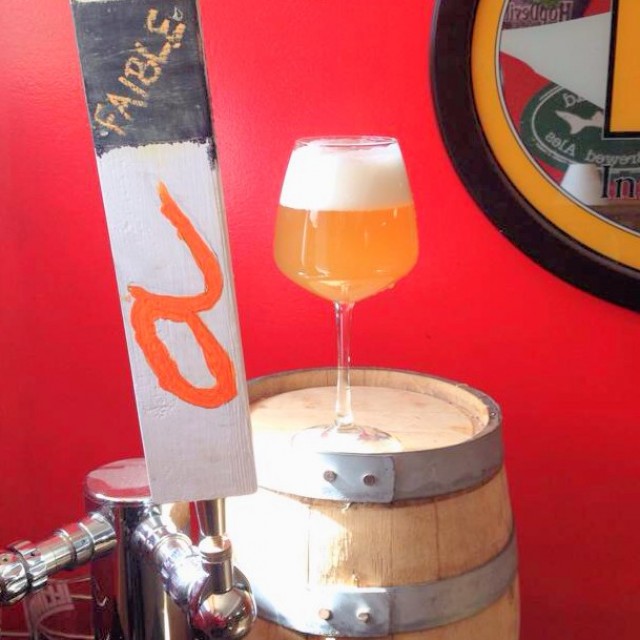
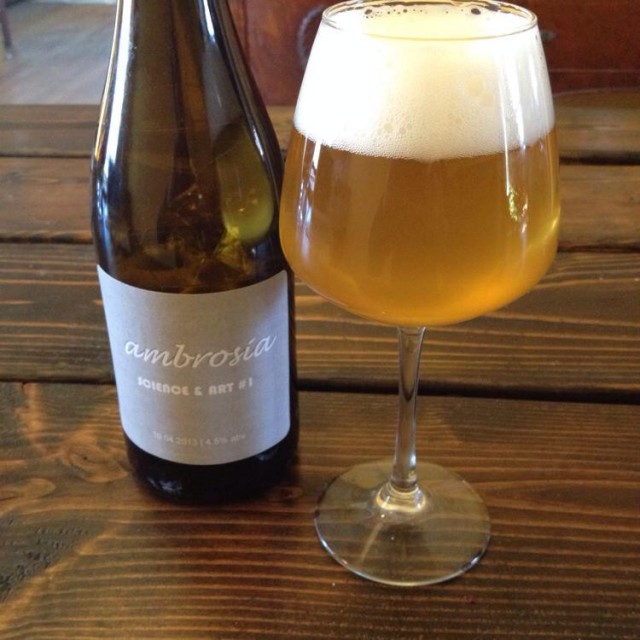
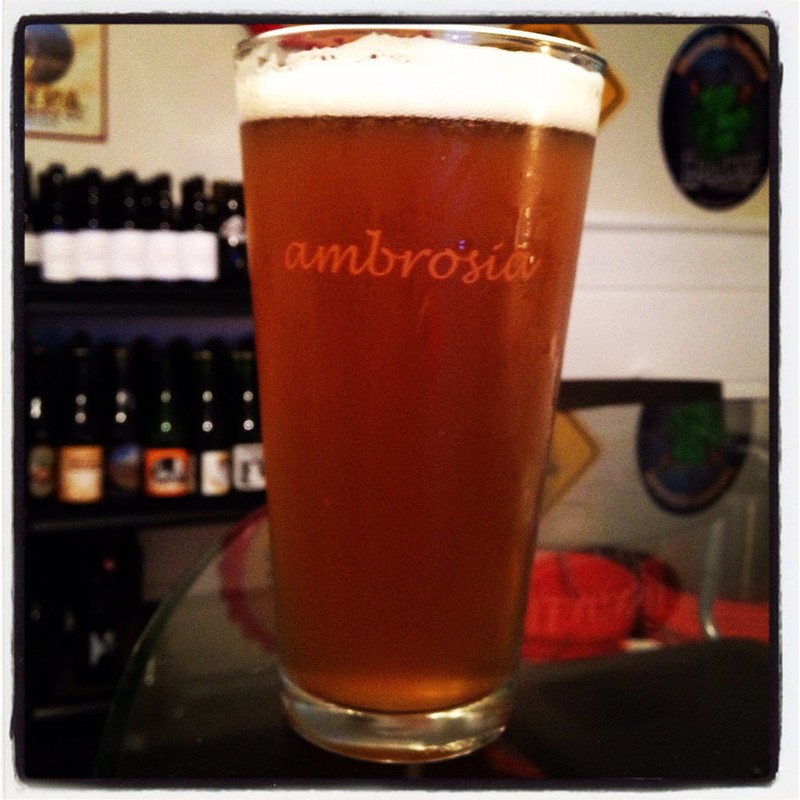
It's been a long time coming as this keg has (unfortunately) long since kicked, but below are the tasting notes for the second batch of Saison Faible (recipe here), which is designed to be a light, easy-drinking saison. This is the portion of the batch that was fermented with Wyeast 3726 Farmhouse Ale. The beer was carbonated in the keg to approximately 3.0 volumes of CO2.
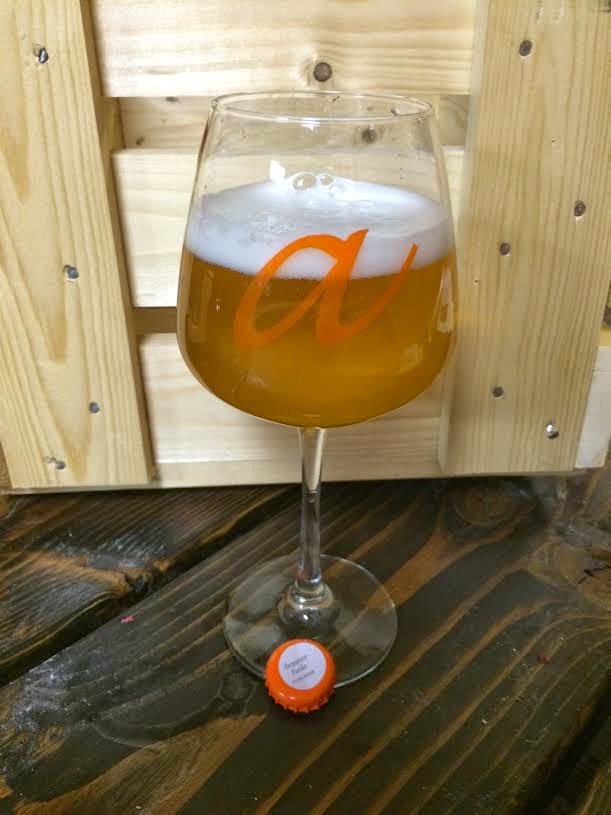
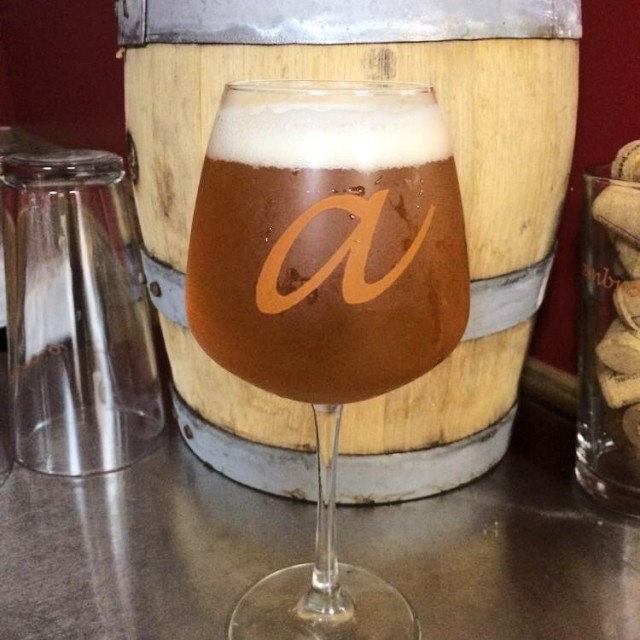
Appearance: Heavy, creamy head atop a hazy golden beer. Great retention and heavy lacing on the way down. One of the best-looking beers that I've brewed. As I think I have mentioned in the past, I love the rustic look of a hazy saison as opposed to one that pours crystal clear.
Nose: Strong with notes of mango, orange zest, honey, and a bit of pear. Almost a light, vanilla-like character as it warms.
Taste: Similar to the nose, but actually has a bit of tart cherry in the background. It's not a sour beer by any means, but there is a very faint tartness through the finish. Just a hint of earthy spice.
Mouthfeel: Full and creamy up front, but finishing quite dry. The oats and wheat added plenty of proteins, and it seems like this yeast produces plenty of glycerol, together leading to a lovely feel. At the same time, finishing around 1.002-1.004 doesn't leave much there, and the finish is accordingly quite dry.
Overall: Not much I would change about this one, and I'm looking forward to brewing another batch. This is something I plan to have on tap year round at the future tap room, and is making me think twice about doing all oak fermentation with Brett in everything. While there is undoubtedly a bit of Brett going to work here (given that there was a pellicle at the time of kegging), its character is relatively muted compared to the Saccharomyces and hops.
A blog devoted to craft beer and homebrewing, with an emphasis on saisons, wild ales, and other farmhouse beers. Home to recipes and tasting notes for Ambrosia Farmhouse Ales.
Showing posts with label Tasting Notes. Show all posts
Monday, October 19, 2015
Thursday, February 26, 2015
Garnet: Tasting Notes
Background and tasting notes for a blonde sour (Citrine Batch 5) aged on tart cherries.
While at this point I've done plenty of fruited saisons (Demeter Auran, Demeter Vert, Demeter Sinis (Cranberry), Demeter Spectre, etc.), this was only my second time preparing fruited sours. The first was way back when I blended the first three batches of Citrine, adding gooseberries, rhubarb, blueberries, and kiwi to different portions. The gooseberry version was a disaster, as the puree that I purchased tasted more like twigs than any sort of gooseberry that I've ever tried. The blueberry version was okay, just a bit plain without enough funk and acidity to back up the berry flavor. The kiwi and rhubarb versions were both quite good, in my opinion, and are something I need to get back to. Luckily, after a few trips to farms around Michigan last summer, I have a decent stockpile of fruit to work through.
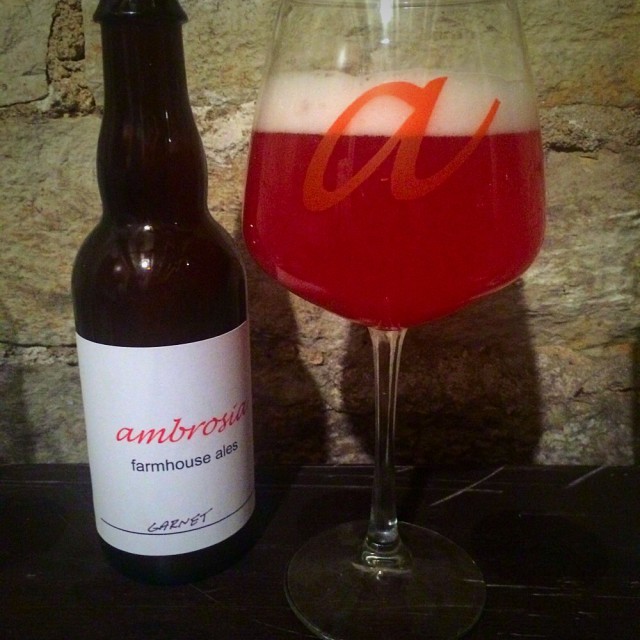
This beer went more traditional, using Montmorency tart cherries from a farm in Southwest Michigan. Alongside this, I also added black raspberries to a Flanders Red to create Amethyst, a beer I'll have notes on in the future. Amarelle and Morello are the two main tart cherries types grown in the United States. Montmorency cherries, a type of Amarelle, don't give nearly as deep of a red color as Balaton, a type of Morello, because while the skins of Amarelle cherries are bright red, the insides are more of a pale yellow. In contrast, with Morello cherries, both the skin and flesh are dark. That's why Garnet, pictured below, isn't that deep red color one often expects from a kriek, even though I used a typical ratio of two pounds of fruit per gallon of beer (actually two pounds of fruit per gallon of available fermentor space, filling to the top with aged blonde sour).
The process for this one was relatively simple. I took roughly 3 gallons of the ECY20 version of that Citrine batch and transferred onto 6 pounds of tart cherries that we picked up in Michigan over Fourth of July weekend, all in a 3-gallon Better Bottle. This Citrine base was lightly acidic, but a little plain. The was pH down to only 4.2, even with gravity at 1.002. Some faint melon character. I was hoping the cherries will add some depth and acidity, especially with the inclusion of the pits. While I took a bit of a gamble here not having the most interesting Citrine base, I also thought that the beer would have time to evolve while the cherries fermented away, and I didn't want to go with a base that was too acidic, as I still wanted the base beer to be quite drinkable, as I really loathe overly-acidic beers, particular when acetic acid becomes involved. As indicated in the notes below, I may have been a little too conservative using a "bland" base as the resulting beer could certainly use more depth, but the acidity is just where I want it and the drinkability is quite high.
Appearance: Bright deep pink with a nice bubbly head. Pretty clear beer without much, if any, fruit sediment, as the cherries stayed mostly intact during the secondary fermentation period and through the transfer.
Nose: Bright cherry with a bit of skin. Backing wheat with some lemon and moderate acidity. Could use a bit more funk, and also potentially a cherry blend. Next time I'll consider going with a blend of Montmorency and Balaton, both of which I'll hopefully be able to find this summer. I won't have that problem in a few years, as my wife and I will be planting Montmorency and Balaton cherry trees in our backyard this spring, alongside a new apricot tree and a few cider trees that we planted last year.
Flavor: Similar to nose with a bit more lemon. Definite cherry dominance. Could use more earth and skin with more-pronounced Brett and funk. This would work really well with just a bit of something like Ruby, for a bit more funk and earthiness. As it warms, there's just a bit of biscuit and pie crust in the background rounding out the flavor profile.
Mouthfeel: Very light and crisp and moderate acidity. Super clean lactic character with just a bit of lemon juice. Moderate carbonation. Could maybe use just a bit more, though doesn't need to be at saison levels. Super clean, falling off the palate quickly after swallowing.
Overall: A bit simple, but I really like it for what it is. As detailed above, this wasn't the most-inspiring Citrine base and was fairly young, but is a great showcase for the profile of these cherries. With just a bit more depth, and an increased cherry ratio or blend, this could be a really winner. I would maybe even increase the cherries by 50% if using straight Montmorency again. I could see doing a little blend with this for a future beer in the Science & Art series, blending with a Flanders Red, or putting a bit into a blonde Brett saison to add a bit of extra fruit character.
Tuesday, January 27, 2015
Demeter Facile: Tasting Notes
After nearly three months in the bottle, I'm getting around to posting tasting notes for Demeter Facile (recipe). The idea behind this one was to go with a (relatively) simple malt bill and fairly-minimal hop additions so that I could get a beer that showed off the character of my current house blend (Ambrosia 005) of saison yeast (Saccharomyces), Brettanomyces strains, and lactic acid bacteria (LAB). Overall, I'm quite happy with the results, and this is something that I will most definitely be brewing again in the future. I'll also plan to do an oak-aged version soon enough.
Appearance: Quite clear. Color is a medium yellow with a sizable initial head that fizzles down a bit quickly. Could be better in this area, though the retention isn't horrible.
Nose: Begins with yellow and orange SweeTarts, leading into faint tropical fruit. A bit of apricot. Light grass and wheat. Some honey as it starts to warm, potentially from the bit of honey malt that I used in this one. (While I wanted to keep it simple, I love honey malt in saisons and couldn't resist). Hints of lime zest as well, lingering after the more-upfront mango and tangerine subside.
Flavor: Similar notes as the nose, but with a light-to-moderate tartness through the finish. Just where I like it, tart without really being sour. Maybe a bit of pineapple that I wasn't really getting from the nose. Mango, tangerine, and light lemon/lime seem to be the dominant characteristics. I'm guessing this is mostly from the yeast and bacteria rather than the hops, as I didn't use much Centennial, and it's not the light orange and generic citrus that I typically associate with Centennial.
Mouthfeel: Light and airy, definite saison carbonation. Could use a bit more body. Might need to up the adjuncts next time. Really easy drinking; the bottle goes down way too quickly.
Overall: I really like this beer and am pretty damn pleased with what my standard blend did with an otherwise-simple base beer. I'd like to try bottle conditioning this with honey at some point, and also potentially with a tropical fruit juice. As mentioned above, a bit of oak could also add a bit of complexity.
Thursday, November 20, 2014
Science & Art #5: Blend & Tasting Notes
With Science & Art #4 being unique as the first in the series that didn't use Citrine, this one is unique in that it is the first dark blend. It's also the beer blend that uses something other than different saisons as a sizable portion of the blend, with a Flanders-style wild being the largest component of the blend. In the end, this one ended up being 50% Flanders-style wild and 50% dark saison. The Flanders-style component is made up of two batches of Ruby (Batch 02 (recipe lost due to a computer issue, unfortunately) and Batch 03), and the saison component is made up of Demeter Rouge and Demeter Sinis (Cranberry). The final blend was as follows:
- 2 gallons of Ruby (Batch 03)
- 2 gallons of Demeter Rouge
- 0.5 gallons of Ruby (Batch 02)
- 0.5 gallons of Demeter Sinis (Cranberry)
Overall, I think this blend really captured what I was looking for, which was to take the fruitiness of Demeter Rouge, but cut back on the acidity created by the passion fruit. Oddly enough, this was accomplished by cutting the beer with a sour Flanders-style base, albeit versions of that beer that were more funky than acidic, particularly given the age of the "young" Ruby that was used. The Demeter Sinis (Cranberry) added a nice bit of cranberry alongside some earthy, spicy notes from the black cardamom and lavender used in that beer. Finally, the Ruby additions allowed some mild funk along with notes of strawberry, raspberry, and general jam character, which is something I've had in my recent dark wild beers, particularly Biere de Nord (which I actually thought about using a bit of in this blend, but determined it wasn't necessary).
In terms of process, the Demeter Rouge, Ruby (Batch 02), and Demeter Sinis (Cranberry) were all already carbonated, so I had to be careful on that front. The Demeter Rouge was carbonated to around 2.0 volumes in a keg, and the latter two had already been bottle conditioned and were probably around 2.5 and 3.0 volumes, respectively. Given this, I opted to only aim for 2.0 volumes when using the priming calculator, assuming that this would eventually get me somewhere in the 2.5-3.0 volume range.
In the future, once I hopefully open up a small brewery and have my own little barrel room, I'll be able to blend components without worrying about needing to pull from previously-bottled batches. One thing I'm planning on doing in the future to have more for blending is to take a half gallon or gallon of each batch and let it continue to age in a growler or gallon jug. That way, I can have uncarbonated beer for blending, and also add wine- or spirit-soaked oak cubes to portions of a batch for greater complexity. I've done smaller portions with oak cubes in the past, but never with the general intention of saving that beer for blending.
With that, the full tasting notes for this blend are below. Follow additional views on this beer, take a look at its page on Untappd.
Appearance: Deep mahogany with an even stronger reddish hue under bright light. Head fizzes up light brown, a bit darker and thicker than with cola. Could go for better retention and stability, though it's not too bad considering that a decent chunk of this beer is Flanders-style wild.
Aroma: Initial nose is quite fruity with cranberry and cherry leading the way. A hint of orange zest alongside faint coffee and chocolate notes. A touch of roasted malt and hints of cardamom. Lactic acidity in the back along with a touch of earthy funk. There's a general fruity, berry-jam character to it as well, which I attribute to the Ruby variations included in the blend. Strawberries and raspberries more and more as it warms. Just a hint of tropical fruit. The cranberry, of course is from the cranberry version of Demeter Sinis, and the cherry comes from the Demeter Rouge. The passion fruit in the Demeter Rouge is only there in faint tropical notes.
Flavor: The tropical character comes through plenty more in the flavor, along with more noticeable acidity. Cherry, cranberry, and jam there as well. A bit of earth and funk, though that's relatively minor. Hints of red wine.
Mouthfeel: Medium-light and moderately acidic. Carbonation moderate as well, hitting about where I wanted it to be. It's elevated over typical clean ale levels, but not nearly high enough to be at saison level. The beer is a bit light, and could use some extra body. It would have been great to have been able to put this in a red wine barrel, picking up some oak character, tannin, and body.
Overall: I'm quite happy with this blend. Other than the aforementioned lack in body, there isn't too much that I would change here. I think this one definitely accomplished the foremost blending goal of creating something more interesting and enjoyable than any individual component.
Sunday, November 16, 2014
Farmhouse Mild (Watermelon): Tasting Notes
This was a batch of Farmhouse Mild that had the Pedio in the fermentation blend kick up some diacetyl after I had kegged the beer and before I tapped it. In order to clean this up, I added some extra Brettanomyces, and since I had been wanting to try a beer with watermelon juice, I decided to add that here to provide some extra sugars to jump-start the Brett. I ended up adding the juice from 8 pounds of watermelon into roughly 5 gallons of Farmhouse Mild, and then let it ferment for about a month. The resulting beer had a nice watermelon character, with a nice taffy-like character.
Appearance: Pours a hazy light peach color with just a touch of pink in the light. Big, fluffy white head with good retention, and plenty of sticky lacing on the way down.
Aroma: Nose starts out with a nice watermelon-taffy aroma, and then fades into some slight lactic acidity as well as a bit of plant-like watermelon rind. The latter isn't off-putting at this level, and reminds me of the "green"-type flavor you get from something like watermelon gum. Speaking of, I was pretty shocked how well watermelon taffy/gum apparently captures the flavor of watermelon juice. (Well, at least how watermelon juice tastes after it's been fermented and mixed with saison.)
Flavor: Similar to the nose. Quite juicy and refreshing. It's too bad I'm only a few months late on this one, as it snowed half an inch in the Chicago area last night. (In fairness, I've had this on tap since mid-October, though it's not like it was super warm then either.) Watermelon really leads the way, dominating over any other character, though the watermelon itself is not overpowering. I like the level here, even though the base beer doesn't shine through too much. There's a touch of grain/grass in the background. Though the hops from the base beer have mostly faded, there is still a generic "fruitiness" that I wouldn't attribute to the watermelon, and I'm guessing is lingering from the initial American hops.
Mouthfeel: Light and extremely refreshing. This is something I could drink a gallon of after doing yard work in the summer. Even as I sit here cold and watching football, it's hard to put down. Super crisp with heavy carbonation, it's light and airy, yet the flavor still lingers quite well.
Overall: I'm quite pleased with how this one turned out, especially given that it was an experiment with a beer that had developed some issues. I will absolutely return to this one next year, and this pretty much firms up my thoughts lately that there's no reason for me to brew fruited Berliners when I can instead just go with a session saison and add fruit (particularly when adding fruit juice, which creates a swift secondary fermentation).
Science & Art #4: Blend & Tasting Notes
This is my fourth blend in the Science & Art Series, a group of blended saisons and wild ales. The components of this blend were Demeter Vert, Namur (Meyer Lemon), and Flowerfield. The idea behind blending is to create something that's better than the sum of its parts. Here, I had three beers that ranged from okay to quite good, with each one either having something that I didn't quite like (Namur and Flowerfield), or that were almost there, but could use an extra boost (Demeter Vert).
Demeter Vert was going to be the star of the show, as the lime saison base was something that I really enjoyed. I've been tweaking the recipe for that one across batches and think that I have most things generally dialed in, but this batch was lacking a bit of extra oomph. I think this is due to the fact that this beer was my first time using my yeast/bacteria Blend 05, and the Brett and bacteria weren't a big enough portion of the blend. Based on that, I was looking for something that could give this base a bit more flair.
For each of the previous versions of Science & Art, Citrine -- which is my house blonde wild -- had been a component of the blend, adding some acidity and fund. In this case, I was looking for something that was clean and not really funky, though I was hoping for a bit of acid to boost the overall flavor profile. My first thought was Namur (Meyer Lemon), which was just far too lemony. That beer was my first time using Meyer Lemon (or any type of lemon, for that matter) in a beer, and it was far too much. I was a bit surprised by this, as the use was generally in line with other citrus beers that I've done (Demeter Auran, the above-discussed Demeter Vert, and a few others), and those generally have hints of citrus without being too overpowering.
The lemon juice that was used alongside the zest in that batch of Namur created a good amount of acidity, and the beer itself was very clean and not at all funky, so after a few quick small-scale blends with Demeter Vert, I knew that I'd like to add that to the blend. That blend was still a bit citrus-heavy (though not obviously heavy on either lemon or lime), so I looked for something else to add in.
The perfect answer was a bit of Flowerfield, which is a collaboration that I did with Matt over at Stickman Brewing (he runs A Ph.D in Beer) over Memorial Day weekend 2014. We brewed that as a blonde Brett saison with Nelson Sauvin. To ferment that batch, I used the Yeast Bay Saison/Brettanomyces Blend and I wasn't a huge fan of the profile. There was something in the finish that was slightly acidic and just didn't quite agree with my palate, though others enjoyed it. (Matt, for one, agreed with me.) There wasn't anything wrong with the beer, so I didn't want to get rid of it, but I though blending would be a good option for some of what was remaining in the keg.
After messing around with the ratio of the three beers using a pipette and sample glasses, I settled on a blend that was four parts Demeter Vert, one part Meyer Lemon Namur, and one part Flowerfield. From there, I transferred into a bottling bucket, mixed in the priming sugar, and bottled. Since the Flowerfield portion was already kegged and carbonated and the Meyer Lemon Namur was in bottles, I needed to reduce the sugar so that I didn't get too far over my goal of 3.0 volumes of CO2. (Since the Namur was in bottles, I added that portion last, slowly pouring from chilled bottles into the bottling bucket with the neck submersed in the liquid in the bucket.) Given this, I decided to put the target at 2.2 volumes (almost purely guesswork) in the priming calculator, and then used that as my sugar level for bottling.
And now for the tasting notes, which are coming around 3.5 months after I bottled up the blend. For tasting notes from others, you can follow the beer here on Untappd.
Appearance: Clear, bright light yellow with a fluffy white head. Good retention and plenty of lacing as it went down. Visible carbonation bubbles rising through the liquid. Has just about all it needs for a saison. I generally don't pay too much attention to whether my saisons are clear or hazy so long as they have a nice head of foam and good retention, as hazy beers seem a bit more rustic, which is something I don't mind at all when dealing with saisons with Brett and/or lactic acid bacteria (LAB).
Aroma The citrus citrus isn't too strong in the nose, and is mostly generic but tending a bit more toward the lemon. Lime there as well. I'm glad that most people haven't been able to pick out the exact citrus, as one of my goals here was to really knock down the lemon of the Namur variant, while preserving the lime from Demeter Vert. At this point, I think I was pretty successful there, likely only picking out the distinct citrus fruits as I know what went into the beer. As it warms, there is also a bit of an almost honey-like character, mixing with a bit of apricot. Maybe a bit of green grape there as well, which could be coming from the Nelson Sauvin that was used fairly heavily in Flowerfield.
Flavor: Lightly tart with just a hint of backing grain. Very clean without any funk, focusing in on the light acidity and citrus character. Maybe a bit simple, but I wasn't looking for this to be an overly-complex beer. The citrus character is just about where I want it, with some Brett-induced fruitiness in the background. The light acidity comes from the citrus, as well as from whatever lactic acid bacteria are now in this fermenting blend. (I typically use buckets that I use a carboy brush to clean, so there are plenty of scratches for LAB from dreg batches to take hold.)
Mouthfeel: Again, quite light, and also extremely crisp. The carbonation is high without gushing or being too bubbly. Clean finish, not much lingering taste. This would be a great beer for the summer, though I'm not sure I'll have much, if any, last until then. The Yeast Bay Wallonian Farmhouse is the base yeast for the fermentation blend of Demeter Vert, and I think it contributes a nice bit of body in beers that are otherwise bone dry. That's certainly apparent here. The water profiles of the base beers also likely contribute to this, as I tend to go relatively heavy on the chloride for saisons, where it seems like many other saisons are too sulfate heavy for my tastes.
Overall: I'd describe this as simple, but elegant. Really easy drinking and is something that I'll try to re-create in the future, potentially all in the same beer by using the base for Demeter Vert and then adding in just a touch of Meyer Lemon and also maybe dry hop with some Nelson.
Tuesday, September 9, 2014
Wallonian Pale Ale (Batch 02): Tasting Notes
Here are the tasting notes for my second batch of Wallonian Pale Ale, which is aimed to be a hoppy farmhouse ale, merging the fruity, citrusy, tropical notes of American hops with tropical and earthy notes coming from our house blend of saison yeast, Brettanomyces, and other critters. On the hop side, this batch included Amarillo, Belma, Citra, Columbus, and Mosaic. I like trying to use a multitude of hops, and that way I can attempt to replicate an aroma/flavor profile based on what I have on hand. The full recipe for the batch is here.
Appearance: Slightly hazy light orange color with a fluffy white head. Good retention and plenty of spotty lacing as it goes down.
Nose: Initial whiff is resinous hops. The Mosaic really comes through here. Tropical fruit, citrus pith, and pine come through underneath. Mango is prevalent alongside leafy hop goodness. As it warms, a bit more orange marmalade.
Flavor: Like the nose, hops hit hard on the front end with nice resin and pine, paired with an intense citrus character. Some light earthiness in the background. Bitterness is moderate, light considering that the flavor and aroma hops are well into the range of a Double IPA.
Mouthfeel: Light with very apparent bitterness. IBUs aren't terribly high, but the water profile and sub-1.005 terminal gravity really accentuate the bitterness. Extremely dry. Very faint tartness from the lactic acid bacteria in the blend coming through on the backend. I've heard people say that sour and butter don't go well together, but the very faint acidity works quite well alongside the dry bitterness, in my opinion. Carbonation is in between that of a standard pale ale and a saison, which seems about right here.
Overall: I'm extremely pleased with this and have been blowing through the keg. Luckily, it was a 10-gallon batch and I decided to bottle off the other half, conditioning with tropical fruit juice instead of table sugar.
I don't think there's much at all that I would change with this one. I'll mess around with the hops based on what I have on hand and what I haven't tried in a while, but this otherwise fits the bill of what I've been looking for -- a saison / IPA hybrid that fits within the farmhouse mold, but could be served to a broader set of drinkers than a wild saison. This will hopefully sit as part of the core lineup at the eventual taproom for Ambrosia Farmhouse Ales.
Sunday, August 10, 2014
Demeter Vert (Batch 03): Tasting Notes
I've had this one (recipe) on tap for a month or so now, and I'm finally getting around to reviewing it. While it is really nice having this on tap, I do really prefer to have my saisons bottle conditioner, for several reasons. First off, based on experience with kegging partial batches and conditioning the rest in the bottle, I believe that the bottle conditioned beers have a better mouthfeel. There's something about the conditioning process that really makes the bottles jump, both figuratively and literally. For the latter, there's nothing like popping a 750 of a farmhouse beer and see
ing that slow gush.
Aside from the conditioning effect itself, which is a fairly minor thing for me, what I really like is being able to sit on the bottles and see how they develop, particularly since everything that I'm doing nowadays has Brettanomyces and lactic acid bacteria (and likely other critters as well). The Brett helps scavenge any additional oxygen, and also does a great job cleaning up the diacetyl that is created by Pediococcus. This is particularly important for a lot of the beers that I've done lately, as I've added plenty of Crooked Stave dregs, and it seems as though they've got a strain of Pedio that really, really likes to kick up a lot of diacetyl.
With this diacetyl creation, there are issues with kegging and then trying to bottle for friends, particularly if that means that the bottles are going to become warm for some time and allow the Pedio to get started again. Without Brett to clean up, I may end up sending out buttery saisons, which is something I certainly don't want. With Pedio in the bottles, there's likely Brett as well, although the latter may not be all that viable, as Chad Yakobson at Crooked Stave has mentioned (video link) that he's seen issues with Brett effectively dying off after being refrigerated for too long.
With those thoughts aside, here are the tasting notes for the beer:
Appearance: Slightly cloudy light peach color with a nice initial head, though the retention could certainly be a lot better. Another unfortunate side effect of draft beer, in my experience. Even when pouring with a thick, rocky head using flow control faucets, the head ends up not lasting for more than a few minutes, and not much lacing is produced.
Aroma: Just a touch of sulfur in the background behind notes of lime and soft malt. A bit of wheat and earth. Very faint background rye spice.
Flavor: Much more complex than the nose, with the rye coming through a bit more alongside lime peel and a bit of light tartness, likely coming from both the lime juice as well as the lactic acid bacteria used in fermenting the beer.
Mouthfeel: Very light and fairly effervescent while still being a bit chewy, likely as a result of the significant adjuncts. The main saison strain used in producing this beer is the Yeast Bay's Wallonian Farmhouse, and it's possible that this yeast produces a good amount of body-enhancing glycerol, much as Wyeast French Saison (WY3711) does. The glycerol produced by that French Saison strain is also mentioned in his talk discussed above. Even with the chewy mouthfeel, the beer finishes quite dry, as well as faintly tart.
Overall: I'm quite happy with this beer, and it's been a great summer drink, especially filling pint mason jars of it as "growlers" to drink on the Metra train on the way home from work. (Yes, one of the perks of my commute is that Chicago's Metra commuter trains allow alcohol.) In terms of improvements, I definitely think this would be better with increased carbonation and a more-lasting head. The carbonation is just right early on, but seems to fade after the glass is initially poured. I'd prefer to have a bottle conditioned version that hits above 3 volumes of CO2.
Aside from the carbonation issues, I'd also plan to use just a bit more lime zest next time, as that should help the aroma pop a bit more. I think that the lime juice that was used appears in the flavor, but doesn't come through too much in the aroma. The bitterness and mouthfeel (aside from carbonation) are where I want them, so I probably wouldn't change much there. I would also maybe dry hop with around 2 ounces per 10 gallons of Sorachi Ace to give a bit more additional aroma (maybe the additional lime zest could also be added here?).
Tuesday, July 22, 2014
Namur (Satsuma Mandarin): Tasting Notes
This was a portion of the second iteration of Namur, which is a rotating mix of blonde saisons. While most of the Namur batches are clean, I've done a few variants that take things in different directions. This one is included, as here I added the juice and zest of Satsuma mandarins, and used a blend of Wyeast Biere de Garde (WY3725), Crooked Stave, and miscellaneous saison dregs.
I have delayed getting these tasting notes done until now, as I previously thought that the Satsuma was too strong. Based on that, in the future I'd plan to use 25-33% less juice, though probably about the same amount of zest. Based on my experience working with citrus in saisons, the juice comes through and is a lot more pungent in small doses compared against zest, where it's mostly aroma without an excessive amount of flavor contribution either way. Side note: The Meyer Lemon portion is still excessively lemon-y to my palate at this point, so I'm waiting for that to subside a bit, though in the interim I may use it as a blending component to brighten up a base.
Appearance: Gusher! Light peach color with residual haziness. Good retention, although not a great deal of lacing as it goes down. Based on the aforementioned gusher status, not sure if the retention is related to sediment being kicked up, or instead the fruit content of this beer.
Nose: Heavy on the Satsuma character even though this beer was brewed over six months ago at this point. A bit one dimensional, but the character is something quite nice on a hot summer day like this. A bit of backing funk.
Flavor: Starts out with a nice orange zest character and light backing acidity. Touch of bitterness on the backend. Orange really carries everything through here, and is not so much an accent as it is the dominant character of the beer. Could use a bit more backing yeast character and/or funk. Oak could work too. It's enjoyable as it is, though could use a bit more depth.
Mouthfeel: Light and crisp, slightly puckering. Fairly-heavy carbonation level despite the initial gushing. Dry and thirst-quenching. The acidity is certainly fruit-derived, but is at a really nice level.
Overall: It's a one-dimensional beer, but that's not the worst thing in the world for a summer slammer. The next time I do this, I'll certainly make sure to do something a bit different with at least half the batch, whether it's aging on oak for a bit more depth and mouthfeel and/or blending with something that's a little more earthy and funky.
Thursday, July 10, 2014
Science & Art #2: Tasting Notes
This is my second in the line of "Science & Art" beers, which will be an ongoing project involving blended saisons with Brett and/or wild ales. This particular version is a blend a Dionysus #2 and Citrine. Dionysus #2 (tasting notes to come) is a version of Namur that was originally brewed with White Labs Belgian Saison III (WLP585), and then aged on white wine-soaked oak cubes and Brettanomyces Bruxellensis Trois (WLP644) for about six months. Citrine is my evolving blond sour ale, mostly utilizing dregs from various lambics, as well as previous batches of Citrine.
This beer is essentially the result of fermenting WLP585 too low. I didn't have temperature control (heating) available in the basement over some of the colder months last year, and decided to use the 585 at around 68*F. After 3 weeks of primary, the gravity wasn't terrible (1.010 or so, if I recall), but the was an overabundance of phenols compared to the fruity esters that I prefer from saison yeast. Knowing that the Brett would be able to take some of these in a different direction, I added plenty of Brett Trois and some oak cubes and let it sit for six months. Since I've got a bit of 585 frozen in a glycerin solution, I'll have to make sure to do this again soon, maybe doing a 5-gallon portion at a low temperature and then aged on Brett, and then starting the other portion out at 70-72*F and then letting it free rise, then kegging on its own.
The Brett portion will then be ready to blend with some Citrine, which I now plan to always keep on hand. The young Citrine (around 6 months) is generally slightly acidic with a nice lemon kick, and is great for blending, especially since I usually only have to use 0.5-1.0 gallons of Citrine in a mix with saison. Then, I can let the other half of the 10-gallon Citrine batch age for eventual blending gueuze-style, or incorporate in some fruit. The last time I brewed Citrine I incorporated plenty of spontaneous fermentation, and plan to do so from here on out, weather permitting (generally would like the overnight temperatures to be 50*F or below).
Tasting Notes:
Appearance: Bright golden-orange with a nice fluffy white head. Thick foam and nice retention. Fairly clear, but still a bit of haze.
Nose: Starts off with a light lemon acidity underneath a bit of melon, mostly honeydew. Notes of oak, especially as it warms. Not much in the way of white wine, even though the cubes had been sitting in the wine for nearly a year. Very faint peppery spice.
Flavor: Oak, melon, citrus, and a bit of Brett funk start things out. A nice body that carries the flavors through, even though this blend finished out damn near 1.000. Perhaps residual glycerol production from the saison yeast (I'm not sure where 585 ranks on this skill), but more likely from the oak, as there's also a faint hint of vanilla and tannin. The oak is just about where I want it to be, rounding out Dionysus #2, which is too oak-forward in my opinion, and I'm planning to use mostly for blending.
Mouthfeel: Very dry and crisp with a light acidity, despite the perceived body through the initial taste. Quite refreshing, though with enough oak such that it's not entirely quaffable. After the oak and honeydew, there's a bit of lingering earthiness.
Overall: I'm quite happy with where this beer turned out, and definitely plan to try it again. As much as I've enjoyed brewing with the dregs of Crooked Stave, Jolly Pumpkin, Tired Hands, Fantôme, and others with my wild saisons, it's satisfying knowing that I can absolutely source the strains that I used again and replicate these. Of course, there's something magical about using all sorts of dregs and only vaguely knowing what's fermenting a given beer, so I'll never be able to give that up either.
Wednesday, July 9, 2014
Demeter Vert (Batch 03): Recipe
This is my third time going through this recipe, which is a blonde saison that includes lime zest and is hopped with Sorachi Ace. This is my first time adding in a bit of fresh lime juice as well, hoping to get a little more acidity early on without resorting to bacteria.
Half the batch will be getting a pitch of straight Yeast Bay Wallonian Farmhouse (2nd Generation) and the other will also be getting the same second generation plus a nice blend of Brett variants (plus a few other saison strains mixed in an older cake). The portion with only the Wallonian will serve to test something I've been curious about, which is whether my plastic buckets are now just harboring all sorts of Brett and bugs. I'm thinking yes, as I've had cross-contamination on other saisons using loose lids, but so much so that I thought it was in the buckets.
This isn't something I'm shying away from, as I'd love for the buckets to develop a bit of a house culture similar to how oak barrels do. I've been using hard-bristle brushes on the buckets, so expect there to be plenty of places for the bugs to get into. Likewise, I've also been just spraying with StarSan rather than soaking in mixed solution. Generally, I don't want to be dirty, but I would like a little rustic character. Eventually, I'd like to get to the point where I've got a larger temperature controlled shed or portion of my garage where I'll have barrels and beams that are littered with Brett and other bugs, with house character developing.
I go back and forth on exactly how to best achieve the results that I'm looking for (clean primary then finishing with Brett, mixed fermentation throughout, blending clean and Brett/wild) and have so far been experimenting with different methods. Eventually, I'd like to nail down a house process. As of now, I'm thinking my preferred route is fermenting with a mixture of saison yeast and Brett, and then blending in wild/sour beer when I want some acidity, as that's worked out quite well with my "Science & Art" series. (Tasting notes for #1 here and #2 here, with notes #3 coming soon along with reviews from the TalkBeer Homebrew Competition (Saison).)
Here are the full details on the batch:
Batch Number: 89
Brew Date: June 21, 2014
Keg Date:
Batch Size: 10 Gallon
OG: 1.045 (est.)
FG: 1.002 (est.)
Fermentation Temperature: 70-80* F
IBU: 35.0 (modified Tinseth)
ABV: 6.2%
SRM: 5.0
Mash: Single infusion for 60 minutes at 152* F
Boil: 60 minute
Fermentables
13.0 lb Dingemans Belgian Pilsner
2.5 lb Flaked Wheat
2.0 lb Munich Malt
1.25 lb Flaked Rye
Salts & Water
8.0g Calcium Chloride (all into the kettle)
2.0g Gypsum (all into the kettle)
6mL lactic acid added to the mash
Resulting water profile is as follows:
Mash pH (est.): 5.41
Calcium: 81
Magnesium: 12
Sodium: 7
Chloride: 82
Sulfate: 47
5mL lactic acid added to the sparge water to get it to a pH around 5.5.
Hops
0.75 oz. Columbus (leaf) (17.7 AAU) at 60 minutes
5.0 oz. Sorachi Ace (pellet) (12.0 AAU) at flameout
Other
2.0 tsp. Wyeast Yeast Nutrient at 10 minutes
100mL lime juice at flameout
4 Tbsp. lime zest at flameout
Yeast
5 gallons: Yeast Bay Wallonian Farmhouse
5 gallons: Ambrosia Blend 005 (Yeast Bay Wallonian Farmhouse, East Coast Yeast Farmhouse Brett (Pure Strain) (ECY03-B), and Ambrosia Blend 002)
Notes
06.21.2014: Pitched at 70-72*F after 30 seconds of pure oxygen to each 5-gallon bucket.
06.22.2014: Up to 74* F at 24 hours. (All water bath temperatures.)
06.23.2014: Up to 76*F at 36 hours, and 78*F at 48 hours.
06.24.2014: 80*F at 2.5 days.
06.25.2014: Started to drop temperature back down, allowing to fall down to 74*F naturally.
07.06.2014: Transferred both portions to kegs. Heavy pellicle on the bucket that was just the Yeast Bay Wallonian, so definitely Brett living in the buckets. Purged head space and letting sit at room temperature for the Brett to develop further in that one. Intentionally added some extra yeast cake to that keg. Transferred the Wallonian plus (intentional) Brett to a separate keg and began force carbonating. Small pellicle on that one.
08.10.2014: Tasting notes for the keg version for the Wallonian plus intentional Brett (Ambrosia Blend 005).
Monday, June 30, 2014
Biere de Nord: Tasting Notes
These are the tasting notes for Biere de Nord, the biere de garde that I brewed and is partly inspired by Hill Farmstead Biere de Norma, and also by the historical biere de garde information mentioned in Phil Markowski's amazing Farmhouse Ales. The beer utilized mostly French Pilsner malt, adding in a few other malts to add complexity and depth. I like the bready character provided by amber malt, and the toasty, faint nuttiness provided by aromatic and brown malt. Finally, a bit of CaraMunich for caramel and sweetness. The hops were kept to a minimum in order to let the malt and, more importantly, the yeast, shine.
Appearance: I let a bit too much sediment get into the bottles at bottling, which requires leaving a good half inch in the bottom of the bottle, but perhaps that allowed the beer to develop faster. Leaving the dregs behind, beer pours a fairly-clear deep amber with a nice head that has a slight reddish hue.
Nose: The first whiff is fresh strawberry coupled with pungent raspberry jam. A bit of vinous grape in the background. A touch of bread and sweet malt, but mostly quite fruity. Hints of leather as it warms.
Flavor: Also focused on the jam aspect with just a touch of warming alcohol through the finish. The oak from the red wine-soaked oak cubes is felt just a touch here as well. A bit more of the Brett L leather than in the nose.
Mouthfeel: Medium body with low, but acceptable, carbonation, which is what I was aiming for at 2.4 volumes, mimicking beers like the aforementioned Hill Farmstead Biere de Norma and BFM Abbaye de Saint Bon-Chien. A bit of residual sweetness, but overall fairly dry.
Overall: I'm really pleased with this beer, especially being my first attempt at the style. This was before I really got into pH and water chemistry (only using 5.2 buffer here), though I don't know that I would change much, other than matching the Alexandria, Virginia water profile used to brew the beer as opposed to the Chicago (Lake Michigan) water that I use now. I would also maybe add a bit more of the oak cubes to impart slightly more red wine character, or age it a bit longer on the cubes.
Monday, June 16, 2014
Namur (Batch 03): Tasting Notes
Tasting notes for the clean portions of Batch 03 of Namur, which consisted of fermenting a single batch of wort with four different yeasts/blends: (1) Yeast Bay Wallonian Farmhouse, (2) Yeast Bay Saison Blend, (3) Yeast Bay Saison/Brettanomyces Blend, and (4) and East Coast Yeast Farmhouse Brett (Saison Blend).
Tasting notes (with dates of sampling) for the Wallonian Farmhouse and Yeast Blend are below. I wante to give the YB Saison/Brettanomyces Blend and ECY Farmhouse Brett (Saison Blend) a bit more time before I finish tasting notes there, as I thought that ECY portion was a bit bland early on after bottling. Hopefully that will develop a bit further. The YB Brett portion was nice and fruity, and seemed to have a bit of tartness to go with the initial fruitiness.
![]() |
| Yeast Bay Wallonian Farmhouse |
Yeast Bay Wallonian Farmhouse
Bright clear golden yellow with a fairly-thick fluffy white head. Good retention and moderate lacing as it falls.
Nose starts out with ripe fruit and faint spice, though initially difficult to pinpoint any one thing in particular. A bit chalky. Notes of mango and peach. Perhaps the faintest touch of banana. Faint tartness and a bit of earth into the flavor. Quite dry; very crisp. Touch of a backing grain with hints of lemon.
Overall, quite nice, especially given that this was fermented around 70*F. I love the general characteristics of this yeast, and am really looking forward to pushing the temperature higher the next time I use it. I can see this turning into a house yeast, and am quite curious to see how it'll do with some Brett C and Trois.
Yeast Bay Saison Blend
Bright and clear, more of a light orange color than the Wallonian. Big white head and decent retention.
Nose has moderate fruit, more citrus notes than the tropical character in the Wallonian Farmhouse. Perhaps an orange marmalade. Mild grain and faint spicing. Lots of fresh fruit. Flavor is super light and crisp, with backing orange and just a touch of pepper.
Mouthfeel is very light, yet at the same time a bit creamy. Might be a bit more glycerol coming out of one of the yeasts in this blend.
As with the Wallonian, I'm really impressed with this. I'll definitely be going with this again, and am very curious to see how the blend evolves over a few batches, and also how it performs at higher temperatures.
Wednesday, May 21, 2014
Farmhouse Mild (Lemon Guava): Tasting Notes
This beer started as a portion of the third batch of Farmhouse Mild that I brewed back in December. The beer had a bit of a pedio issue, kicking up a lot of diacetyl. Since it was going to take the Brett a bit to take care of that, I figured I might as well experiment with some fruit that I'd been wanting to try.
Over the summer, I had frozen 5 pounds of chopped lemon guavas, which I find to be highly enjoyable. They're about the size of a lime, and are a pale yellow, with a "burst" at one end:
The flavor is fantastic. A combination of lemon and guava, with a bit of pineapple thrown in. Very tropical, and lightly tart. The inside has small and hard (yet edible) white seeds.
I let transferred the Farmhouse Mild over to a keg on top of the 5 pounds of chopped, previously frozen fruit, filled the headspace with CO2, and let them sit for about two months. I got the beer on tap in early March, but am just now finally getting around to posting tasting notes.
Appearance: Hazy bright yellow. Shiny with a fluffy white head. Short retention time with little lacing.
Aroma: Nose is bright guava with hints of pineapple and nice backing lemon. Fruit skin hits there as well. Bit of backing wheat, though the overall grain presence is fairly minuscule.
Flavor: Lemon, guava, light acidity, and a bit of fruit skin. Very faint tannin. Lemon guava in liquid form with a bit of extra pineapple and extra acidity. Mild Brett C induced funk in the background. Can just barely taste the wheat.
Mouthfeel: Very light and crisp. Strong carbonation. Extremely easy drinking. Tartness is more than noticeable, but not quite sour. Berliner level in that regard. Low alcohol making it excessively quaffable.
Overall: One of the best beers that I've done to date. At this point, really can't think of how I would change this up too much. Would perhaps up the sodium and chloride levels up just a touch in the water profile, and maybe use a little more wheat, or change up some of the existing flaked wheat unmalted wheat. Maybe 5% or so of oats, enough to give just a bit more body without taking away from the drinkability.
Saturday, February 22, 2014
Saison Faible: Tasting Notes
Saison Faible is the clean petit saison that I brewed for the first time recently, using solely Saccharomyces as opposed to the blend of Saccharomyces, Brettanomyces, and bacteria that is used in my rustic saison, Farmhouse Mild. Of course, I can never entirely get away from wild fermentations, so I took the other 5-gallon portion of this batch and fermented it with Ambrosia Blend 003, which utilizes the grown up dregs from a bottle of the November 2013 batch of Hill Farmstead Anna.
This batch of Faible was fermented with East Coast Yeast Saison Brasserie Blend (ECY08), which is described as "both fruity and spicy characteristics accompanied by dryness." It was hopped with Calypso, Citra, and Simcoe.
Appearance: Hazy golden color with just a touch of a peach hue. Dense, rocky white head with good retention and plenty of lacing as it fades down to a thin cap and collar.
Aroma: Slight tropical fruit notes along with some bread dough. A very slight hint of bubblegum. Some mild pear and honeydew.
Flavor: Juicy Fruit is what immediately comes to mind for me. Tropical fruit and very light orange peel in the background. Honeydew and melon. A touch of pepper and a very mild lingering bitterness in the background. Dry with a hint of tartness through the finish. As it warms, there's a touch of bread dough in the background. I've noticed quite a bit more of the bread dough if I have nearly any other beer ahead of this one.
Mouthfeel: Light with effervescent carbonation. Just enough body to keep it from seeming thin. A slight lingering bitterness through the finish. Very faint pepper in the aftertaste.
Overall: I'm very pleased with how this one came out, especially with it being my first time using this strain/blend. I'm very curious to see how this is going to perform in subsequent generations, as well as with a bigger beer. I of course had to mix it with something wild, so I am already using the second generation of this blend, combined with Brett C and Brett Trois, in the new batch of Demeter Auran.
Tuesday, December 10, 2013
Science & Art #1: Tasting Notes
Below are the tasting notes for Science & Art #1, a blend that I created by using approximately 85% Farmhouse Mild and 15% Citrine (Batch 4). I've wanted to start blending my saisons and wilds, and this seemed like a good place to start. I had both beers on hand and ready to go, so I decided to mix at various ratios to get to an easy-drinking blend. I wanted the fruit and wheat notes from Farmhouse Mild to dominate, following up with just a bit more acidity and minor funk from the Citrine.
At that point, all I needed to do was come up with a name. I wanted something that I could keep around for awhile, as with these blends, I thought it would be easier to go with a standard name followed by numbers or years, such as Lost Abbey Veritas, Hill Farmstead Civil Disobedience, and Cantillon Zwanze. Given that these beers will be blends of wilds and saisons, I thought "Science & Art" would be appropriate. One of the things I love about brewing, and particularly about saisons, is that there is so much room for creativity. However, at the same time, there's still the base science behind beer making and, most importantly for my purposes, fermentation.
Appearance: A bright, faint yellow color with a large, fluffy white head. Great retention, with the head eventually falling down to a thin cap. Plenty of lacing on the glass. Pretty clear with visible carbonation.
Aroma: The initial nose has a touch of sulfur. Enough to be noticeable, but not distracting. This is something I actually like to have a bit of in my wild beers, similar to what I've found in Sahalie from Ale Apothecary. With that said, I know that this is often heavily present in my Berliner Weisse beers and then dissipates, so I'll have to find out the cause and whether that will be true here. Maybe it's something caused by the bottle conditioning process, as neither of the beers used in blending this beer had any sulfur.
Aside from that, there's a light bit of lemony citrus and some faint barnyard funk.
Flavor: The flavor continues from the nose, with a nice zesty acidity carrying through the finish. Some lactic, but more of a citric acid feel. A bit of wheat there, as well as a very mild tropical fruit note. While Farmhouse Mild was quite tropical and Sweet Tart-like, this takes on more of the citric feel of Citrine, even with Citrine only being 10-15% of the blend.
Mouthfeel: Lingering dryness after a light body and spritzy carbonation. Similar to Farmhouse Mild, this is very easy drinking. The acidity keeps the quaffability a little bit in check, though the lighter body makes this more drinkable than the slightly-fuller body of Farmhouse Mild.
Overall: I'm pretty pleased with the blend, and am curious to see where it goes over time. Right now it's fairly bright, fruity, and lactic. I'm curious if it'll become a bit more rustic and funky over time.
Monday, December 9, 2013
Demeter Spectre: Tasting Notes
At this point, the bottles of Demeter Spectre are carbonated well enough and I had a chance to snap a picture and record some thoughts. Overall, I like the beer and will definitely do it again with a few alterations.
Appearance: Slightly-hazy light copper with an orange hue. Big, fluffy white head with good retention and lacing. It's a bit darker, which I was hoping for, as that somehow seems to be a bit more rustic. I think a lot of this color is attributable to the fruit juice addition, as the grain bill was pretty light. The fruit accomplished what I wanted in that regard, especially as there isn't anything that would indicate that there is juice from peaches, raspberries, and strawberries in this.
Aroma: Faintly peachy with a bit of underlying fruit and lemon. There is a bit of generic spice there as well. It's not quite phenolic, more of a very light citrus perfume, perhaps the grains of paradise. Either way, nothing specific is identifiable, which was the goal with the spice and fruit additions.
Flavor: Mildly lactic with a generic fruitiness underneath peach. Some peach pit in the finish. Would reduce peach amount by half and instead substitute apricots. Raspberry and strawberry are not specifically identifiable. Generally faint spice and fairly light on the tongue.
Mouthfeel: Body is light to medium with good carbonation. Could use a touch more wheat and grain emphasis, perhaps upping the chloride and sodium a bit. Bitterness is not particularly noticeable; probably right where I want it. Finish is lingering fruitiness with a touch of citric and lactic acid.
Overall: I think I would mess around with the water chemistry just a bit and swap the peach for apricot, but otherwise I think this is a good start and could be a pretty good beer. I think I may also add a bit more lemon zest, and a just a bit (maybe 25mL) of juice as well.
Wednesday, November 20, 2013
Farmhouse Mild: Tasting Notes
I had really been delaying writing down some tasting notes for Farmhouse Mild, as while I really enjoyed the beer, I was having quite a bit of difficulty figuring out exactly how to describe it. When I finally got around to taking some notes last Sunday during the Bears-Ravens weather delay, it proved to be fortunate timing, as the keg kicked that evening.
Appearance: Pale yellow-golden color with an initial fluffy white head. Slightly hazy body with visible carbonation bubbles. Fairly decent head retention with a bit of lacing.
Aroma: The nose has an initial whiff a faint lemon alongside what I can best describe as a Sweet Tart candy-type flavor. It's unquestionably fruity, though it's difficult to describe what's there aside from the lemon. I guess it's faintly tropical, perhaps including guava and a bit of tart apricot.
Flavor: Lightly tart with a hint of background wheat. The main flavor is a generic fruitiness similar to Sweet Tarts when considering the combination of fruit and mild acidity. Again, guava and apricot are probably the best I can do, though neither would be particularly prominent.
Mouthfeel: The body is light and airy with some background wheat to help prevent it from being too boring. It's dry with just a touch of residual sweetness. Moderate carbonation and overall very drinkable with a lingering acidity.
Overall: One of my favorite beers that I've brewed to date. It's very light and easy drinking, but has enough complexity to keep it captivating. The acidity is faint and adds an interesting twist, without being to the level where it detracts at all from drinkability.
In the end, 5 gallons wasn't nearly enough of this. I made 10 gallons of the base beer, though half of that was blended with some Citrine in what became Science & Art #1. I will have a post up on that as soon as I have time to open a bottle and take some notes.
Wednesday, November 21, 2012
Repeating Numbers: Recipe & Tasting Notes
Review written on July 23, 2014. Set to publish to original brew date to keep time order of posts.
It's been nearly two years since I brewed this beer, but am starting the process of getting some of my old saison recipes onto the blog. This was the first beer that I brewed using grown up Hill Farmstead dregs. The original yeast came from Arthur, Clara, and Vera Mae, as detailed in the recipe for batch one of Demeter Auran, which was the second generation of this blend.
The beer was based on the clone recipe of Stone 02.02.02 Vertical Epic. We were doing the tasting and had all except that one, and I really didn't want a huge witbier, so I opted to use this blend instead. My notes on the batch aren't the best (seems to be a mix-up somewhere between it being 2.5 and 3.5 gallons, though I think the latter, so the gravity and ABV probably aren't too accurate). Given that my notes so I bottled 3.5 gallons and the yield in bottles supports that, I'm guessing there was a mixup somewhere and the gravity is for a 3.5 gallon batch, so I've adjusted that from what I originally had. Aside from that, I still wanted to get some thoughts down since after this, I've only got a single bottle left.
Appearance: Clear light golden with ample carbonation and very nice retention of a fluffy white head.
Aroma: A bit of sulfur on the front end, followed up with a touch of orange and faint lemon.
Flavor: Moderate generic citrus with a touch of backing wheat. Mild lemon and a faint tartness.
Body: Very light and crisp. A bit tart through the finish. Plenty of carbonation.
Overall: Has certainly fallen off since the first 3-12 months that I had it. Still a good beer, but doesn't really pop at this point.
The recipe for the full batch is as follows:
Batch Number: 51
Brew Date: November 21, 2012
Bottle/Keg Date: December 9, 2012
Batch Size: 3.5 Gallon
OG: 1.053
FG: 1.002 (estimate)
Fermentation Temperature: 65-70*F
IBU: 29.2
ABV: 6.7% (est.)
SRM: 3.2
Mash: Single infusion for 60 minutes at 148*F.
Boil: 60 minute
Fermentables
3lb 12oz Pale Malt
3lb Red Wheat (Torrified)
8oz Flaked Oats
Salts & Water
I wasn't really dealing with water chemistry at this point, so just would have been filtered Alexandria, Virginia water with 5.2 buffer.
Hops
0.5oz Chinook (11.0 AAU) at 60 minutes
Other
.14oz Bitter Orange Peel at flameout
Salts & Water
I wasn't really dealing with water chemistry at this point, so just would have been filtered Alexandria, Virginia water with 5.2 buffer.
Hops
0.5oz Chinook (11.0 AAU) at 60 minutes
Other
.14oz Bitter Orange Peel at flameout
.12oz Coriander at flameout
.09oz Sweet Orange Peel at flameout
.01oz Black Pepper at flameout
Yeast
Hill Farmstead dreg mixture mentioned above
Yeast
Hill Farmstead dreg mixture mentioned above
Notes
Femented in a bucket. Got approximately 3.5 gallons. Gave 30 seconds of oxygen.
12.09.2012 -- Bottled approximately 3.5 gallons with 2.7oz of cane sugar, aiming for 2.5 volumes of carbonation. Yield was 17 Jolly Pumpkin-style 750mL bottles. Initial taste is quite lemony with a bit of coriander and orange in the background. Slight spice. Very mild acidity.
Tuesday, August 14, 2012
Monnik Blonde (Brett Trois): Recipe & Tasting
Base Recipe
I brewed this recipe with the plan of splitting the batch, giving half White Labs Abbey Ale (WLP530) and giving the other half White Labs Brettanomyces Bruxellensis Trois (WLP644), which is a Brettanomyces strain isolated from Drie Fonteinen. The goal was to see the effect of the different yeasts on the ultimate beer, and also to get a better feel for the Brett character that would come out of a primary fermentation with this strain. I also wanted to build up a large amount of WLP644 to save for future batches. A week after kegging this, I brewed Atlas Trois IPA, another beer with WLP644 as the primary yeast strain, coupled with an IPA hop bill comprised entirely of Galaxy hops.
The tasting notes for the Brett portion of this beer are below; I plan to do a write up of the "clean" version soon. The recipe for the full batch is as follows:
Batch Number: 40/41
Brew Date: June 21, 2012
Keg Date: July 28, 2012
Batch Size: 8 Gallon
OG: 1.046 (measured)
FG: 1.008 (Brett version)
IBU: 36.8
ABV: 5.0%
SRM: 3.7
Mash: Single infusion for 60 minutes at 151 F.
Boil: 60 minute
Fermentables
7lb 13oz French Pilsner
Batch Size: 8 Gallon
OG: 1.046 (measured)
FG: 1.008 (Brett version)
IBU: 36.8
ABV: 5.0%
SRM: 3.7
Mash: Single infusion for 60 minutes at 151 F.
Boil: 60 minute
Fermentables
7lb 13oz French Pilsner
5lb 8oz White Wheat Malt
2lb 5oz Flaked Wheat
8oz Rice Hulls
Hops
2lb 5oz Flaked Wheat
8oz Rice Hulls
Hops
3.0 oz Styrian Celeja (4.0 AAU) at 60 minutes
1.5 oz Styrian Celeja (4.0 AAU) at 15 minutes
1.5 oz Styrian Celeja (4.0 AAU) at 0 minutes
Other
1 ea. Whirlfloc tablet at 10 minutes
1/2 tsp Yeast nutrient at 10 minutes
Yeast
White Labs Abbey Ale (WLP530) (half batch)
White Labs Brettanomyces Bruxellensis Trois (WLP644) (half batch)
Other
1 ea. Whirlfloc tablet at 10 minutes
1/2 tsp Yeast nutrient at 10 minutes
Yeast
White Labs Abbey Ale (WLP530) (half batch)
White Labs Brettanomyces Bruxellensis Trois (WLP644) (half batch)
Tasting
Appearance: Pours a mostly-clear pale orange / deep golden color with some light copper highlights. Nice fluffy white head with good retention and plenty of sticky lacing on the sides of the glass. Long-lasting cap on the top of the brew as well. It could be a bit clearer, but other than that, this aspect of the beer turned out quite well. 2.5/3.
Aroma: The nose is fairly-faint compared with the flavor, which has a lot more fruit and general Brettanomyces character. The background provides a bit of citrus character and floral hops along with a bit of earth. As it warms more, a bit of a grapefruit-pith character comes through, alongside some standard horse blanket Brettanomyces character. 7.5/12.
Flavor: The flavor starts out with a nice burst of tropical-fruit flavors, including some mango and a touch of pineapple. Behind that is a bit of peach and apricot character. Slight tartness comes through as well alongside a very mild earthy funk. Light floral hop character in the background, and coming through the finish a bit more as it warms. There is some bitterness there, but that could probably go up a touch, or at least have some additional mineral additions to up the perceived bitterness. Warmth brings more Brettanomyces character as some of the fruitiness and hop citrus character fades away. 15/20.
Feel: The body is fairly light, though feels a bit heavier than it actually is because the carbonation isn't as high as I would like it to be. I need to turn that up a factor, and there might be an additional boost here. The bitterness level is also a bit low for what I would prefer. 3/5.
Overall: I'm not disappointed with the way this one came up, but I was hoping for a bit more. For a future batch, I'd go with a bit more bitterness, a slightly lighter body, and additional carbonation. Luckily, given that I kegged all of this batch, I'll be able to correct the last of these issues. After upping the carbonation, I plan to use my Blichmann Beer Gun to bottle at least a bit of this to see if any Brett that is still in suspension can do some additional work on the beer. In the future, this beer might be a good base to experiment with the usage of multiple strains of Brett, using one in the primary to get its more-fruity character, and then another for bottle conditioning to get a drier, more-leathery and earthy feel to the beer. Using this in primary along with a separate Bruxellensis or Lambicus variety could prove interesting. 7/10.
Overall score: 35/50
Subscribe to:
Posts (Atom)