Showing posts with label Bottle Conditioning. Show all posts

Monday, February 9, 2015

Science & Art #7: Blend & Tasting Notes

Where Science & Art #5 and Science & Art #6 drifted in new directions for the series by being most a blend of dark sours (#5) and bottle conditioned with fruit juice (#6), Science & Art #7 goes right back to where the series started, utilizing only two components.  Similar to what was done with Science & Art #1 and Science & Art #2, this blend takes a blonde Brett saison and marries it to Citrine, creating a fruity, tart, and slightly-funky offering.  In this case, heavy emphasis on fruity given that the blonde saison base for this iteration in the series, Demeter Facile (recipe; tasting notes), is one of the fruitiest beers I've brewed to date, even though it had no actual fruit additions.

The process to this blend wasn't terribly complicated, as I had an extra fermenting bucket full of Demeter Facile as well as several carboys of fermenting Citrine (my house blonde wild) to pick from.    In this case, I selected a batch of Citrine (dreg blend version) that was mildly funky and tart, but had a nice lemon and pineapple character, as I thought that would pair quite well with the orange, lemon, and tropical fruit character coming out of the Demeter Facile.  I was aiming for something that would be dry and lightly-acidic and would be popping with fruit character, even though it would contain almost no residual sweetness.

For this blend, the final ratio was 5 gallons of Demeter Facile and 1 gallon of Citrine.  To accomplish this, I transferred the Demeter Facile to a bottling bucket, and then used an auto-siphon to rack the 1 gallon of Citrine into the bucket, keeping the tubing inside of the Facile that was already transferred.  I flushed the bucket with CO2 prior to adding the Facile, and also added a blanket of CO2 on top of the Facile prior to adding the Citrine.  I also purged the auto-siphon with CO2.  All of this was certainly overkill, as the beer was set to condition with Brett, which would pull out any oxygen pickup quite quickly.  

I then added the priming sugar, aiming for 3 volumes, and carefully mixed that in.  This was a little bit lower than my typical blonde saisons, but given the fruity profile I was going for, I knew it wouldn't be as crisp as many blonde saisons that I've done, and I wanted the carbonation to be a little bit lighter so that it would linger on the palate a bit longer.
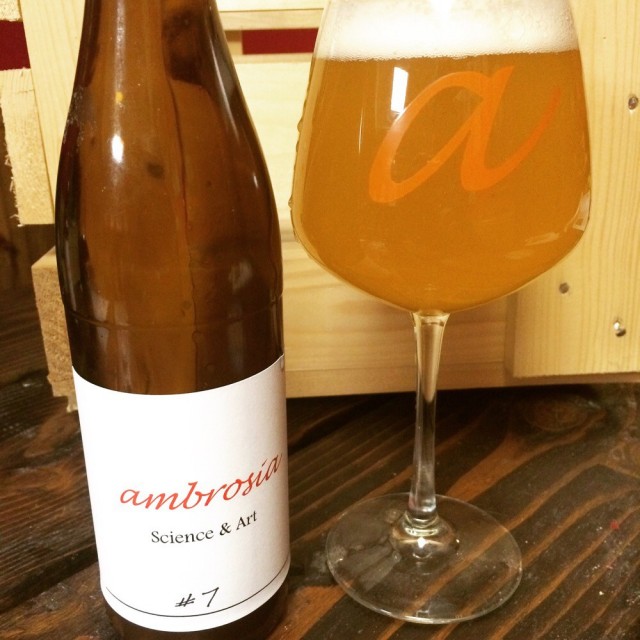


Appearance: Slightly-hazy light orange color with a big, fluffy head that lingers for quite a long time, leaving plenty of lacing on the glass on the way down.

Nose: Orange and lemon with a bit of pineapple and other tropical fruit. Light grass and a bit of wheat. Excessively fruity, just as I was hoping for. As with Demeter Facile, this beer is quite reminiscent of SweeTarts up front.

Flavor: Loads of fruit with oranges, lemon, pineapple, and guava. Moderate tartness. Just a bit of chewy wheat on the backend. Subtle funk coming from the Citrine, but the Facile really dominates here. Almost the same flavor and tartness that you'd get from a "tropical"-flavored candy or ice cream.

Mouthfeel: Light-medium body with plus carbonation and a light acidity through the finish. Super fruity and tart throughout. Great body with ample carbonation; never seems too thin. 

Overall: The Citrine didn't add too much, but I think it rounds the beer out nicely. This is just over-the-top fruity and reminds me a bit of some Fantome beers I've had (minus the peach), as well as some aged Sanctification. Not saying this is in the same league as those beers, but this definitely has similar qualities. I will definitely make this again, and as with many beers, will experiment with conditioning this with honey or fruit juice. I'd really enjoy seeing what would happen if I conditioned this with something like passion fruit, apricot, or mango juice. Maybe juice from some of the lemon guavas that I'm so fond of.

Wednesday, February 4, 2015

Science & Art #6: Blend & Tasting Notes

Science & Art #6 was a first in the series in that in addition to blending several beers, I also blended in fruit juice to add the sugar necessary to bottle condition the batch.  To start, I had plenty of Demeter Automne (recipe; tasting notes), as that was a 10-gallon batch and I didn't really need 10 gallons of funky pumpkin saison to get me through the fall season, so I knew that  wanted to do something interesting with the second half of the batch.  I considered adding red wine-soaked oak cubes or blending in some dry commercial French (or French-style) cidre such as Etienne Dupont Cidre Bouché or Virtue Percheron.  

Ultimately, when I found tart cherry juice without any preservatives at a local specialty foods shop, I decided to blend that in and use its sugars for conditioning, as that has been something I have wanted to try.  It's a nice twist on conditioning with honey, and Logsdon Farmhouse Ales has done a great job with this method, conditioning its beers (mainly saisons, including the outstanding Seizoen Bretta) with pear juice.

Once I knew what I was working with, I decided which batch of Citrine I would use to blend with the Demeter Automne.  I ultimately, selected a batch of Citrine that was fermented with East Coast Yeast 20 (Bug County), as that wasn't too acidic and added a nice, subtle fruitiness and mild funk that I thought would complement both the Demeter Automne and the cherry juice.  At the point of blending (September 2014), the Citrine was about nine months old.  The final blend ratio was 3.75 gallons of Demeter Automne, 1 gallon of Citrine, and 45 ounces of Montmorency tart cherry juice.  Based on my calculations, the sugars in the juice used should create about 3 volumes of CO2, toward the low end of where I like my saisons, but I generally go around there for darker saisons.  The total yield was 39 375mL bottles and 6 750ml bottles.

In order to determine the amount of cherry juice that I needed to use, I first used a priming calculator to figure out how much sugar I would need in grams.  Since the sugars in the cherry juice should be 100% fermentable, I could then figure out how many grams of sugar I would need from the juice.  From there, since the nutrition label would tell me how many ounces of juice I would need to use to reach the right number of grams of sugar.  Regrettably, I didn't write down the exact numbers.

However, as an example, assume that the priming calculator told me that for 4.75 gallons of beer, I would need 100 grams of sugar.  Then, I look to the nutrition label and see that one serving of cherry juice is 8 fluid ounces and each serving contains 20 grams of sugar.  That would then tell me that I would need 5 servings of juice to get to 100 grams of sugar.  Multiple 5 servings by the serving size of 8, and I'd be using 40 fluid ounces of juice in that scenario.

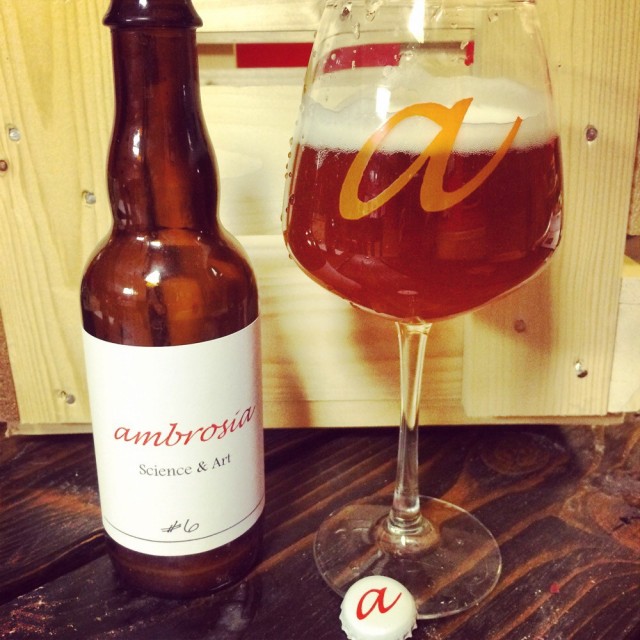
A picture and full tastings notes are below.  At this point, the beer is around 4.5 months old.


Appearance: Light mahogany color with an eggshell-white head that's fairly long-lasting. Plenty of visible active carbonation. Quite clear.

Nose: Bright, fresh tart cherry with backing earth and mild funk. Just a touch of background clove, maybe a hint of cinnamon. A bit of the biscuit character of the base beer as it warms.

Flavor: Cherry pie with a light acidity. Earthy with a bit of pie crust and biscuit. Slight spice and fall notes without being too far in any one direction.  A bit leafy through the finish.

Mouthfeel: Very dry finish, though a bit chewy initially. Acidity is above a tartness, but not at all to the level where I'd consider it too acidic or even distracting.  It very much reminds me of a tart cherry as opposed to any specific lactic or acetic character.  Moderate to high carbonation, just about where I want it.  The cherry character lingers through the finish.

Overall: I quite like this beer.  I like the base beer of Demeter Automne well enough, but this is much, much better.  It's amazing how much just enough cherry juice to bottle condition really changed this beer alongside the Citrine addition.  I would like to try again next year and also use some fresh-pressed juice from cider apples, but this one will definitely stay in the repertoire and hopefully be a future seasonal once we open Ambrosia.