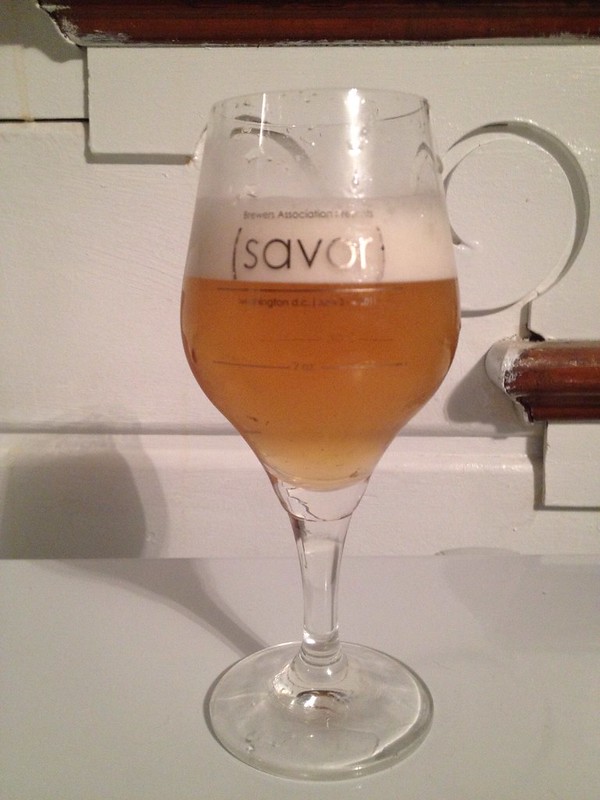
Tuesday, August 14, 2012

Monnik Blonde (Brett Trois): Recipe & Tasting


Base Recipe

I brewed this recipe with the plan of splitting the batch, giving half White Labs Abbey Ale (WLP530) and giving the other half White Labs Brettanomyces Bruxellensis Trois (WLP644), which is a Brettanomyces strain isolated from Drie Fonteinen.  The goal was to see the effect of the different yeasts on the ultimate beer, and also to get a better feel for the Brett character that would come out of a primary fermentation with this strain.  I also wanted to build up a large amount of WLP644 to save for future batches.  A week after kegging this, I brewed Atlas Trois IPA, another beer with WLP644 as the primary yeast strain, coupled with an IPA hop bill comprised entirely of Galaxy hops.

The tasting notes for the Brett portion of this beer are below; I plan to do a write up of the "clean" version soon.  The recipe for the full batch is as follows:

Batch Number: 40/41
Brew Date: June 21, 2012
Keg Date: July 28, 2012
Batch Size: 8 Gallon
OG: 1.046 (measured)
FG: 1.008 (Brett version)
IBU: 36.8
ABV: 5.0%
SRM: 3.7

Mash: Single infusion for 60 minutes at 151 F.
Boil: 60 minute

Fermentables

7lb 13oz  French Pilsner
5lb 8oz    White Wheat Malt
2lb 5oz    Flaked Wheat
8oz          Rice Hulls

Hops
3.0 oz Styrian Celeja (4.0 AAU) at 60 minutes
1.5 oz Styrian Celeja (4.0 AAU) at 15 minutes
1.5 oz Styrian Celeja (4.0 AAU) at 0 minutes

Other

1 ea. Whirlfloc tablet at 10 minutes
1/2 tsp Yeast nutrient at 10 minutes

Yeast

White Labs Abbey Ale (WLP530) (half batch)
White Labs Brettanomyces Bruxellensis Trois (WLP644) (half batch)
 
Tasting

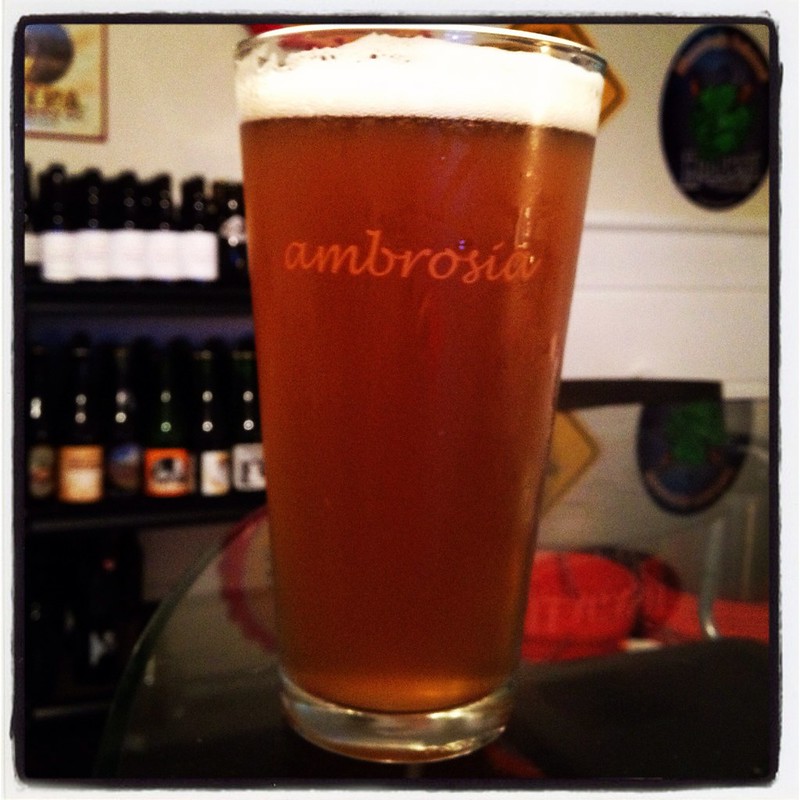
Appearance: Pours a mostly-clear pale orange / deep golden color with some light copper highlights.  Nice fluffy white head with good retention and plenty of sticky lacing on the sides of the glass.  Long-lasting cap on the top of the brew as well.  It could be a bit clearer, but other than that, this aspect of the beer turned out quite well.  2.5/3.

Aroma: The nose is fairly-faint compared with the flavor, which has a lot more fruit and general Brettanomyces character.  The background provides a bit of citrus character and floral hops along with a bit of earth.  As it warms more, a bit of a grapefruit-pith character comes through, alongside some standard horse blanket Brettanomyces character.  7.5/12.

Flavor: The flavor starts out with a nice burst of tropical-fruit flavors, including some mango and a touch of pineapple.  Behind that is a bit of peach and apricot character.  Slight tartness comes through as well alongside a very mild earthy funk.  Light floral hop character in the background, and coming through the finish a bit more as it warms.  There is some bitterness there, but that could probably go up a touch, or at least have some additional mineral additions to up the perceived bitterness.  Warmth brings more Brettanomyces character as some of the fruitiness and hop citrus character fades away.  15/20.

Feel: The body is fairly light, though feels a bit heavier than it actually is because the carbonation isn't as high as I would like it to be.  I need to turn that up a factor, and there might be an additional boost here.  The bitterness level is also a bit low for what I would prefer.  3/5.

Overall: I'm not disappointed with the way this one came up, but I was hoping for a bit more.  For a future batch, I'd go with a bit more bitterness, a slightly lighter body, and additional carbonation.  Luckily, given that I kegged all of this batch, I'll be able to correct the last of these issues.  After upping the carbonation, I plan to use my Blichmann Beer Gun to bottle at least a bit of this to see if any Brett that is still in suspension can do some additional work on the beer.  In the future, this beer might be a good base to experiment with the usage of multiple strains of Brett, using one in the primary to get its more-fruity character, and then another for bottle conditioning to get a drier, more-leathery and earthy feel to the beer.  Using this in primary along with a separate Bruxellensis or Lambicus variety could prove interesting.  7/10.

Overall score: 35/50

Saturday, June 23, 2012

Demeter Vert (Batch 02): Recipe


RETRO: Post written on November 13, 2014, but set to publish on the date of the original brew session to maintain order within the blog.

This was my second batch of what was then known as Sorachi Lime Saison.

The recipe for the full batch is as follows:

Batch Number: 43
Brew Date: June 23, 2012
Bottle Date: Not recorded
Batch Size: 5 Gallon
OG: 1.061 (estimate)
FG: 1.002 (estimate)
Fermentation Temperature: 65-70*F (room temperature throughout)
IBU: 31.8
ABV: 7.6%
SRM: 4.2

Mash: Single infusion at 149*F for 60 minutes

Boil: 90 minute

Fermentables

8lb 0oz Pilsner Malt
2lb 12oz Wheat Malt
1lb 0oz Rye, Flaked

Salts & Water

At this point I wasn't doing anything besides filtering the water and adding 5.2 buffer, so that's probably it.

Hops

1.0oz Sorachi Ace (pellet, 10.7 AAU) at 20 minutes
1.0oz Sorachi Ace (pellet, 10.7 AAU) at 5 minutes
1.0oz Sorachi Ace (pellet, 10.7 AAU) at flameout

Other
Whirlfloc
Yeast Nutrient

2 Tbsp Lime Zest at 5 minutes

Yeast

Wyeast French Saison (WY3711) (1 package)
Wyeast Belgian Saison (WY3724) (1 package)
White Labs Brettanomyces Claussenii (WLP645)

Notes

06.23.2012 - Brewday. Efficiency still seems low based on the OG. Not sure what the issue is. For yeast, used 2-month-old packs of 3711 and 3724 plus a good bit of Brett C slurry from the continuous jug. Hoping to create a house culture to use with different saisons. Can eventually blend in other yeast cultures if necessary, using dregs from favorite bottles.

07.28.2012 - Added the dregs from a bottle of Batch 6 Russian River Sanctification.

Calypso's Ghost: Recipe


RETRO: Post written on November 13, 2014, but set to publish on the date of the original brew session to maintain order within the blog.

Brewed as I continued to focus more and more on saisons.  The name was based on the use of Calypso hops (my first time using them) and Wyeast's Biere de Garde yeast, which is supposedly from Fantôme.

The recipe for the full batch is as follows:

Batch Number: 42
Brew Date: June 23, 2012
Keg Date: August 14, 2012
Batch Size: 6 Gallon
OG: 1.052 (estimate)
FG: 1.002 (measured)
Fermentation Temperature: 65-70*F (room temperature throughout)
IBU: 31.0
ABV: 6.6%
SRM: 3.8

Mash: Single infusion at 150*F for 60 minutes

Boil: 60 minute

Fermentables

6lb 0oz Pilsner Malt
4lb 8oz Wheat Malt
0lb 12oz Rye, Flaked
0lb 12oz Wheat, Flaked

Salts & Water

At this point I wasn't doing anything besides filtering the water and adding 5.2 buffer, so that's probably it.

Hops

1.0oz Calypso (leaf, 12.8 AAU) at 30 minutes
1.0oz Calypso (leaf, 12.8 AAU) at flameout

Other

Whirlfloc
Yeast Nutrient

Yeast

Wyeast Biere de Garde (WY3725)

Notes

Later on when the keg was about halfway finished, I added raspberries and peaches and let those ferment out with Brett Trois and Brett Lambics.

Monday, May 14, 2012

Farmhouse Mild: Tasting

 
I'm finally getting around to doing some tasting notes for Farmhouse Mild, which I brewed back at the end of March.  I only kegged up two gallons of this batch, so I have been saving it until I had some time to review it and use my Beer Gun to get a few bottles filled.  The other three gallons were split between three one-gallon jugs, with each one getting a dose of a different Brettanomyces strain.  I used White Labs Bruxellensis, Clausseni, and Lambicus.  I plan to bottle each of those after letting them sit with the Brett for a bit.

Appearance: Pours a very pale golden-straw color.  Very clear with a nice, fluffy white head.  Good retention and some spotty lacing as it falls down.  A thin cap remains throughout.  3/3.

Aroma:  The nose brings faint earth and herbal character along with a touch of white pepper.  There isn't much fruitiness, despite the American hops that I used.  I can't say that I miss it, although I expected a bit more given the level I put in there and the otherwise-basic recipe.  Behind that is a bit of light pilsner malt and a touch of straw.  As it warms, there's just a bit of Amarillo in the background.  9/12.

Flavor: It starts out with some crisp pilsner malt with some wheat and straw in the background.  Behind that is a nice yeast presence; most prevalent are notes of faint pepper and just a touch of fruit, which was otherwise missing from the nose.  Behind it all is a nice, smooth bitterness leading to a very crisp finish.  I think the yeast presence is nicely subdued, and I'm not sure I'd want too much more from a beer that is intentionally light and refreshing.  Perhaps a bit more hop flavor would put it over the top.  Perhaps another half ounce or so at 5-10 minutes.  16/20.

Feel: Body is very light and refreshing.  Quite crisp with moderately-high carbonation.  I think that this is something that can comfortably sit around 2.5 volumes.  Bitterness is just right.  There isn't much I'd change about the feel of this one.  It's crisp and dry, and leaves behind just a bit of flavor through the finish.  4/5.

Overall: This is the second iteration of a small saison that I've done.  The first was Petit Saison, and this is the Farmhouse Mild.  There wasn't much variation between the two, and I really like how both turned out.  Perhaps some minor tweaking over time, but not much.  8/10.

Score: 40/50

This is something I could really see ending up as the flagship of a brewpub.  In the past I had thought something like a Kolsch, but this offers a bit more complexity, and also wouldn't require the addition of a separate yeast.  I would really like to follow the model of a place like Tired Hands, basically only using American Ale and Saison yeast, then letting various other critters go to work in a separate barrel-aging area.

Saturday, April 21, 2012

Emerald: Recipe


RETRO: Post written on November 13, 2014, but set to publish on the date of the original brew session to maintain order within the blog.

This was originally designed as a Munich Helles with New Zealand hops, and it ended up going on tap that way.  At the time, I had 5-6 beers on tap, and I ended up with about half a keg that had lost it's hop presence and was too tame for my palate.  Based on this, I decided to sour the remaining portion and add kiwi, which seemed an appropriate fruit based on the New Zealand-based ingredients that I had already used.

The recipe for the full batch is as follows:

Batch Number: 36
Brew Date: April 21, 2012
Keg Date: April 1, 2012
Batch Size: 5 Gallon
OG: 1.051 (estimate)
FG: 1.002 (estimate)
Fermentation Temperature: 65-70*F (room temperature throughout)
IBU: 28.6
ABV: 6.7%
SRM: 4.0 (not accounting for fruit)

Mash: Single infusion at 148*F for 60 minutes

Boil: 90 minute

Fermentables

9lb 0oz Pilsner Malt
0lb 8oz Cara-Pils
0lb 8oz Munich

Salts & Water

At this point I wasn't doing anything besides filtering the water and adding 5.2 buffer, so that's probably it.

Hops

1.0oz Nelson Sauvin (pellet, 12.0 AAU) at 20 minutes
1.0oz Nelson Sauvin (pellet, 12.0 AAU) at flameout

Other

Whirlfloc
Yeast Nutrient
Kiwi

Yeast

White Labs German Bock Lager (2 vials) (WLP833)
Brett and bacteria, as identified below

Notes

04.21.2012 - Brewday began at 7:45 AM. Milled the grain and got the hot liquor going. Used 14 quarts of 168 F water, aiming for 153 F. The initial shot was too high, so I added a bit of filtered water out of the hose to bring it down to 153 F. Set the time to 60 minutes and let the mash sit. Sparged with 6 gallons of 180 F water. The final collection was 7.8 gallons of 1.034 runnings.

Did a starter with each of the two vials. Let ferment for 5 days.

05.01.2012 - Gravity down to 1.018. Put chest freezer temperature up to 60 F for a diacetyl rest.

05.04.2012 - Gravity down to 1.012.

05.07.2012 - Transferred to keg to begin lagering.

08.28.2012 - Not sure why I don't have notes on this until now, but didn't really enjoy the character of this beer after the hops faded, so decided to make a sour lager. While this was originally known as "German Nelson," at some point around the Fourth of July, I added 2lb of kiwi per gallon along with a few lambic oak cubes and some lambic dregs. On 08.28, I transferred to a keg. The beer is now known as "Emerald."

Friday, April 6, 2012

Ruby (Batch 01): Recipe


RETRO: Post written on November 13, 2014, but set to publish on the date of the original brew session to maintain order within the blog.

This was the first batch of Flanders Red/Brown that I've done.  Once it was toward the end of fermentation, it spent some time in a 3-gallon whiskey barrel.  That allowed it to pick up acidity faster, and even though it was the second use of the barrel, the beer picked up some nice whiskey notes.

The recipe for the full batch is as follows:

Batch Number: 35
Brew Date: April 6, 2012
Keg Date: October 14, 2012
Batch Size: 5 Gallon
OG: 1.060 (estimate); 1.056 (measured)
FG: 1.004 (estimate)
Fermentation Temperature: 65-70*F (room temperature throughout)
IBU: 16.1
ABV: 6.8%
SRM: 15.0

Mash: Single infusion at 155*F for 60 minutes

Boil: 60 minute

Fermentables

9lb 0oz Pilsner Malt
1lb 0oz Munich Malt
0lb 8oz Aromatic Malt
0lb 8oz CaraMunich Malt
0lb 8oz Special B
0lb 8oz Wheat, Flaked

Salts & Water

At this point I wasn't doing anything besides filtering the water and adding 5.2 buffer, so that's probably it.

Hops

1.0oz East Kent Goldings (pellet, 4.5 AAU) at 60 minutes

Other

Whirlfloc
Yeast Nutrient

Yeast

Wyeast Roeselare (WY3763)

Notes

Roeselare package was manufactured January 3, 2012. It popped when I hit the smackpack, so I drained the contents into a sanitized measuring cup with foil on top.

Mashed at 155 F for 60 minutes. Did a single-step batch sparge without stirring and collected 7.5 gallons of 1.048 wort for 83% efficiency.

OG is 1.056. Tried siphoning to the carboy after whirlpooling, but ended up with too little beer. Tried to pour through a thin strainer, but still ended up with quite a bit of trub in the fermenter. Will need to transfer to second. Should do so along with red-wine oak cubes from Saison Lambicus.

Gave pure oxygen for 30 seconds and pitched Roeselare blend.

07.04.2012: I transferred 3 gallons of this to the whiskey barrel that previously held Batch 003 -- Kukulcan Imperial Stout. The two remaining gallons were transferred to two separate one-gallon jugs.

07.18.2012: I added approximately 5-6 grams of red-wine-soaked lambic oak cubes to one of the single-gallon portions. This was 4 cubes. I plan to eventually blend the base portion with wine and whiskey portions. I also have one gallon of Monnik Six soured with currants to add to the blend.

LATER: The single-gallon portions had airlock issues and ended up being too acetic, so were dumped.


Sunday, March 25, 2012

Strange Wit: Recipe

One of my favorite warm-weather beers is Jolly Pumpkin Calabaza Blanca. Since it's not always the easiest to find around DC and is fairly expensive at $12+ per bottle, I thought I'd do something similar. I'm going to brew a traditional witbier, with spicing on the low side, and then add some dregs from one of my sour program beers. Hopefully I'll get a bit of acidity and some moderate funk out of this, and it won't take nearly as long to finish out as my lambic-style beers.

Since I've never done a Wit before, I adapted Jamil's witbier recipe from Brewing Classic Styles. I took down the spice additions a notch, as I generally prefer spicing on the lighter side in witbiers. I also lowered his recommended mash temperature a bit, as I generally prefer dryer, lighter beers. (Also, in this instance, I'd like for everything -- including the bugs -- to finish up quickly, so I don't need to leave many complex chains for the wild stuff to chew up.)

Batch Number: 34
Brew Date: March 25, 2012
Keg Date: TBD
Batch Size: 5 Gallon
OG: 1.045 (measured)
FG: TBD
IBU: 16.4
ABV: TBD
SRM: 3.4

Mash: Single infusion for 60 minutes at 152 F.
Boil: 60 minute

Fermentables

4.5 lb French Pilsner
4.0 lb Flaked Wheat
1.0 lb Flaked Oats
0.25 lb Munich Malt
0.50 lb Rice Hulls

Hops

0.5 oz Centennial (8.8 AAU) at 20 minutes
0.5 oz Centennial (8.8 AAU) at 10 minutes

Other

.25 oz Coriander (crushed) at 5 minutes
.25 oz Orange Peel (bitter) at 5 minutes
1/4 tsp Yeast nutrient at 10 minutes

Yeast

Belgian Wit (WLP400)
Sour Program #1 Dregs

Notes

03.20.2012 Made a starter with White Labs Belgian Wit. I forgot to write down the date, but I think the package was 8-10 weeks old. Probably not a concern given the starter and fairly-low starting gravity. The volume is approximately 1.6 liters.

03.25.2012 Brewday. The starter is still quite hazy, but I'm still going to decant. Even if it's not 100% finished, I wouldn't mind selecting for the more-flocculant cells, as this beer could be served clear.

I mashed at 152 F for 60 minutes, infusing with 15 quarts of 167 F water. Initial mash temperature was 152 F. After draining, I batch sparged with 5.25 gallons of 180 F water. That led to 7.5 gallons of 1.036 runnings.

After a 60-minute boil, I was left with 5.5 gallons of 1.045 wort. The wort was chilled to about 75 F, then I used a funnel to transfer to a 6-gallon Better Bottle. I'll let it sit a bit after room temperature before pitching.

After pitching, I also caved and started the souring/funkifying early, after deciding that I'd rather it get a bit too much wild character rather than not enough. I added about a vial's worth of dregs from Sour Program #1, which is the most acidic out of the three "lambics" I've done so far. I also I also threw in the dregs from a 2011 bottle of Cantillon Rose de Gambrinus, just to get things started. Finally, to keep this mildly authentic in my intentions, I added the dregs from a bottle of Jolly Pumpkin Calabaza Blanca (Batch 810; 05.31.2011).