Wednesday, June 13, 2018

Recipe: Namur (Third Edition) [Batch #106]


Retro post as I'm going through old homebrew notes to try to organize them. This one came up as I was trying to locate my notes for a batch that "dry hopped" with basil in a keg. Full recipe and timeline posted below.

The recipe for the full batch is as follows:

Batch Number: 106
Brew Date: July 16, 2016
Bottle/Keg Date: See notes below.
Batch Size: 20 Gallon
OG: 1.042 (est. and measured)
FG: See below.
Fermentation Temperature: See notes below

IBU: 30.0 (modified Tinseth)
ABV: 4.9% (est.)
SRM: 4.0

Mash: Single infusion for 60 minutes at 150*F.
Boil: 60 minute

Fermentables

25.00 lb French Pilsner (70%)
7.00 lb Wheat, Flaked (20%)
3.5 lb Acid Malt (10%)

Salts & Water

5.0g Calcium Chloride (all added directly to the kettle)
10.0g Calcium Sulfate (all added directly to the kettle)
12.0g Sodium Chloride (all added directly to the kettle)

Resulting water profile is as follows:

Mash pH (est.): 5.22
Calcium: 68
Magnesium: 12
Sodium: 51
Chloride: 104
Sulfate: 79

Hops

9.0 oz Strisselspalt (3.5 AAU, but see below), pellet, at 60 minutes
3.0 oz East Kent Goldings (7.2 AAU, but see below), pellet, at 10 minutes
3.0 oz Hallertau Tradition (4.4 AAU, but see below), pellet, at 10 minutes

Other

4 tsp. Wyeast Yeast Nutrient at 10 minutes

Yeast

Imperial Organic Rustic

Notes

07.13.2016: Starter based on http://yeastcalculator.com

Have two cans of Imperial Yeast "Rustic" canned on May 19, 2016. Per site, these are at 62% viability. Each can has 200 billion cells, so this means there are currently 248 viable cells.

For a 1.040 beer (20 gallons), I need 567 million cells. Per the calculator, four liters of 1.030 wort with intermittent shaking will get me to 586 viable cells.

Added 245g of DME to 3L of water plus 1/4 tsp of yeast nutrient. Boiled 10 minutes, chilled, and pitched into a 5L flask with a can of starter wort and a pint of water. The flask is covered with sanitized foil.

07.15.2016: Per past order notes, Saaz hops were ordered in March 2012 so should be from the 2011 harvest and are almost five years old at this time. Per http://brewerslog.appspot.com/HopAlphaCalc, alpha acids have gone from 3.4 to 1.5 even though they have been stored in the original package at 10*F. Will decide whether to use them based on aroma upon opening the package.

Dupont mash schedule: "113°F (45°C) mash-in, gradually raised to 162°F (72°C) over more than 90 minutes." https://beerandbrewing.com/VMvilisAAKGj51nr/article/belgian-beer-youre-probably-doing-it-wrong. IBUs are around 32 and carbonation is approximately 3.5 volumes.

From Farmhouse Ales: "Note: Brasserie Dupont uses a different approach, favoring a “rising temperature” infusion mash. Dupont starts with an initial temperature of 113 ° F (45 ° C) and continuously heats the mash (while constantly stirring) by approximately 0.5 ° F (0.25 ° C) per minute over the course of 108 minutes (1: 48) until the mash temperature reaches 162 ° F (72 ° C). The intention is to maximize fermentable sugar production in order to get the characteristic attenuation (when an appropriate yeast strain is used) and low terminal gravity of 1.0 to 1.5 ° P (1.004 to 1.006 SG)."

07.16.2016: Saaz hops are from 2011. Ordered in March 2012 from Northern Brewer.

Mashed in at 124*F and then ramped too quickly. At 152*F after 15 minutes. Turned off the flame at this point and let it go for 60 minutes longer. Mash temperature of 148*F 30 minutes after the flame was turned off. At 146* 40 minutes after the flame was turned off. At this point, turned the burner back on low to start heating toward mash out. At that point, bumped the burner up to quickly get it to 170*F. Took about 10 minutes to go up to 170*F. Turned off the pump, shut the valve from the boil kettle, and let the mash drain to the kettle. Kettle temp is at 182*F.

By the time the mash was empty, the kettle was at 200*F. At this point, it's about 2.5 hours fromwhen I turned on the water to start filling the kettle.

The kettle has approximately 25.75 gallons of wort.

Per http://brewerslog.appspot.com/HopAlphaCalc, Strisselspalt that is from 2014 (so about 600 days old) is now at 2.4 AAU instead of 3.5 AAU. Per same, 2014 Hallertau Tradition marked down from 4.4 to 3.4 AAU. Per same, 2015 EKG marked down from 5.1 to 4.3 AAU at 270 days old.

7 hours after chilling, wort is at 78*F. Pitched after decanting and adding 120 seconds pure O2. Fermenting in a Blichmann conical.

Temperature controller is set at 74*F. I usually pitch saisons in the low-70s and let it gradually go up to 80+*F, though should be fine given the yeast. Bob at Saint Somewhere pitches around 80*F and lets it go to 90*F: http://www.themadfermentationist.com/2014/06/american-saison-reimagining-farmhouse.html

Dave Logsdon also suggests pitching at a high temperature: http://www.babblebelt.com/newboard/thread.html?tid=1108752780&th=1191674019&pg=&tpg=1

Blaugies pitches around 80.6*F: https://farmhousebeerblog.wordpress.com/2015/07/12/yeast-brasserie-de-blaugies/

07.17.2016: At 12 hours, probe showed 77*F with 1*F differential, so bumped to 80*F.  Plenty of obvious fermentation activity as I can hear it chugging along inside the conical. I also lifted the weight setting on the lid hatch to let pressure escape.

82*F at 24 hours. 

07.18.2016: At 36 hours, bumped to 84*F.  86*F at 48 hours.

07.19.2016: At 60 hours, very little activity left and the krausen is gone. Turned off the heater since we were leaving for vacation, but should stay plenty warm in the garage since it's supposed to be over 90*F all week.

07.24.2016: Temperature is at 78*F.

07.25.2016: Turned heater back on at 83*F with a 1*F differential.  Gravity reading yesterday was 1.012 but that seems unreliable as there was so much carbonation that it wasn't all gone after the sample sat out all night after being heavily agitated.

07.29.2016: I checked this morning and the beer has a pellicle. I'm guessing this is from the stainless thermowell not being properly cleaned, or from general infestation of all of my equipment.

07.31.2016: Turned off the temperature control.

09.24.2016: Added 15g of macerated lime basil to the keg in the keezer in a hop bag. Did not wash beforehand. Clean from garden. No pesticides or any other chemicals used.

12.17.2016: Rustic keg tastes incredible. Strain does very, very well with some time and under pressure. Likely some Brett involved given that it's my equipment (and that there was a pellicle in the fermenter!).  Filled barrel with Vert, Rustic with Saaz and Basil, and base Rustic.  Tapped Rustic 3726 with Sudwerk dregs.  Need to save cake.

Friday, December 30, 2016

Afterthought Brewing Company

I haven't been able to post much over the past few months as I've been working on opening up a commercial brewery -- Afterthought Brewing Company -- which will focus on saisons and other mixed-fermentation beers.  For a general guide to my thoughts on brewing and the types of beers that I like to produce, here's my post from early last year on the class of beers that can be loosely described as saisons.

The brewery will be quite small with batches coming in around 1.5 barrels with two brew sessions per month for a total of about 3 barrels being produced per month.  In the end, that's approximately 93 gallons per month, which translates to around 35 cases of 750mL bottles per month when accounting for waste and spillage.  A lot of the initial production will go into barrels, so the releases will slowly roll out over time.

Our final equipment delivery is later today, so we'll be ready to go as soon as we have TTB and Illinois approval, which will hopefully be this spring, meaning that bottled beer should be available for sale in late spring or at some point during the summer.  Below are a few very-early pictures of the space.  Follow our brewery's Facebook page for continued updates on progress, releases, and (hopefully) an eventual membership club.

Here's to a saison-heavy 2017!


Thursday, July 7, 2016

Recipe: Blank Space (First Edition) [Batch #105]

Back in May, I had some friends over for a brew day, and we decided to do a saison with key lime juice and zest.  We wanted hops to complement that citrus character, and decided to use newer hops that would give additional "green fruit" character.  Namely, Hallertau Blanc, Nelson Sauvin, and Sorachi Ace.  Together, these hops should impart some gooseberry, lime, white grape, and lemon/lime character.  (I know that some people get unusual flavors like dill from Sorachi Ace, but I've always ended up with a nice citrus character, though I've never used them in a beer that didn't also feature citrus zest, so who knows what they're like all by themselves.)

Not only am I a big fan of all these flavors, but I knew that by the time this beer was done with primary fermentation, my oak barrel would be empty and I thought this would all work well with a bit of oak and its accompanying characteristics.  

I ultimately decided that I wanted to have a non-barrel-aged portion of the beer that I could also dry hop to have an ultra-refreshing (and low ABV!) beer for the summer.  Because of that, a portion of the barrel will end up with some other blonde saison as a component of the fill.  I nearly always have some sort of blonde saison around, so that shouldn't be a problem, especially since I use the same Ambrosia 005 blend as part of nearly all of my fermentations.  This is particularly true given the fact that all of my carboys and buckets are scratched and certainly house plenty of that culture, although I recently purchased a conical that I'll use for "clean" saisons going forward that I can either bottle/keg that way, or introduce specific Brett strains and/or other bugs at packaging to see how they work in secondary.

I mentioned above that a plus to this beer is its low alcohol content, but that doesn't really make this beer any sort of outlier.  As those who read this blog frequently have likely noticed, it's extremely rare for me to brew a beer that ends up over 6% ABV, as I like my saisons light, refreshing, and consumable in (relatively) large quantities.

The recipe for the full batch is as follows:

Batch Number: 105
Brew Date: May 14, 2016
Bottle/Keg Date: See notes below.
Batch Size: 20 Gallon
OG: 1.042 (est.)
FG: 1.004 (measured)
Fermentation Temperature: Room temperature, fluctuating around 65*-70*F.
IBU: 67.0 (modified Tinseth)
ABV: 5.0% (est.)
SRM: 3.0

Mash: Single infusion for 60 minutes at 154*F.
Boil: 60 minute

Fermentables

20.00 lb French Pilsner (57%)
9.00 lb Wheat, Flaked (26%)
3.25 lb Acid Malt (9%)
3.00 lb Oats, Flaked (9%)

Salts & Water

All salts added directly to the mash along with the strike water.  I'm now using a Blichmann BrewEasy system, so everything is recirculating between two pots.  All the liquid is then drained into the boil kettle at the end of the mash.

5.0g Calcium Chloride
8.0g Calcium Sulfate
12.0g Sodium Chloride

Resulting water profile is as follows:

Mash pH (est.): 5.30
Calcium: 64
Magnesium: 12
Sodium: 51
Chloride: 104
Sulfate: 69

Hops

2.0 oz Sorachi Ace (10.4 AAU), pellet, at 60 minutes
5.0 oz Nelson Sauvin (13.2 AAU), pellet, at flameout
4.0 oz Hallertau Blanc (16.8 AAU), pellet, at flameout
2.0 oz Sorachi Ace (10.4 AAU), pellet, at flameout

Dry hop forthcoming to the non-barrel-aged portion.

Other

4 tsp. Wyeast Yeast Nutrient at 10 minutes
2 Tbsp. Key lime zest (5-gallon portion only)
100 mL Key lime juice (5-gallon portion only)

Yeast

Ambrosia Blend 005

Notes

05.31.2016: Added key lime juice  (100mL) and zest (2 Tbsp.) to a 5-gallon portion of the batch being fermented in a bucket.


7.06.2016:  I rinsed the barrel with several rounds of hot water followed by a spray-out with the hose, then several rounds of cool water.  I then purged the barrel with CO2 and started adding beer:
  • 4.5 gallons of Blank Space (carboy-fermented). SG of 1.006.  Light lemon and green grape with definite backing flaked grain body and feel.
  • 5.5 gallons of Blank Space (bucket-fermented). SG of 1.004.  Flavor is similar to the carboy version but with a little bit of sulfur in the nose at first, though that quickly dissipated. 
  • 3 gallons of Wallonian-fermented wort from the 04.29.2016 WPA batch (Batch 104). SG is 1.004.
I added the rest of the Wallonian Farmhouse portion of Batch #104 to the carboy fermented with Ambrosia 005 from that batch.  That carboy is now at max capacity, and I plan to transfer that beer onto some watermelon juice soon.

12.17.2016: Emptied the barrel into kegs.

01.01.2017: One full keg of Black Space received 33g of Galaxy pellets. The other received 43g of Nelson Sauvin.  Both kegs bottled after dry hopping was complete.

01.14.17: 3 gallon keg remained (approximately). It's been carbonating in the keezer and has a bit of sulfur and is a bit too oaky. Added 1oz of Denali pellets in a muslin bag. Keezer at 45*F.

Thursday, June 16, 2016

Recipe: Demeter Auran (Batch 5; Barrel Fermentation Batch 1) [Batch #103]


This post relates to my fifth edition of Demeter Auran, a blonde saison brewed with citrus zest, rose hips, and citrusy American hops.  This batch features blood oranges along with Citra, Mosaic, and Amarillo hops. For the malt bill, I added a little bit of honey malt, as I really enjoy the character that brings out in a blonde saison assuming I'm not going for something that's more floral and grassy, leaning toward a more-traditional phenolic base.  More importantly, this was my first time doing barrel fermentation. This beer went into the barrel for primary fermentation right after I cleared the barrel of Dionysus #3.  See this post for background on the barrel and the beer that was in the barrel prior to this batch of Demeter Auran.  

With the barrel fermentation, I'm really hoping to pull out a bit of oak over the three to four week fermentation period.  Furthermore, I want to gain additional experience working with barrels, as when I eventually open up a commercial brewery, I plan to start with everything being fermented in oak.  From there, perhaps I'll eventually get some stainless fermentors for saisons without any sort of Brett or lactic acid bacteria, but from the start I think barrels will be the best way to showcase the kind of beers that I want to make, and there's the added bonus of barrels being significantly cheaper to work with compared to stainless fermentors.

Blood oranges ready to be zested.

The recipe for the full batch is as follows:

Batch Number: 103
Brew Date: February 6, 2016
Bottle/Keg Date: See notes below.
Batch Size: 20 Gallon
OG: 1.032 (est.)
FG: 1.002 (measured)
Fermentation Temperature: Fluctuating around 65*-70*F.
IBU: 43.0 (modified Tinseth)
ABV: 4.0% (est.)
SRM: 4.0

Mash: Single infusion for 60 minutes at 150*F.
Boil: 60 minute

Fermentables

16.00 lb French Pilsner (46%)
6.00 lb Wheat, Flaked (17%)
5.00 lb Oats, Flaked (14%)
3.00 lb Munich (9%)
2.81 lb Acid Malt (8%)
2.00 lb Honey Malt (6%)

Salts & Water

10.0g Calcium Chloride (all added directly to the kettle)
8.0g Calcium Sulfate (all added directly to the kettle)
11.0g Sodium Chloride (all added directly to the kettle)

Resulting water profile is as follows:

Mash pH (est.): 5.33
Calcium: 69
Magnesium: 12
Sodium: 40
Chloride: 102
Sulfate: 61

Hops

3.0 oz Mosaic (11.6 AAU), leaf, at 60 minutes
3.5 oz Citra (13.0 AAU), leaf, at flameout
3.5 oz Amarillo (8.8 AAU), leaf, at flameout
3.0 oz Mosaic (11.6 AAU), leaf, at flameout

Other

4 tsp. Wyeast Yeast Nutrient at 10 minutes
56g blood orange zest at flameout
21g dried rose hips at flameout
400mL blood orange juice at flameout

Yeast

See notes below.

Transferring the wort into the barrel.

Notes


02.03.2016: Created a starter with 7.75oz DME into 4L of water with 2 tsp of yeast nutrient.  

Yeast:

3724 manufactured 12.06.2015 (x2)
OYL Saisonstein's Monster manufactured 12.15.2015

3724 manufactured 08.26.2015
3726 manufactured 07.22.2015
WLP645 expired 06.19.2015
WLP644 expired 07.19.2015
1 cup Farmhouse Mild thick slurry (at least 50% yeast) from 03.16.2014 (kept in fridge since then)

Added all the old stuff to 1 L of the starter wort.  It was about 500ml of yeast in total.  I then added the two new packets of 3724 and Omega Saisonstein's Monster to 3L of starter wort.

02.07.2016: Heavy fermentation 24 hours after pitching.  At 48 hours, bumped the temperature to 70*F for the carboy version.  Sitting previous to this at ambient at 65*F.  Barrel remains at 65*F.


Fermentation.

02.10.2016: At 60 hours, the carboy is at 69*F.  Raised to 72*F with a differential of 2*F.  At 72 hours, raised to 76*F with differential of 2*.

02.11.2016: At 84 hours, I raised the carboy temperature to 78*F with differential of 2*F.

02.14.2016: Added dregs of 2012 3F Golden Blend to the barrel

02.16.2016: Barrel sitting at 66*F.

03.23.2016: Carboy finished at 1.002.  Transferred 5 gallons from the carboy to a  keg with 2.0 oz of Hallertau Blanc.  Transferred 3 gallons of the barrel to a carboy with 14oz of passion fruit pulp.  Transferred 5 gallons to a keg without any dry hops.  Finally, I bottled 5 gallons with 7oz raw sugar aiming for 3.5 volumes (probably under as CO2 escaped from the barrel during the fermentation process).  Yield of 23 750ml bottles.

Transferring from the barrel into the bottling bucket.

Monday, June 13, 2016

Barrel Number 01: Process & Timeline

In January 2015, I ordered a 13.2-gallon barrel made of a new Hungarian Oak from MoreBeer. Barrel aging was something I had done a bit in the past with a 3-gallon whiskey barrel. That experience was fairly limited, however. I first filled the barrel with a stout to scrub a lot of the oak and whiskey character, and then subsequently added my first batch of Ruby (a Flanders Red-inspired beer). However, while the next beer was in the barrel (another batch of Ruby, I believe), I unfrotuantely discovered some mold growing on the bottom of the barrel due to excess moisture in the basement of the house we were living in at that time, and I ended up ditching the barrel as I didn't want to ruin another batch. (That barrel still serves as a nice decoration in our basement pub, however.)

For this barrel, I made sure to read all that I could about cleaning and maintenance. The post I leaned most-heavily on was Embrace the Funk's Barrel Cleaning and Storage post. I also followed the instructions from the barrel maker (Vadai), which indicated that a thorough rinse with hot water would be necessary to pull some of the "new oak" character out of the barrel. The instructions also call for swelling the heads of the barrel by putting boiling water on top of them, as well as a few other steps, so make sure to read the full instructions if you plan to use the methods discussed here and you're not relying on instructions from your barrel supplier or elsewhere on the web. I'm sure there are plenty of ways to properly hydrate a barrel and prep it for storage, but these methods worked for me so I'll be following them in the future.

With those thoughts in mind, I spent a few nights filling the barrel with boiling water, bunging it up, and rolling it around. Then I would rinse and repeat. I initially used the wooden bung/peg that came with the barrel as that swelled as water soaked into it, allowing it to form a better seal and stick inside the barrel as I rolled it back and forth. Then, in ordered to remove it, I gently tapped it back and forth with a rubber mallet. (Safety note: Make sure to very slowly pull the bung out and have it pointed away from you the whole time as the steam from the boiling water will create quite a bit of pressure.)

After the barrel was prepped using Vadai's methods, I added a "holding solution of citric acid and potassium metabisulfite (KMS) at a rate of 4g citric acid 8g KMS per gallon of barrel volume" based on instructions from Midwest Supplies since, at that point, I didn't have enough beer ready for the barrel. When using the KMS, but sure to be in a well-ventilated area and follow proper safety precautions, as the KMS has an extremely-strong odor that will certainly sting your lungs and make you cough quite a bit if you're not careful.

On May 30, 2015, I was finally ready to fill the barrel. At that point, the holding solution had been in the barrel for around four months. I drained out the holding solution, and then gave the barrel several rinses with hot water, followed by several rinses with cold water. I wanted to make sure I had rinsed all of the holding solution so as not to adversely affect the beer going into the barrel. 

The initial barrel fill was a mix of Citrine (spontaneous) and Farmhouse Mild (Batch 06). The ratio was approximately 10 gallons of Farmhouse Mild to a little over three gallons of Citrine. This was based mostly what I had on hand (as I was quite anxious to get the barrel filled at that point!), though of course I did a test blend in a small glass to confirm that I liked the ratio before filling the barrel. The combination of tropical fruit and light funk from the Farmhouse Mild paired really well with the earthy funk, lemon, and pineapple notes from the Citrine. Blending these two beers was nothing new to me, as earlier iterations of these beers had been used to blend the first beer in my Science & Art series. The tasting notes for Science & Art #1 can be found here. At this point I was just using a standard auto-siphon to get the beers into the barrel, though I've since moved on to a barrel-transfer tool that is quite useful (more on that below).

Original barrel fill (May 30, 2015)

Of course, I checked on the barrel the night after filling and there was either some residual fermentation going on or some trapped CO2 from the beers was released, as the bung popped out a bit (photo below).

Following other oak-aged beers that I had done in the past, the name for pulls of blonde saison from the barrel have been known as Dionysus #3.

Additional fermentation (or release of trapped CO2) (May 31, 2015)
The remainder of this post is a timeline devoted to the barrel.  I had incorporated notes on the barrel's path to date, and will continue to update the post as beers move into and out of the barrel, posting links to recipes for the beers that spend time in the barrel, as well as tasting notes for each beer that comes out of the barrel.  

Timeline

07.05.2015:  I pulled my first "true" barrel sample.  (I had previously used a small pipette to take tiny tastes to check on progress, as I really wasn't sure how long it would take to get the character I was looking for.)  The beer smelled and tasted of pineapple and lemon with a light acidity.  There was a bit of background funk and citrus pith.  Delicate, with some oak notes emerging. Aside from the oak, the beer has a delicate white-wine character.  Hint of white grape and green gooseberry underneath the more-prominent pineapple and lemon.

09.07.2015: I transferred 5 gallons from the barrel to a keg and then topped off the barrel with Demeter Auran (Batch 101) and a little bit of the Yeast Bay Wallonian portion from Batch 100.   

Transferring from the barrel (09.07.2015)


09.12.2015: After the initial pull was carbonated, I was eager to start drinking it.  Unfortunately, I thought that the beer was a bit too oaky, especially when poured from the tap at a cooler temperature, so I mostly used this first batch as a blending component, filling glasses with a few ounces of this before filling the rest with other saisons that I had on tap at the time.

11.10.2015: Barrel gravity of 1.002 and pH of 3.59.  Still a bit too oaky for my tastes.  Transferred  three gallons to 14oz passion fruit pulp and three gallons to 2 lb of mango chunks.

Topped off the barrel with Namur 3724 (+dregs) (Batch #102) at 1.004 and pH 4.41. All of one carboy and a bit of another.

02.06.2016: Pulled the entirety of the barrel and then filled with a batch of Demeter Auran   This pull had less oak, mild acidity, lemon, hay, touch of vanilla, and tropical fruit.    Really, really pleased with it all around.  It might be the best beer I've brewed to date.

03.23.2016: Emptied the barrel of the Demeter Auran.  I didn't have anything at the time to re-fill the barrel and I wasn't brewing again for a bit after that, so I rinsed the barrel with warm water and filled it with the same holding solution I used after first cleaning it after the original acquisition, as described above.

I emptied the barrel with a very handy stainless transfer tool, pictured below.  Here are the plans I used to build it.


07.06.2016: I rinsed the barrel with several rounds of hot water followed by a spray-out with the hose, then several rounds of cool water. I then purged the barrel with CO2 and started adding beer:

  • 4.5 gallons of Blank Space (carboy-fermented). SG of 1.006. Light lemon and green grape with definite backing flaked grain body and feel.
  • 5.5 gallons of Blank Space (bucket-fermented). SG of 1.004. Flavor is similar to the carboy version but with a little bit of sulfur in the nose at first, though that quickly dissipated. 
  • 3 gallons of Wallonian-fermented wort from the 04.29.2016 WPA batch (Batch #104).  SG is 1.004.
12.17.2016: Filled barrel with Vert, Rustic with Saaz and Basil, and base Rustic.

12.29.2016: Added dregs of 10.27.2015 3F OG to the barrel.

Friday, June 10, 2016

Recipe: Noble Namur [Batch #102]

This was a batch of Namur, which is my "plain" saison that's generally fermented clean.  I ended up pitching some bugs into the 3724 portion when it stalled at 1.024.  However, a separate 5-gallon portion was fermented with Omega's Saisonstein's Monster and got down quite low.  That portion I dubbed "Noble Namur" given the use of classic hops in combination with the clean saison yeast profile.

In the end, I really, really enjoyed the Saisonstein's Monster portion and will definitely be making a full batch of this again in the future, simplifying the malt bill quite a bit  (this one was more of a "get rid of some stuff" profile) so that it's essentially a pilsner fermented with a saison yeast that's more peppery and earthy rather than fruity, even though I generally prefer saisons that fit into the latter category.

Finally, the water profile on this one was a bit more sulfate-heavy than my typical saison, as I wanted the bitterness to stand out a bit more.  Although, in the end, this one ended up just a bit too bitter, so I'd probably pull back the IBUs to 25-30 the next time around.

The recipe for the full batch is as follows:

Batch Number: 102
Brew Date: October 2, 2015
Bottle/Keg Date: See notes below.
Batch Size: 20 Gallon
OG: 1.033 (est.)
FG: See below.
Fermentation Temperature: Started at 72*F and ramped up to 82*F.
IBU: 36.0 (modified Tinseth)
ABV: 4.1% (est.)
SRM: 3.0

Mash: Single infusion for 60 minutes at 154*F.
Boil: 60 minute

Fermentables

12.00 lb French Pilsner (46%)
7.00 lb Wheat, Flaked (27%)
2.00 lb Munich (8%)
1.81 lb Acid Malt (7%)
1.50 lb Oats, Flaked (6%)
1.50 lb Rye, Flaked (6%)

Salts & Water

1.1g Calcium Chloride (all added directly to the kettle)
13.1g Calcium Sulfate (all added directly to the kettle)
17.5 Sodium Chloride (all added directly to the kettle)

Resulting water profile is as follows:

Mash pH (est.): 5.24
Calcium: 68
Magnesium: 12
Sodium: 77
Chloride: 128
Sulfate: 102

Hops

9.0 oz Strisselspalt (3.5 AAU), pellet, at 60 minutes
4.0 oz Sterling (8.0 AAU), pellet, 90 minutes after flameout (30-minute hopstand)

Other

4 tsp. Wyeast Yeast Nutrient at 10 minutes

Yeast

Wyeast 3724 (Dupont)
Omega Saisonstein's Monster

Notes

10.02.2015 Mash temp 152*F.  4oz of Sterling added after 1.5 hours natural cooling. Temp was 165*F.  After removing the hops, I let the wort sit for approximately 8 hours before pitching at 68*F with temperature regulator set at 72*F and the differential set at 1*F.

30 seconds of oxygen to each 5-gallon portion.  The 3724 packs were both manufactured on 08.11.15. Omega Saisonstein was packaged on 09.01.15.  Controller probe placed in the carboy with the Omega.

10.03.2015: At 24 hours, moved to 74*.

10.04.2015: At 48 hours, loved to 76*. Moved to 78* and 80* at single-day intervals. Continued to 82* at next day. Leaving at 82*.

10.15.2015: Omega at 1.002. 3724 at 1.024.  Controller turned down to 70*F.  Planning to add bugs to the 3724 carboys.

10.16.2015: Created a blend of Saccharomyces Trois, Brett C, Brett Drei, and ECY 03-B plus dregs from Demeter Automne and Demeter Facile.  250mL and split between each 3724 carboy.  The temperature is sitting at 69*F.  Eventually got down to less than 1.002.

11.10.2015: Kegged Noble Namur. FG is 1.001 and pH is 4.51.

Recipe: Demeter Auran (Fourth Edition) [Batch #101]

Continuing with the recipes, this is a batch of Demeter Auran (the fourth time I've brewed this beer), most of which ended up going into my 13.2-gallon oak barrel.  For the portion that I kegged, I didn't end up taking formal tasting notes on any of the batch, even though I would have liked to as half was dry-hopped with Citra and half was dry-hopped with Galaxy.

The recipe for the full batch is as follows:

Batch Number: 101
Brew Date: August 15, 2015
Bottle/Keg Date: See notes below.
Batch Size: 20 Gallon
OG: 1.037 (measured)
FG: 1.004 (measured)
Fermentation Temperature: 76-78*F.
IBU: 51.0 (modified Tinseth)
ABV: 4.2%
SRM: 3.0

Mash: Single infusion for 60 minutes at 154*F.
Boil: 60 minute

Fermentables

16.00 lb French Pilsner (53%)
9.00 lb Wheat, Flaked (30%)
3.00 lb Oats, Flaked (10%)
2.00 lb Acid Malt (7%)

Salts & Water

10.0g Calcium Chloride (all added directly to the kettle)
8.0g Calcium Sulfate (all added directly to the kettle)
11.0g Sodium Chloride (all added directly to the kettle)

Resulting water profile is as follows:

Mash pH (est.): 5.35
Calcium: 82
Magnesium: 12
Sodium: 50
Chloride: 125
Sulfate: 70

Hops

2.0oz Citra (13.0 AAU), leaf, at 60 minutes
8.0oz Citra (13.0 AAU), pellet, at flameout

5 gallons of the batch was dry-hopped with 2oz of Citra leaf, and another 5 gallons was dry-hopped with 2oz of Galaxy pellets.  The remaining 10 gallons went into the barrel after fermentation and did not receive any dry hops.

Other

4 tsp. Wyeast Yeast Nutrient at 10 minutes
56g Orange Zest at flameout
20g Rose Hips at flameout

Yeast


Fresh pack of Wyeast 3726 (Blaugies), 200ml of Wyeast 3726 slurry, and 200ml of Wyeast 3724 (Dupont) slurry.

Notes

08.16.2015: Pitched at 77*F 15 hours after cooling.  I pitched late as chiller only went down to 88*F. Temperature controller off for now.

08.17.2015 (8:00 AM) Temperature has been sitting between 76* and 78*F without any assistance. Water bath container seems to have a small leak.

09.07.2015: Transferred 5gal to keg with 2oz Citra leaf.

11.02.2015: FG is 1.004 and pH is 3.50. Dry hopped with 2oz of Galaxy pellets. Transferred with CO2 using stainless setup.

Wednesday, June 8, 2016

Recipe: Wallonian Pale Ale (Fifth Edition) [Batch #100]

It has unfortunately been a long, long time since my last post, but I'm hopeful that, starting with this post, I'll be back to posting frequently. I have 4-5 recipe posts (some with accompanying tasting notes) in the backlog.  I need to work through those over the next several weeks so that I can really focus on a post that will combine quite a few of these recipes -- an all-encompassing post on the work that I've started to do with barrel-aging and barrel-fermenting saisons, including plenty of blending.   Once up, I will use that post going forward to track everything that goes into and comes out of the 13.2-gallon oak barrel that I have in our basement.

For now, below is a recipe for my fifth iteration of Wallonian Pale Ale, which essentially an America IPA malt and hop base then fermented with a blend of saison yeasts, Brettanomyces, and some lactic-acid bacteria. Even though the IBUs are quite high, a bit of acidity still comes through.  The grain bill on this one was a bit of a mess as I tried to get rid of some older adjuncts that were used to lighten up the body a bit in order to let the yeast and hops shine through.  For hops, I used a nice blend of American hops and went with a 90-minute hop stand at the end of the boil, which is a technique I've used in the past with this beer to really lock in the hop character over a relatively-long (at least for hoppy-beer standards) fermentation period.

Here are the full details on this batch:

Batch Number: 100
Brew Date: August 8, 2015
Batch Size: 16 Gallon
OG: 1.049 (est.)
FG: 1.004 (est.)
IBU: 52 (modified Tinsmith)
ABV: 6.0% (est.)
SRM: 6

Mash: Single infusion for 60 minutes at 154* F
Boil: 60 minute


Fermentables


16.00 lb Dingemans Belgian Pilsner (47%)
4.19 lb Wheat Malt (12%)
3.00 lb Munich (9%)
2.00 lb Flaked Oats (6%)
1.88 lb Acid Malt (6%)
1.75 lb Flaked Rice (5%)
1.75 lb Flaked Corn (5%)
1.25 lb Rye Malt (4%)


Salts & Water


12.5 g Calcium Chloride (all in the boil kettle)
13.5 g Gypsum (all in the boil kettle)
4.5 g Sodium Chloride (all in the boil kettle)

Resulting water profile is as follows:

Mash pH (est.): 5.20
Calcium: 110
Magnesium: 12
Sodium: 27
Chloride: 115
Sulfate: 114


Hops

3.0 oz Mosaic (pellet, 11.6 AAU), at 60 minutes 
8.0 oz Mosaic (pellet, 11.6 AAU), at flameout (hopstand for 90 minutes)
4.0 oz Galaxy (pellet, 15 AAU), at flameout (hopstand for 90 minutes)
4.0 oz Belma (leaf, 11.6 AAU), at flameout (hopstand for 90 minutes)
8.0 oz Styrian Bobek (pellet, 3.9 AAU, 2.5 years old), at 60 minutes


Other


4.0 tsp. Wyeast Yeast Nutrient at 10 minutes


Yeast


Ambrosia Blend 05
Yeast Bay Wallonian


Monday, October 19, 2015

Saison Faible (Batch 02): Tasting Notes

It's been a long time coming as this keg has (unfortunately) long since kicked, but below are the tasting notes for the second batch of Saison Faible (recipe here), which is designed to be a light, easy-drinking saison.  This is the portion of the batch that was fermented with Wyeast 3726 Farmhouse Ale.  The beer was carbonated in the keg to approximately 3.0 volumes of CO2.


Appearance:  Heavy, creamy head atop a hazy golden beer. Great retention and heavy lacing on the way down. One of the best-looking beers that I've brewed. As I think I have mentioned in the past, I love the rustic look of a hazy saison as opposed to one that pours crystal clear.

Nose: Strong with notes of mango, orange zest, honey, and a bit of pear. Almost a light, vanilla-like character as it warms.

Taste: Similar to the nose, but actually has a bit of tart cherry in the background. It's not a sour beer by any means, but there is a very faint tartness through the finish. Just a hint of earthy spice.

Mouthfeel: Full and creamy up front, but finishing quite dry. The oats and wheat added plenty of proteins, and it seems like this yeast produces plenty of glycerol, together leading to a lovely feel. At the same time, finishing around 1.002-1.004 doesn't leave much there, and the finish is accordingly quite dry.

Overall: Not much I would change about this one, and I'm looking forward to brewing another batch. This is something I plan to have on tap year round at the future tap room, and is making me think twice about doing all oak fermentation with Brett in everything. While there is undoubtedly a bit of Brett going to work here (given that there was a pellicle at the time of kegging), its character is relatively muted compared to the Saccharomyces and hops.

Saturday, July 18, 2015

Saison Faible (Batch 02): Recipe

This was my second time brewing Saison Faible, which is intended to be a light, fruit- and hop-forward saison without the funk and light acidity of Farmhouse Mild. For this one, I wanted to experiment with a few different yeasts, so half the batch was fermented with non-saison Belgian yeasts. It was a 20-gallon batch, so I ended up with around 5 gallons of portions fermented with each of the following: Wyeast 3724 (Dupont, Wyeast 3726 (Blaugies), White Labs 510 (Bastogne, which is Orval's primary-fermentation strain), and White Labs 550 (Achouffe, which is, or at least was, Jolly Pumpkin's primary strain).

After this, I plan to start experimenting a little bit more with European and old-school American hops, as I'd like to see how much of the fruity profile of many of my beers is a result of the yeast and bacteria strains I use, and how much is related to the generally-copious amounts of American and Southern Hemisphere hops I use at flameout.

Here are the full details on the batch:

Batch Number: 99
Brew Date: June 15, 2015
Keg/Bottle Date: See notes below
Batch Size: 20 Gallon
OG: 1.040 (est.)
FG: 1.003 and the 3724 and 3726; 1.008 for the 510 and 550 (measured, prior to Brett/dreg additions)
Fermentation Temperature: See notes below
IBU: 32.0-66.0 (wildly-different estimates from BrewCipher based on the hop stand, and I also don't know how much the aged 60-minute hops affected things)
ABV: 4.9% (est.) for the 3724 and 3726; lower for the 510 and 550 (until I decided to add dregs to each)
SRM: 3.0

Mash: Single infusion for 60 minutes at 152* F
Boil: 60 minute

Fermentables

14lb 8oz Dingemans Belgian Pilsner (46%)
9lb 8oz Flaked Wheat (30%)
2lb 0oz Munich (6%)
2lb 0oz Flaked Oats (6%)
1lb 11oz Acid Malt (5%)
1lb 0oz Flaked Rye (3%)
1lb 0oz Honey Malt (3%)

Salts & Water

1.0g Calcium Chloride (all in the boil kettle)
13.1 Gypsum (all in the boil kettle)
17.5g Sodium Chloride (all in the boil kettle)

Resulting water profile is as follows:

Mash pH (est.): 5.30
Calcium: 67
Magnesium: 12
Sodium: 75
Chloride: 123
Sulfate: 99

Hops
8.0oz Styrian Bobek (pellet, 3.9 AAU, 2.5 years old), at 60 minutes
1.0oz of Galaxy (pellet, 15.0 AAU), after flameout*
4.75oz of Mosaic (pellet, 11.6 AAU), after flameout*
4.25oz of Calypso (leaf, 12.0 AAU), after flameout*

* No hops right at flameout. Turned the burner off and let it cool to 190*F. Added the hops at that point for a 90-minute hop stand, with final temperature around 150*F.
Other

4.0 tsp. Wyeast Yeast Nutrient at 10 minutes

Yeast

  • Wyeast 3724: Pitched into a water bath at 72*F. At 12 hours, bumped to 74*F. At 72 hours, bumped to 76*F. All temperatures are setting on controller with a 1*F differential. At 5 days, bumped to 78*F. Removed temperature control at 8 days.
  • Wyeast 3726: Pitched into a water bath at 72*F. At 12 hours, bumped to 74*F. At 72 hours, bumped to 76*F. All temperatures are setting on controller with a 1*F differential. At 5 days, bumped to 78*F. Removed temperature control at 8 days.
  • White Labs 510: Fermented in the basement at room temperature, generally 67-68*F.
  • White Labs 550: Pitched into bath at 72*F. At 12 hours, bumped to 74*F. At 72 hours, bumped to 76*F. All temperatures are setting on controller with a 1*F differential. At 5 days, moved to ambient garage temperature, generally 70-75*F.

Notes

06.19.2015: Starters:


06.15.2015 - 06.23.2015: See "Yeast" section above for temperature adjustments.

06.15.2015: Bastogne finished at 1.008 after sitting for 15 days at 67-68*F ambient temperature. Pint of slurry harvested.  Very clean with little sediment.  Flavor is a bit leafy and earthy in the background with some faint phenolics.  Apricot and peach up front. 

550 finished at 1.008.  Lighter profile than the Bastogne.  A bit of pear and honey with a light touch of bread dough.  Very faint fruity notes, quite a bit less than the Bastogne in that area.  Fuller mouthfeel than the Bastogne despite finishing a bit drier.

Blaugies is extremely carbonated for coming out of primary.  Sitting at 1.004.  Dupont is also sitting around 1.004.  Both are fairly tropical and have notes of peach and apricot, but the Blaugies is more subdued.  Many of the fruity aspects are likely coming from the hops.  

07.06.2015: Transferred the Bastogne version to a keg to begin carbonation.  Not sure I like the combination of the fruity hops with the more floral, earthy, and leafy yeast.  I'll have to try this again with Noble hops, as those will complement those yeast aromas/flavors.

07.07.2015: Decent pellicle already going on the Blaugies fementor not too many days after it was removed from the hot water bath.  (Obviously, even filling these buckets with StarSan solution and letting them sit for a while doesn't get rid of all the bugs I have in the buckets and lids.)  My theory on the sudden Brett takeover is that the saison yeast really takes over at higher temperatures, but as the temperature is lowered and the gravity drops, it becomes more dormant and the Brett takes over.

07.09.2015: Added the dregs from two year-old 375mL bottles of Bam Biere to the WLP550 version, as I wasn't terribly happy with the profile, and it has been a long while since I've used Jolly Pumpkin dregs.

07.18.2015: The Bastogne version was on tap, but I'm still not happy with how the yeast character clashes with the hops, so I pulled the keg and plan to add some Orval dregs to let those go to work over time, which will also allow for the hop aromatics to fade a bit.

11.09.2015: Added Orval dregs to the Bastogne keg.

03.04.2016: Added dregs from a bottle of 03.11.2014 Jolly Pumpkin Luciernaga to the Bastogne keg.

05.31.2016: Was never happy with the 550 version, so that one ended up going down the drain, as I didn't have anything to blend it with that I thought would actually work out.  I'm likewise not particularly pleased with the Bastogne version, but I'm still holding out hope for further development with that one.

Wednesday, July 15, 2015

Farmhouse Mild (Batch 06): Recipe

This was my sixth time trying out this recipe, a petit saison with Brettanomyces and miscellaneous bacteria, plus a slew of saison strains.  This was also my first beer brewed since my wife and I had twins in November, and I was also testing out quite a bit of new equipment, including a Blichmann 30-gallon kettle and a 13.20-gallon oak barrel!  The vast majority of this beer headed to the barrel.  I can't wait to have that around on tap and in bottles for a long time to come as soon as it's ready.

Since I'm not writing this four months after the beer was brewed (not to mention that it's the sixth iteration of the recipe), I'll keep the post fairly short and straightforward.  However, now that I'm brewing regularly again, I should hopefully have a steady stream of recipe posts.

Here are the full details on the batch:

Batch Number: 98
Brew Date: March 15, 2015
Keg/Bottle Date: 
Batch Size: 20 Gallon
OG: 1.035 (est.)
FG: 1.004 (est.)
Fermentation Temperature: 65-70* F (room temperature)
IBU: 30.0 (modified Tinseth from BrewCipher)
ABV: 4.2%
SRM: 3.0

Mash: Single infusion for 60 minutes at 154* F
Boil: 60 minute

Fermentables

10lb 0oz Dingemans Belgian Pilsner
7lb 0oz Flaked Wheat
3lb 0oz Vienna 
3lb 0oz Flaked Oats
1lb 12oz Acid Malt
1lb 8oz Flaked Rye

Salts & Water

9.3g Calcium Chloride (all in the boil kettle)
7.6g Gypsum (all in the boil kettle)
11.0g Sodium Chloride (all in the boil kettle)

Resulting water profile is as follows:

Mash pH (est.): 5.24
Calcium: 82
Magnesium: 12
Sodium: 50
Chloride: 125
Sulfate: 70

Hops

2.0oz Mosaic (pellet, 12.0 AAU) at 60 minutes 
3.0oz of Galaxy (pellet, 15.0 AAU), at flameout
3.0oz of Mosaic (pellet, 11.6 AAU), at flameout
4.0oz of Belma (leaf, 11.6 AAU), at flameout

Other

4.0 tsp. Wyeast Yeast Nutrient at 10 minutes

Yeast

Portions of the batch split between Ambrosia Blend 005 (10 gallons at room temperature), along with 5 gallons fermented with Wyeast 3724 (Dupont) and 5 gallons fermented with Wyeast 3726 (Blaugies).  The latter two were ramped up from 70*F to 84*F over a period of 11 days (see below)

Rather than chill before pitching, I set the beers out in my brew pots to chill overnight:


Cage to keep out all the raccoons and other critters near our house, and the box as it was supposed to drizzle a bit that night, and I didn't have a clean tarp.


Notes

03.15.2015: Into the Coolship at 138*. Hops were sitting in beer for 2.5 hours. Used spigot to drain 10 gallons into other pot. Total of 21 gallons. Current temperature is 57* (9:45 PM)

03.16.2015: At 8:00 AM, beers around 60*. Each got 30 seconds of O2. Accidentally left Mosaic bittering bag overnight in Blichmann kettle.

Set water bath to 72*F.

650mL total of AMB005. 50mL to 750mL of wort for continuing culture. 300mL to each 5 gallon batch.

10 hours after pitching, basement bath doing well. Both have airlock activity and bath sitting at 70*F due to the 2* differential.

03.18.2015: 2 days after pitching, good activity in basement water bath. Was down to 69* and heat turned back on. Bumped setting up to 74* with 2* differential.

03.19.2015: Three days after pitching, bumped to 76*.

03.21.2015: 4.5 days after pitching, at 75*. Bumped controller to 78*.

03.23.2015: 7 days after pitching. Probe said 77* and actual temp of each was 76*. Bumped to 80*. Each at 1.010. 3726 more mild with some light fruit and hints of spice. 3724 a fruit bomb with pineapple and juicy fruit.

03.24.2015: Bumped to 82*. For wild portion, one at 1.008 with beginning of bubbles for pellicle, and other at 1.006 with bubbles covering almost the entire surface.

03.25.2015: Bumped to 84*.

03.26.2015: Bumped to 86*. Differential still at 2*, so beer currently at 84* with heater on.

04.06.2014. Water bath below the probe level, but beers still at 80*F. Removed the temperature control.

June 2015: Of the 20 gallons, some was blended into Science & Art #8 (a future post), and the rest was added to a newly-acquired 13.2-gallon Hungarian Oak barrel.

Thursday, February 26, 2015

Garnet: Tasting Notes

Background and tasting notes for a blonde sour (Citrine Batch 5) aged on tart cherries.

While at this point I've done plenty of fruited saisons (Demeter Auran, Demeter Vert, Demeter Sinis (Cranberry), Demeter Spectre, etc.), this was only my second time preparing fruited sours.  The first was way back when I blended the first three batches of Citrine, adding gooseberries, rhubarb, blueberries, and kiwi to different portions.  The gooseberry version was a disaster, as the puree that I purchased tasted more like twigs than any sort of gooseberry that I've ever tried.  The blueberry version was okay, just a bit plain without enough funk and acidity to back up the berry flavor.  The kiwi and rhubarb versions were both quite good, in my opinion, and are something I need to get back to.   Luckily, after a few trips to farms around Michigan last summer, I have a decent stockpile of fruit to work through.

This beer went more traditional, using Montmorency tart cherries from a farm in Southwest Michigan.  Alongside this, I also added black raspberries to a Flanders Red to create Amethyst, a beer I'll have notes on in the future.  Amarelle and Morello are the two main tart cherries types grown in the United States.  Montmorency cherries, a type of Amarelle, don't give nearly as deep of a red color as Balaton, a type of Morello, because while the skins of Amarelle cherries are bright red, the insides are more of a pale yellow.  In contrast, with Morello cherries, both the skin and flesh are dark.  That's why Garnet, pictured below, isn't that deep red color one often expects from a kriek, even though I used a typical ratio of two pounds of fruit per gallon of beer (actually two pounds of fruit per gallon of available fermentor space, filling to the top with aged blonde sour).

The process for this one was relatively simple. I took roughly 3 gallons of the ECY20 version of that Citrine batch and transferred onto 6 pounds of tart cherries that we picked up in Michigan over Fourth of July weekend, all in a 3-gallon Better Bottle. This Citrine base was lightly acidic, but a little plain. The was pH down to only 4.2, even with gravity at 1.002. Some faint melon character. I was hoping the cherries will add some depth and acidity, especially with the inclusion of the pits. While I took a bit of a gamble here not having the most interesting Citrine base, I also thought that the beer would have time to evolve while the cherries fermented away, and I didn't want to go with a base that was too acidic, as I still wanted the base beer to be quite drinkable, as I really loathe overly-acidic beers, particular when acetic acid becomes involved. As indicated in the notes below, I may have been a little too conservative using a "bland" base as the resulting beer could certainly use more depth, but the acidity is just where I want it and the drinkability is quite high.


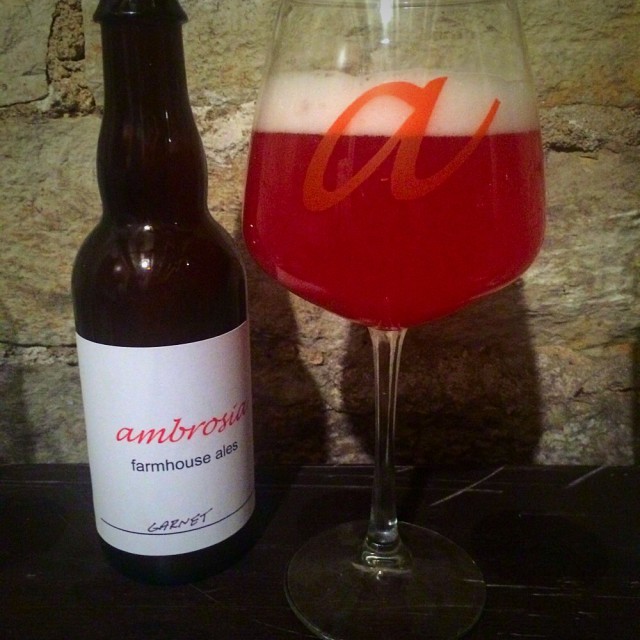
Appearance: Bright deep pink with a nice bubbly head. Pretty clear beer without much, if any, fruit sediment, as the cherries stayed mostly intact during the secondary fermentation period and through the transfer.

Nose: Bright cherry with a bit of skin. Backing wheat with some lemon and moderate acidity. Could use a bit more funk, and also potentially a cherry blend. Next time I'll consider going with a blend of Montmorency and Balaton, both of which I'll hopefully be able to find this summer. I won't have that problem in a few years, as my wife and I will be planting Montmorency and Balaton cherry trees in our backyard this spring, alongside a new apricot tree and a few cider trees that we planted last year.

Flavor: Similar to nose with a bit more lemon. Definite cherry dominance. Could use more earth and skin with more-pronounced Brett and funk. This would work really well with just a bit of something like Ruby, for a bit more funk and earthiness. As it warms, there's just a bit of biscuit and pie crust in the background rounding out the flavor profile.

Mouthfeel: Very light and crisp and moderate acidity. Super clean lactic character with just a bit of lemon juice. Moderate carbonation. Could maybe use just a bit more, though doesn't need to be at saison levels. Super clean, falling off the palate quickly after swallowing.

Overall: A bit simple, but I really like it for what it is. As detailed above, this wasn't the most-inspiring Citrine base and was fairly young, but is a great showcase for the profile of these cherries. With just a bit more depth, and an increased cherry ratio or blend, this could be a really winner. I would maybe even increase the cherries by 50% if using straight Montmorency again. I could see doing a little blend with this for a future beer in the Science & Art series, blending with a Flanders Red, or putting a bit into a blonde Brett saison to add a bit of extra fruit character.

Monday, February 9, 2015

Science & Art #7: Blend & Tasting Notes

Where Science & Art #5 and Science & Art #6 drifted in new directions for the series by being most a blend of dark sours (#5) and bottle conditioned with fruit juice (#6), Science & Art #7 goes right back to where the series started, utilizing only two components.  Similar to what was done with Science & Art #1 and Science & Art #2, this blend takes a blonde Brett saison and marries it to Citrine, creating a fruity, tart, and slightly-funky offering.  In this case, heavy emphasis on fruity given that the blonde saison base for this iteration in the series, Demeter Facile (recipe; tasting notes), is one of the fruitiest beers I've brewed to date, even though it had no actual fruit additions.

The process to this blend wasn't terribly complicated, as I had an extra fermenting bucket full of Demeter Facile as well as several carboys of fermenting Citrine (my house blonde wild) to pick from.    In this case, I selected a batch of Citrine (dreg blend version) that was mildly funky and tart, but had a nice lemon and pineapple character, as I thought that would pair quite well with the orange, lemon, and tropical fruit character coming out of the Demeter Facile.  I was aiming for something that would be dry and lightly-acidic and would be popping with fruit character, even though it would contain almost no residual sweetness.

For this blend, the final ratio was 5 gallons of Demeter Facile and 1 gallon of Citrine.  To accomplish this, I transferred the Demeter Facile to a bottling bucket, and then used an auto-siphon to rack the 1 gallon of Citrine into the bucket, keeping the tubing inside of the Facile that was already transferred.  I flushed the bucket with CO2 prior to adding the Facile, and also added a blanket of CO2 on top of the Facile prior to adding the Citrine.  I also purged the auto-siphon with CO2.  All of this was certainly overkill, as the beer was set to condition with Brett, which would pull out any oxygen pickup quite quickly.  

I then added the priming sugar, aiming for 3 volumes, and carefully mixed that in.  This was a little bit lower than my typical blonde saisons, but given the fruity profile I was going for, I knew it wouldn't be as crisp as many blonde saisons that I've done, and I wanted the carbonation to be a little bit lighter so that it would linger on the palate a bit longer.


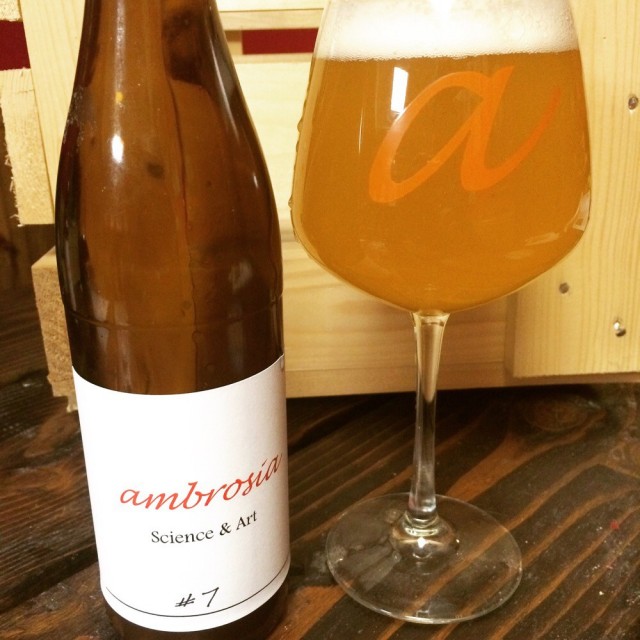
Appearance: Slightly-hazy light orange color with a big, fluffy head that lingers for quite a long time, leaving plenty of lacing on the glass on the way down.

Nose: Orange and lemon with a bit of pineapple and other tropical fruit. Light grass and a bit of wheat. Excessively fruity, just as I was hoping for. As with Demeter Facile, this beer is quite reminiscent of SweeTarts up front.

Flavor: Loads of fruit with oranges, lemon, pineapple, and guava. Moderate tartness. Just a bit of chewy wheat on the backend. Subtle funk coming from the Citrine, but the Facile really dominates here. Almost the same flavor and tartness that you'd get from a "tropical"-flavored candy or ice cream.

Mouthfeel: Light-medium body with plus carbonation and a light acidity through the finish. Super fruity and tart throughout. Great body with ample carbonation; never seems too thin. 

Overall: The Citrine didn't add too much, but I think it rounds the beer out nicely. This is just over-the-top fruity and reminds me a bit of some Fantome beers I've had (minus the peach), as well as some aged Sanctification. Not saying this is in the same league as those beers, but this definitely has similar qualities. I will definitely make this again, and as with many beers, will experiment with conditioning this with honey or fruit juice. I'd really enjoy seeing what would happen if I conditioned this with something like passion fruit, apricot, or mango juice. Maybe juice from some of the lemon guavas that I'm so fond of.